
Review · JAPAN
Nagano/Matsumoto: Matsumoto Castle and Narai-juku Day Trip
Matsumoto Castle is the star here: a black-and-white fortress with an original six-story tower, narrow stairways, old weapons, and broad views across the city. Pairing it with Narai-juku, a wooden post town in the Kiso Valley, gives you two very different looks at old Japan in one long day.
I like the sensible pairing of history and everyday street life. You get a guided visit inside one of Japan’s most important castles, then time to browse snacks, crafts, and cafes on Frog Street and Narai-juku. Guides such as Shawn, Nadin, and Joyce have also made a point of explaining local culture rather than simply pointing at buildings.
The tradeoff is the pace. This is a long day with roughly four and a half hours on the road, plenty of walking, and steep, narrow stairs inside Matsumoto Castle. Winter snow and changing weather can make the outdoor portions harder, so this trip rewards travelers who arrive prepared.
Key points to know before you book
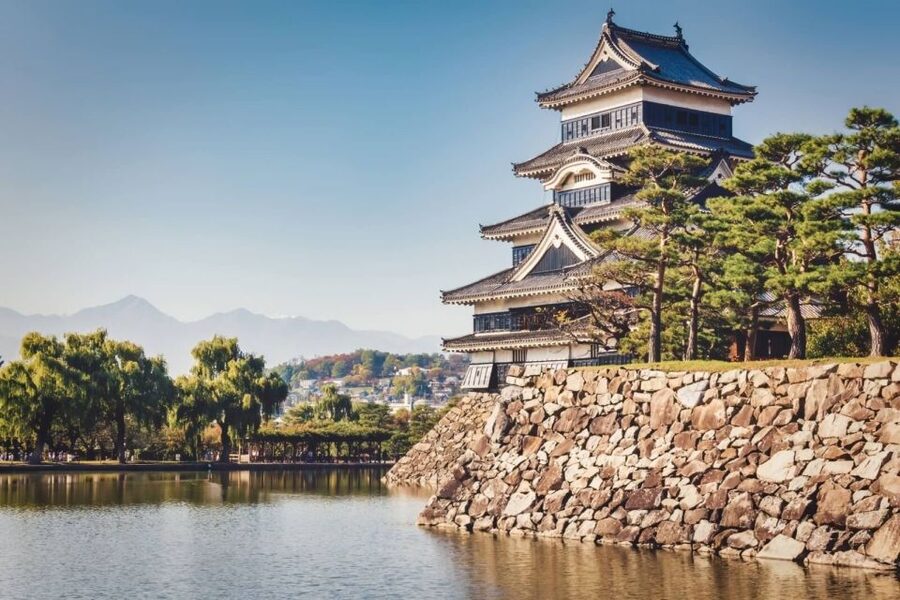
- Matsumoto Castle’s original tower: Climb all six floors of one of Japan’s oldest surviving castle towers, with wooden details, weapons, and city views along the way.
- Frog Street is more than a photo stop: Nawate-dori has more than 50 shops, cafes, and restaurants selling rice crackers, taiyaki, candy, ice cream, and frog-themed souvenirs.
- Narai-juku preserves the Nakasendo route: Walk a wooden-lined post town where travelers once rested between Tokyo and Kyoto.
- The coach saves planning time: Transport connects Nagano, Matsumoto, the two attractions, and the return stations in one organized day.
- Lunch is your responsibility: You get free time to choose a cafe or restaurant, and one guide helped a vegetarian find suitable food.
- Plan for stairs and weather: This is not suitable for wheelchair users or people with mobility impairments, and winter footwear matters.
Why this day trip works
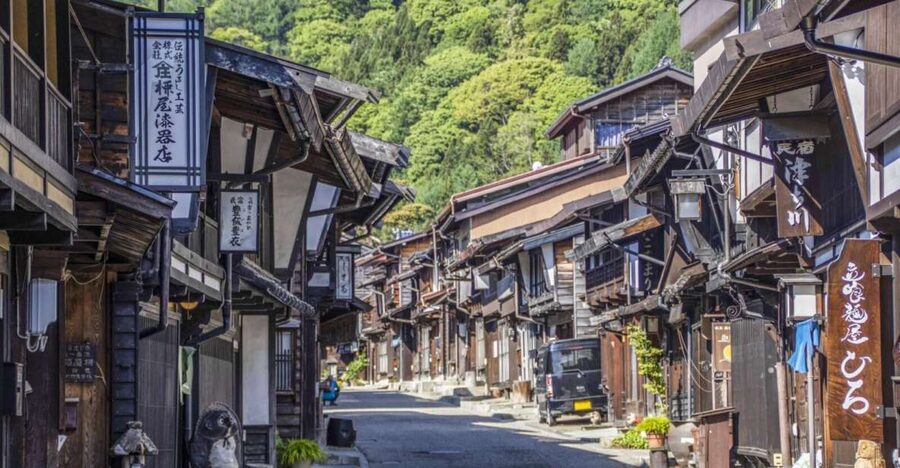
Matsumoto and Narai-juku are close enough to combine by road, but they offer different experiences. Matsumoto gives you a major landmark and a strong lesson in samurai-era defense. Narai-juku feels smaller and quieter, with wooden buildings lining the old Nakasendo road.
That contrast is the real value. If you visited only Matsumoto Castle, you would get an excellent monument but less sense of how people moved, traded, and rested across central Japan. If you visited only Narai-juku, you would see a beautiful old street without the same dramatic look at military power.
The price is $180 per person. That is not a bargain basement excursion, but it deserves a closer look before you dismiss it. The fee covers the coach between Nagano and Matsumoto, transport to Narai-juku, the return journey, a guide, the Matsumoto Castle entry ticket, a guided castle visit, and a guided walk in Narai-juku.
Public transport and admission would still cost money, and you would need to work out the route and timing yourself. The strongest value is convenience: you can use the day to look out the window, listen to local explanations, and avoid piecing together several connections.
The weaker value is the amount of time spent moving. The route includes about 100 minutes to Matsumoto, an hour to Narai-juku, and roughly two hours and 15 minutes on the return journey. If you are already comfortable with Japanese trains and buses, you may prefer to visit one place at a slower pace. If you want both sites in one day, the coach is useful.
More Castle Day Trips in the world:
- From Munich: Neuschwanstein & Linderhof Castle Full-Day Trip
★ 4.6 · 14,646 reviews - Lisbon: Pena Palace, Sintra, Cabo da Roca, & Cascais Daytrip
★ 4.7 · 9,981 reviews - Bucharest: Dracula’s Castle, Peleș Castle & Brașov Day Trip
★ 4.4 · 6,100 reviews
Starting from Nagano or Matsumoto
You can join at Nagano Station, Matsumoto Station, or Kokusai 21, depending on the option you choose. The exact meeting point changes with the booking, so check that detail carefully before setting out.
The day begins with a coach ride to Matsumoto. If you board in Nagano, the journey gives you time to settle in before the walking begins. If you are already in Matsumoto, you skip the first pickup leg and join at the second meeting point.
Once everyone is aboard, the route heads toward Matsumoto’s historic center. The city grew as a castle town during the samurai period, and that context helps make the first stop more than a quick castle photo.
Your guide speaks English and leads the day from the meeting point through both walking visits. Recent guides have included Shawn, Nadin, and Joyce. The guide style can shape the day, but the supplied experiences point to a strong focus on historical stories, regional culture, and practical help. Joyce, for example, has also taught origami during a smaller departure, while Nadin helped a vegetarian find lunch.
Nawate-dori, the cheerful stop before the castle
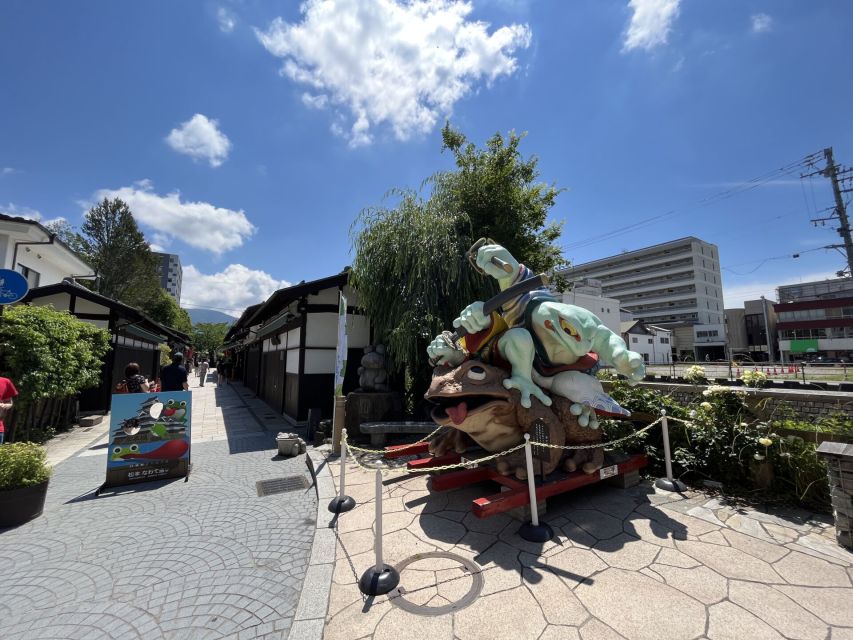
The first walking section takes place on Nawate-dori, also called Kaeru Michi, or Frog Street. The name is hard to miss. Frog sculptures and frog-themed goods appear along the street, giving this part of Matsumoto a lighter tone before the more serious castle visit.
More than 50 shops, cafes, and restaurants line the street. You might browse o-senbei rice crackers, taiyaki fish-shaped pastries, dagashi candy, ice cream, and local souvenirs. It is a useful place to see how a historic district serves daily visitors rather than functioning only as a preserved set.
You can also use this stop to get your bearings. Look for a snack, browse the small shops, or simply notice the mix of old streets and playful decorations. One guide-led group stopped for a regional fried chicken dish nearby, so lunch can begin here if the timing works.
Do not expect hours of independent shopping. The day has a firm schedule, and the castle is the main attraction in Matsumoto. Still, Nawate-dori adds personality that a direct castle transfer would miss.
Inside Matsumoto Castle’s six-story tower
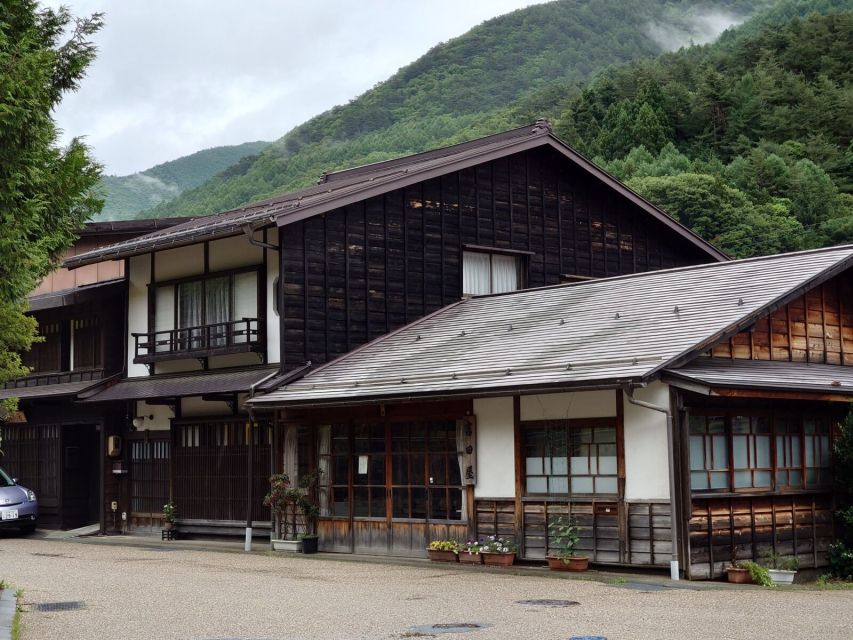
Matsumoto Castle is the core of the experience. It dates to the end of Japan’s Warring States Period, when rival forces fought for control of territory. Much of the original structure remains, and the tower is recognized as one of Japan’s National Treasures.
The building’s dark exterior gives it a stern look, especially against the surrounding mountains. Inside, the mood changes. You move through timber rooms, defensive passages, and steep stairways rather than polished modern galleries.
The tower is a five-tiered structure with six interior stories. You climb all the way to the top, so this is not a flat museum visit. The stairs are narrow and very steep in places. Take your time, keep both hands available, and expect the climb to be a real part of the experience.
At each level, the construction helps explain how the castle worked. You can see intricate woodwork, defensive design, and the compact spaces used by the castle’s occupants. The guide points out features that are easy to miss if you rush through behind a large crowd.
The displays include historical guns, weapons, and other objects linked to Japanese warriors. These items put a human scale on the castle. You are not just looking at walls and rooflines. You are seeing the tools and objects connected to the people who defended and occupied the building.
At the top, look out over Matsumoto City. The views are one of the rewards for making the climb, though the amount you see depends on weather and seasonal conditions. Snow may sit on the ground in winter, and the surrounding mountains can be especially striking when the air is clear.
This is also the part of the day least suited to anyone with limited mobility. Wheelchair access is not available for the castle experience, and the stairs can be difficult even for fit walkers. Comfortable shoes help, but they cannot turn the stairway into an easy climb.
More day trips around the world:
- Tuscany Day Trip from Florence: Siena, San Gimignano, Pisa and Lunch at a Winery
★ 5.0 · 21,634 reviews - From Amsterdam: Zaanse Schans, Volendam & Marken Day Trip
★ 4.4 · 18,501 reviews - Florence: Pisa, Siena and San Gimignano Day Trip with Lunch
★ 4.6 · 9,771 reviews - From Marrakech: Day Trip to Ouarzazate and Ait Benhaddou
★ 4.7 · 9,447 reviews
Free time around Matsumoto Castle
After the guided castle visit, you have free time to continue looking around the grounds and browse nearby shops. This pause matters because the guided portion gives you the framework, while the unstructured time lets you revisit a detail or take photographs without trying to keep up.
You may also have time to finish lunch or buy a small snack. Since lunch is not included, budget separately for food and drinks. The exact amount of free time can vary with traffic, weather, and the group’s progress, so avoid planning a separate reservation immediately afterward.
The castle grounds are worth treating as part of the visit rather than merely a route to the entrance. From outside, you can better appreciate the strong contrast between the dark tower, water, walls, and surrounding city.
The coach ride to Narai-juku
The journey to Narai-juku takes about an hour. This is a good point to rest, especially after the castle stairs and the first walking section.
The road passes fields and mountain scenery. In winter, snow may cover the ground and mountain tops, which makes the ride attractive but also raises the need for waterproof shoes and warm clothing. In rain, an umbrella or rain gear becomes useful because much of the day takes place outside.
The coach makes the connection simple. You do not need to locate a rural platform, calculate a transfer, or worry about missing the route back. The price of that ease is less flexibility. You move when the group moves, and a slow independent lunch in one village is not the purpose of this trip.
Walking through Narai-juku’s wooden main street
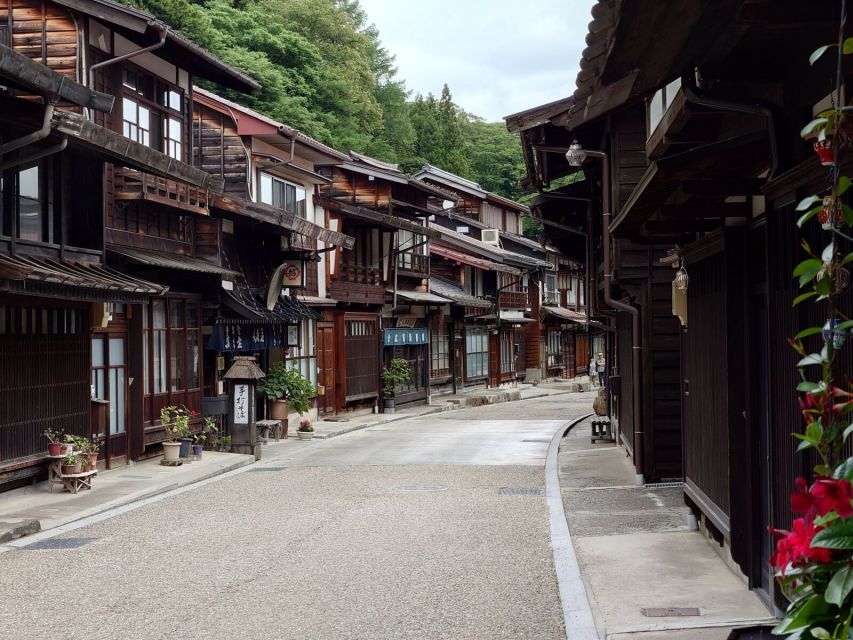
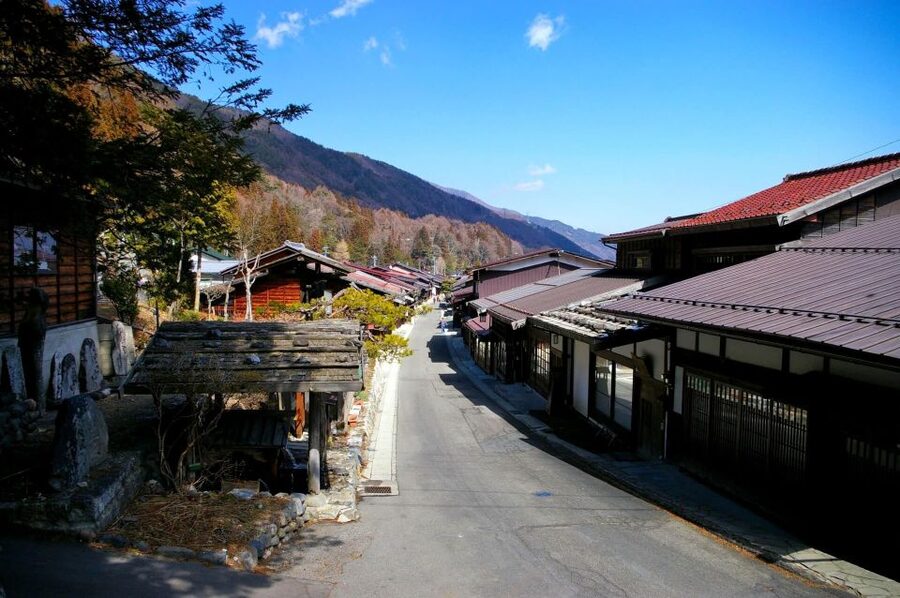
Narai-juku once served people traveling between Tokyo and Kyoto along the Nakasendo road. It was a place to rest, eat, and find lodging during a long journey through central Japan.
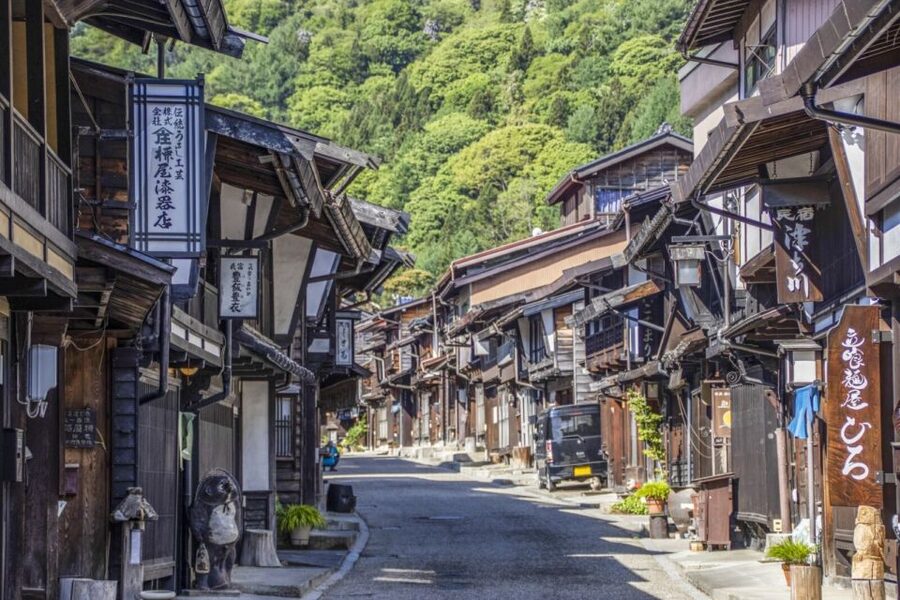
Today, the main street retains a strong Edo-period character, with traditional wooden buildings and a compact town layout. The guided walk begins near the train station at the entrance to the town, then follows the main street while your guide explains how Narai-juku was built and why it prospered.
This section has a quieter feel than Matsumoto. There is no large fortress to dominate the view. Instead, the pleasure comes from the repeated details of the buildings, the mountain setting, and the sense of a route designed for people on foot.
You get about an hour of free time after the guided walk. Browse local shops, look for wood and lacquered handicrafts, or sit down at a cafe or restaurant. Some shops may be closed, particularly outside the busiest weekend periods, so keep your expectations realistic. Narai-juku is not a nonstop shopping street.
That quietness can be part of its appeal. You have room to notice the wooden facades and narrow street without the pressure of a major commercial district. It can also feel limiting if you want many open stores or a wide choice of meals.
One useful detail from the day’s experiences is that a guide recommended a local restaurant serving a meat and seafood udon soup for a modest price. Food choices depend on what is open, but asking your guide can save time. If you have dietary needs, tell the guide early. Nadin, in particular, has helped a vegetarian manage lunch.
What the long return means for you
After Narai-juku, the coach returns to Matsumoto Station, Kokusai 21, or Nagano Station. The return portion can take about two hours and 15 minutes, making this a full day rather than a casual half-day outing.
That length is the main practical drawback. You should not book a demanding evening activity immediately after the tour, especially if you began in Nagano. The day includes several walking sections, castle stairs, outdoor exposure, and long stretches of sitting.
On the other hand, the schedule lets you see two places that are awkward to combine without private transport. For many people, that is the point. You trade a little independence for a clear route and a guide who connects the sites.
The tour has received a perfect overall rating from 23 submitted experiences, with especially strong praise for the historical explanations, friendly guides, transport, and the surprise appeal of Narai-juku. Those strengths match the design of the day: it is not just transportation to two famous spots, but a guided introduction to the region.
Weather, shoes, and physical effort
Pack for an outdoor day even if the forecast looks kind. Bring sunglasses, a sun hat, an umbrella, rain gear, and clothing suited to the season.
Winter needs extra care. Snow often lies on the ground, so waterproof winter shoes and warm clothing are important. Ordinary smooth-soled shoes can be uncomfortable or unsafe on wet streets and snowy paths.
You will walk at both major stops and climb the castle tower. The tour is not suitable for wheelchair users or people with mobility impairments. If you can walk comfortably but dislike steep stairs, you can still enjoy the grounds and the guided explanation, but reaching the top of the castle requires accepting a demanding climb.
The tour provider notes that every activity depends on availability. If weather, venue conditions, or another issue changes the schedule, an adjustment may be needed. That is normal for a day with several outdoor stops, but it is worth keeping your plans flexible.
Who should book this experience
I would choose this day trip if you are staying in Nagano or Matsumoto and want a guided look at central Japan beyond the best-known city routes. It suits people who value context, enjoy historic buildings, and would rather have transport arranged than manage several connections.
It is especially good for a first visit to the area. The guide helps explain why Matsumoto became a castle town and why Narai-juku mattered on the Nakasendo road. That background turns two attractive places into a connected story.
Families with older children may enjoy the castle weapons, frog decorations, snacks, and mountain views. Food-focused visitors should note that lunch is not included, but the free time and guide suggestions can make a local meal easy to arrange.
I would hesitate if you want a slow day, dislike coach rides, have difficulty with steep stairs, or need guaranteed access for a wheelchair. I would also consider an independent visit if you are happy seeing only Matsumoto Castle and want more time for shopping or museums.
For everyone else, $180 is defensible because it includes the castle ticket, transport, two guided visits, and the planning that connects them. The best reason to book is not simply the castle. It is the combination of a powerful samurai-era monument with a smaller old road town that many visitors would otherwise skip.
Should you book Matsumoto Castle and Narai-juku?
Book it if you want two distinctly different historical stops in one organized day and you are comfortable with long coach rides, outdoor weather, and steep castle stairs.
Skip it if you need a relaxed schedule or easy-access sightseeing. For prepared walkers, though, this is a useful way to see Matsumoto’s castle, street food, and local shops before heading into the Kiso Valley for Narai-juku’s quieter wooden streets.
FAQ
Where does the tour start?
You can choose from Kokusai 21, Matsumoto Station, or Nagano Station. The exact meeting point depends on the option booked.
Where does the tour finish?
Drop-off options are Matsumoto Station, Kokusai 21, and Nagano Station.
Is lunch included?
No. Lunch is not included, but free time is provided for a cafe, restaurant, or snacks at Matsumoto and Narai-juku.
What language is the tour conducted in?
The live tour guide speaks English.
How long is the tour?
It lasts one full day. The listed route includes about 100 minutes to Matsumoto, one hour to Narai-juku, and about two hours and 15 minutes on the return journey, plus the visits and walking time.
Is Matsumoto Castle accessible for wheelchair users?
No. The tour is not suitable for wheelchair users or people with mobility impairments, and the castle includes steep, narrow stairs.
What should I bring?
Bring sunglasses, a sun hat, an umbrella, rain gear, and weather-appropriate clothing. In winter, wear waterproof shoes and warm clothing because snow is often present.
New day trips around the world
- Beijing: Badaling Ancient Great Wall of China Day Trips★ 4.8 · 208 reviews
- Barcelona: Montserrat Monastery and Natural Park Day Trip★ 4.6 · 755 reviews
- Bari: Alberobello and Polignano a Mare Half-Day Trip★ 4.8 · 37 reviews
- Bari: Matera Day Trip★ 4.6 · 65 reviews
- Bangkok: Maeklong Railway & Amphawa Floating Market Day Trip★ 4.3 · 675 reviews
- Barcelona: Walking and Horse Riding Day-Trip in Montserrat★ 4.8 · 40 reviews
- Montserrat & Cava Wineries Day Trip from Barcelona w/ Pickup★ 4.6 · 218 reviews
- Bali: Ubud Waterfall, Village and Pool Club Day Trip★ 4.7 · 45 reviews
Day Trips from Japan, compared.
Nara Half Day Trip Walking Tour (Private Option Available)
Read our review →
Tokyo: Mt. Fuji, Kamakura, Big Buddha, & Lake Ashi Day Trip
Read our review →
Mt Fuji Private Day Trip from Tokyo with English speaking driver
Read our review →
Tokyo Private Day Trip – Enjoy Your First-Time Visit to Tokyo!
Read our review →
Explore Kyoto | Private Tour – Local English Driver(guide option)
Read our review →
From Kyoto: Nara, Osaka & Kobe Day Trip – 3 Cities in 1 Day
Read our review →This day trip also appears in