
Review · KYOTO
Kyoto and Nara Day Trip from Kyoto
Kyoto and Nara in one day is a bold plan, but this tour makes it workable. You move from Tokugawa power at Nijo Castle to the gold-covered Kinkaku-ji, then on to Nara’s enormous bronze Buddha and famously free-roaming deer. It is a long day, yet you see the two cities’ essential sights without piecing together several trains, buses, and admission tickets.
I like the air-conditioned coach and the clear mix of temples, a castle, an imperial site, and a park. I also like the guides, including KC, Momo, Yuki, and Etsuko, who are repeatedly praised for strong English, humor, historical detail, and keeping the group on schedule.
The trade-off is time. With five major stops packed into roughly 10 to 11 hours, you will see a great deal, but you will not linger at every site. Nara is especially short for anyone who wants a slow walk among the deer.
Key points to know before booking
- Five major sights in one day: Nijo Castle, Kinkaku-ji, Kyoto Imperial Palace, Kasuga Shrine, and Todai-ji are all included.
- Nara comes after Kyoto: The morning focuses on Kyoto, followed by a coach ride south and an afternoon in Nara.
- Guides make the difference: Guides such as KC, Momo, Yuki, and Etsuko are praised for clear English, humor, and useful historical context.
- The pace is brisk: Expect about 50 minutes at Nijo Castle, 45 minutes at Kinkaku-ji, 40 minutes at the palace, one hour at Kasuga Shrine, and 70 minutes at Todai-ji.
- Lunch is optional: You can book a Western-style or Indian thali lunch, or choose no lunch and arrange your own meal.
- The meeting point takes care: Start at the JTB Sunrise Tours Desk in the basement of Kyoto Avanti near Kyoto Station at 8:20 a.m.
Why this Kyoto and Nara combination works
Kyoto and Nara are close enough to visit in one day, but their character is different. Kyoto gives you the refined court and warrior world: palaces, gardens, religious buildings, and the former seat of imperial life. Nara feels more open and monumental, with a huge temple hall, old shrine traditions, and deer wandering through the park.
I like that the day does not turn into a temple marathon. Nijo Castle adds political drama. Kinkaku-ji supplies the famous photograph. The Imperial Palace explains the emperor’s former role. Then Nara shifts the mood with Todai-ji, Kasuga Shrine, and the deer.
The coach matters here. You do not need to work out the best combination of local trains and buses, and you can sit down between sites. The group can include up to 40 people, so this is not a private or leisurely outing. Still, guides such as Momo and KC are praised for giving clear instructions and gently getting people back to the bus on time.
This is best viewed as an introduction, not a complete study of either city. If you have several days in Kyoto, you may prefer to visit some of these places independently and spend longer at each one. If you have only one free day, the breadth is the main attraction.
More day trips around the world:
- Tuscany Day Trip from Florence: Siena, San Gimignano, Pisa and Lunch at a Winery
★ 5.0 · 21,634 reviews - From Amsterdam: Zaanse Schans, Volendam & Marken Day Trip
★ 4.4 · 18,501 reviews - From Munich: Neuschwanstein & Linderhof Castle Full-Day Trip
★ 4.6 · 14,646 reviews
Nijo Castle: Kyoto’s warrior chapter
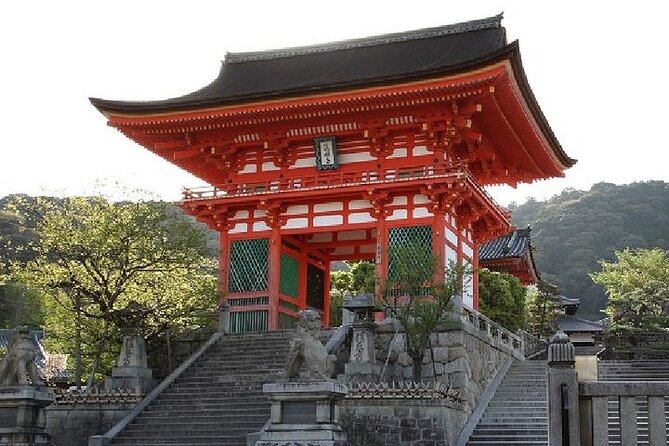
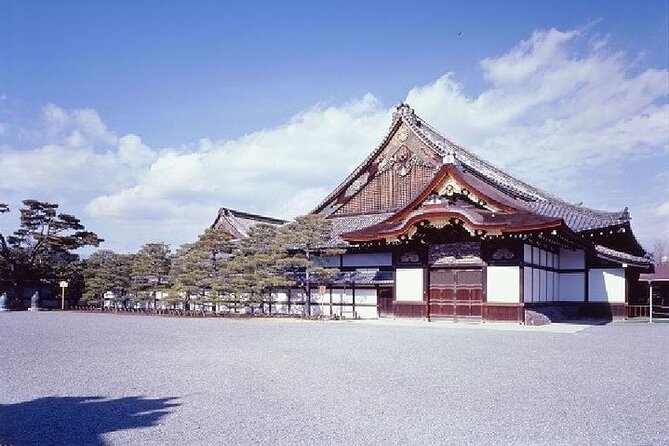
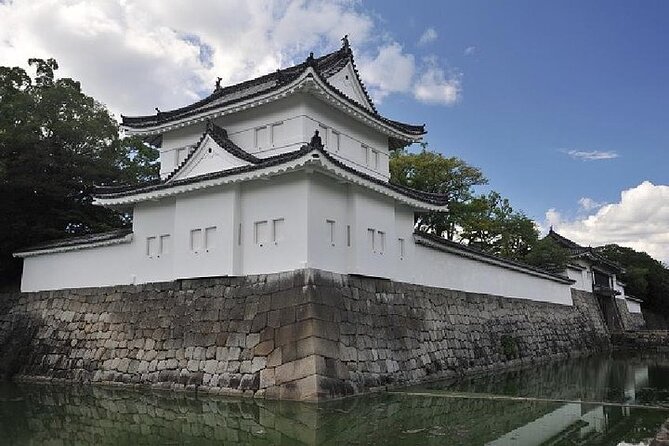
The morning begins at Nijo Castle, built in 1603 for Tokugawa Ieyasu and completed in its current form in 1626. It served as lodging for the shogun and as a powerful reminder of military authority beside the Imperial Palace.
The castle’s appeal comes from contrast. Its outside has a formal, guarded look, while the interior is filled with elaborate carvings and decorated rooms. You should be ready to remove your shoes inside, so wear socks and footwear that is easy to take off and put back on.
The scheduled visit is about 50 minutes. That gives you enough time to understand the main rooms and grounds, but not enough for a slow inspection of every detail. Listen closely to the guide here, since the building’s political purpose is just as important as its decoration.
Nijo Castle can close on Tuesdays in January, July, August, and December, as well as from December 26 through January 3. If a closure affects the tour, the substitute is Ryoan-ji Temple. The replacement may suit anyone interested in Zen gardens, but it is a different experience, and the price is not reduced.
Kinkaku-ji: Kyoto’s famous golden view
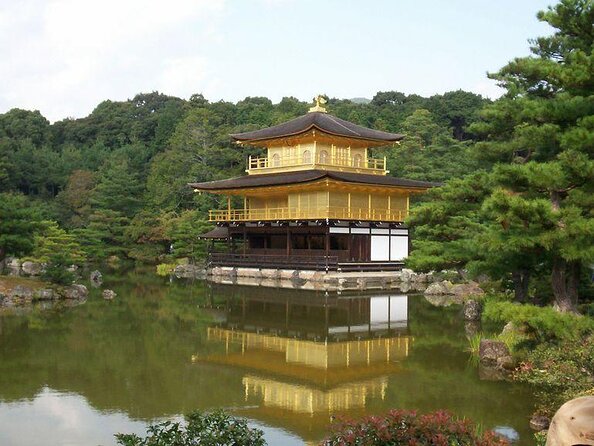
Kinkaku-ji, also called the Golden Pavilion, is the quickest photo stop of the Kyoto morning. The three-story wooden building is covered in thin layers of gold leaf and sits beside a pond in a carefully arranged garden.
The usual visit lasts about 45 minutes. You will have time to walk the route, take photographs, and hear why the pavilion became one of Kyoto’s best-known sights. The view is especially direct: gold, water, trees, and the pavilion’s reflection.
This is one place where the group format helps and limits you. The guide gives the site context and keeps everyone moving, but you will not have hours to explore each garden path. If Kinkaku-ji is the place you most want to study, plan a separate visit on another day.
Kyoto Imperial Palace and its formal grounds
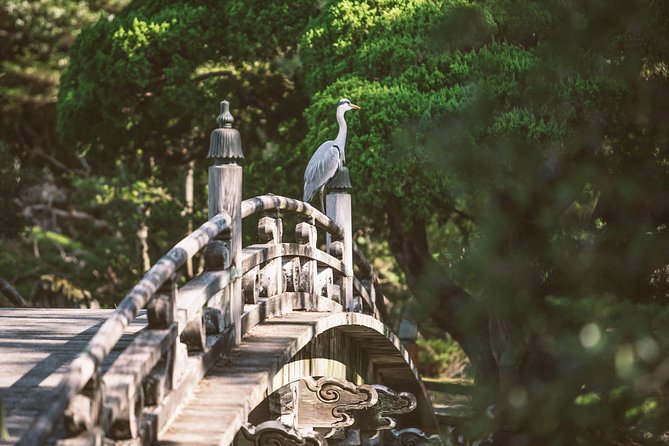
The Kyoto Imperial Palace was used as the emperor’s residence until about 150 years ago. The tour includes time to see the Shishin-den, a key building for major state ceremonies, and to walk through the palace grounds.
The scheduled stop is around 40 minutes. That is enough for an introduction to imperial architecture and ceremony, but the palace grounds can reward a slower pace. I find this stop useful because it balances Nijo Castle. One shows the shogun’s authority, while the other points to the older court tradition.
The palace is closed to visitors on Mondays, or on the following day when Monday is a holiday. It can also close for Imperial Household Agency events. In those cases, the tour visits Kitano Tenmangu Shrine instead. If the closure falls on the 25th, the substitute is Nishi Hongan-ji Temple.
These changes are important to understand before booking. The tour operator does not issue refunds for alternate destinations. The replacement can still be worthwhile, but you should not assume the advertised stop is guaranteed on every date.
Same base, another direction out:
- Lisbon: Pena Palace, Sintra, Cabo da Roca, & Cascais Daytrip
★ 4.7 · 9,981 reviews - Florence: Pisa, Siena and San Gimignano Day Trip with Lunch
★ 4.6 · 9,771 reviews - From Marrakech: Day Trip to Ouarzazate and Ait Benhaddou
★ 4.7 · 9,447 reviews - From Naples: Sorrento, Positano & Amalfi Coast – Small Group Tour
★ 5.0 · 8,643 reviews
The road to Nara and the value of a guided coach
After the Kyoto stops, you travel south to Nara. The exact order can change because of road conditions and congestion, so do not treat the timetable as fixed to the minute.
This transfer is one of the day’s practical strengths. You can rest after a busy morning, and guides often use the journey to explain Japanese culture and history. The coach also keeps the group together, which is useful when moving between sites in a city you may not know.
The downside is that the schedule leaves little room for delay. A late return to the bus affects everyone, so follow the guide’s meeting instructions carefully. Several guides are praised for being friendly while still firm about departure times. That matters more than it may sound on a full-day tour.
Kasuga Grand Shrine and its lanterns
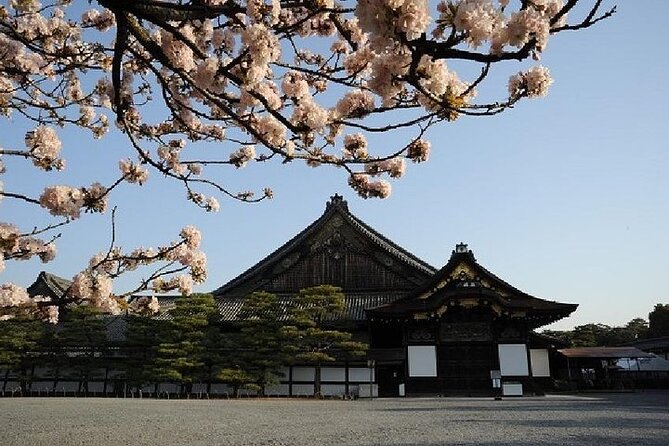
Kasuga Grand Shrine is a Nara-period shrine and part of the UNESCO-listed Historic Monuments of Ancient Nara. Its most distinctive feature is the large number of stone and bronze lanterns, with more than 3,000 associated with the shrine.
The scheduled visit lasts about one hour. That is a useful amount of time for a guided look at the shrine buildings and the approach through the wooded grounds. Nara’s deer are traditionally regarded as messengers of Kasuga Shrine, so the stop connects the animals in the park with the religious setting.
From January 2025, the tour is scheduled to include the Main Sanctuary special visit area. Access can still be blocked by events or operating conditions. If that happens, the substitute is the Kasuga Taisha Museum or Todaiji Museum, with no refund for the change.
I like this stop because it gives the Nara portion a quieter, more symbolic side before the grand scale of Todai-ji. The lanterns also make it visually different from the gold pavilion and the formal Kyoto sites.
Todai-ji and the Great Buddha
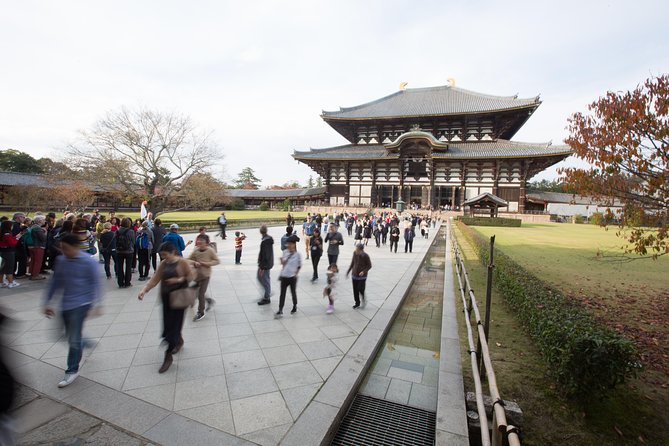
Todai-ji is the day’s largest visual punch. The temple is a symbol of the Nara period and includes one of the world’s largest wooden structures, the Great Buddha Hall. Inside is the huge bronze Great Buddha, an image that is difficult to understand from photographs alone.
The scheduled visit is about 70 minutes. You will have time to enter the main hall, see the Buddha, and hear how the temple fits into Nara’s religious story. The scale is the point: the hall, the statue, and the surrounding complex all ask you to look upward and take in their size.
Todai-ji is also where the pace may feel most frustrating. The site is large, and 70 minutes passes quickly once you account for walking, gathering, and the guide’s explanation. If you want long quiet moments inside the hall, an independent return visit would be worthwhile.
Nara Park and the deer
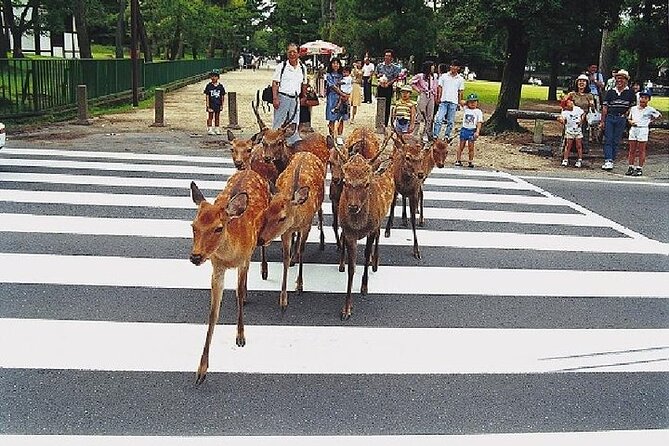
Nara Park adds a welcome change after several formal buildings. Deer roam freely through the park, and they are closely tied to the local religious tradition. You can see them near the shrine and temple areas, not behind a fence or on a separate farm.
The deer are appealing, but you should pay attention to the guide’s warnings. One guide specifically cautioned that some deer can be quite assertive. Keep your focus on your belongings and follow instructions when approaching them.
The tour’s Nara time is divided among Kasuga Shrine, Todai-ji, and the park, so do not expect a long unstructured walk. One useful tip is to save your own photos and browsing for the designated free moments rather than assuming you can wander far from the group.
Lunch choices and what to expect
Lunch is not automatically included in every booking. You need to select the option with lunch if you want the meal included. The Western-style choice is a set menu, and vegetarian requests must be made at booking because same-day changes are not accepted.
The Indian thali option is vegetarian and includes three curries, vegetable pakora, yogurt, naan or roti, rice, salad, and one non-alcoholic drink. The Indian and Western meals are served in separate dining areas, and you cannot switch between them on the day.
Halal, gluten-free, and other meal requests are not available. If you choose no lunch, you have free time to eat independently in the Kyoto Station area. This makes the no-lunch option less convenient during the touring day, but it can suit you if you have strict dietary needs or want to choose your own food.
At about $194.85 per person, the value depends heavily on what you would otherwise arrange yourself. Admission fees, transport, and an English-speaking licensed guide are included. Add the cost of individual tickets, taxis or buses, and the time needed to plan the route, and the price is easier to justify.
The tour is less compelling if you already know Kyoto and Nara well, have a low tolerance for group schedules, or want to spend an entire afternoon at one temple. For a first visit, the included logistics and range of sights make the cost reasonable, especially if you select lunch and want a predictable day.
Timing, walking, and meeting point advice
The start time is 8:20 a.m. at the JTB Sunrise Tours Desk in the basement of Kyoto Avanti, near Kyoto Station. The meeting point can be hard to find if you are unfamiliar with Kyoto Station, so allow extra time to locate the desk rather than arriving at the last minute.
The tour ends at Kyoto Station at about 6:30 p.m. for the Kyoto start and end option. There is no hotel drop-off, so you will need to make your own way back afterward.
Expect plenty of walking through temple grounds, palace areas, shrine approaches, and the park. Most people can take part, but the pace is not ideal if long walks or repeated standing are difficult for you. Seats may not be assigned, and the group can reach 40 people.
Children aged five and under may join free, but they do not receive a bus seat or lunch unless booked at the child rate. Anyone under 18 needs written parental permission, and anyone under 15 or not yet in middle school must be accompanied by a parent or guardian.
Who should book this day trip?
I would choose this tour if you are visiting Japan for the first time, want a strong overview, and prefer a guide to explain what you are seeing. It is particularly useful for English-speaking visitors who want historical background without managing Kyoto and Nara’s transport system alone.
Families may like the variety, especially the deer and the large Buddha. Couples and solo visitors should enjoy the easy transport, but should accept that the day is shared and tightly timed.
I would hesitate if your priority is photography, quiet contemplation, or detailed garden study. You will get good photo chances, but not unlimited time. Nara is the part most likely to leave you wishing for another hour.
Should you book it?
Book this Kyoto and Nara day trip if you want to cover the essential sights in one organized day and value a licensed English guide, included admissions, and air-conditioned transport. The strongest guides, including KC, Momo, Yuki, and Etsuko, add humor and useful explanations that help the sites make sense.
Skip it if you have several Kyoto days and prefer to set your own pace. For everyone else, this is a demanding but sensible first look at two of Japan’s most important historic cities. Just arrive early, wear easy-off shoes, watch the clock, and treat the itinerary as a broad introduction rather than the final word on Kyoto or Nara.
FAQ
How long does the Kyoto and Nara day trip last?
The experience lasts approximately 10 to 11 hours. The Kyoto start and end option finishes at Kyoto Station around 6:30 p.m.
What time and where does the tour begin?
The tour begins at 8:20 a.m. at the JTB Sunrise Tours Desk in the basement of Kyoto Avanti, near Kyoto Station.
Which sights are included?
The planned stops are Nijo Castle, Kinkaku-ji Temple, Kyoto Imperial Palace, Kasuga Grand Shrine, Todai-ji Temple, and Nara Park’s deer area.
Is transportation included?
Yes. Transportation between the sites and admission fees are included. The tour uses air-conditioned transport.
Is lunch included?
Lunch is included only when you select a lunch option during booking. You can choose a Western-style set meal, an Indian thali meal, or no lunch.
Can I request a vegetarian meal?
Vegetarian meals are available when requested in advance. The Indian thali option is suitable for vegetarians. Halal, gluten-free, and other meal requests are not available.
What happens if Kyoto Imperial Palace is closed?
The tour visits Kitano Tenmangu Shrine instead. If the closure falls on the 25th, the substitute is Nishi Hongan-ji Temple.
What happens if Nijo Castle is closed?
The tour visits Ryoan-ji Temple instead. Nijo Castle closes on certain Tuesdays in January, July, August, and December, and from December 26 through January 3.
Can I cancel for a full refund?
Yes, if you cancel at least 24 hours before the experience start time. Cancellations or changes made less than 24 hours in advance are not refunded or accepted.
New day trips around the world
- Beijing: Badaling Ancient Great Wall of China Day Trips★ 4.8 · 208 reviews
- Barcelona: Montserrat Monastery and Natural Park Day Trip★ 4.6 · 755 reviews
- Bari: Alberobello and Polignano a Mare Half-Day Trip★ 4.8 · 37 reviews
- Bari: Matera Day Trip★ 4.6 · 65 reviews
- Bangkok: Maeklong Railway & Amphawa Floating Market Day Trip★ 4.3 · 675 reviews
- Barcelona: Walking and Horse Riding Day-Trip in Montserrat★ 4.8 · 40 reviews
- Montserrat & Cava Wineries Day Trip from Barcelona w/ Pickup★ 4.6 · 218 reviews
- Bali: Ubud Waterfall, Village and Pool Club Day Trip★ 4.7 · 45 reviews
Day Trips from Kyoto, compared.
Explore Kyoto | Private Tour – Local English Driver(guide option)
Read our review →
From Kyoto: Nara, Osaka & Kobe Day Trip – 3 Cities in 1 Day
Read our review →
From Osaka/Kyoto: Private Kyoto & Nara Day Trip with Pickup
Read our review →This day trip also appears in