Review · ROME
Ancient Ostia Antica Semi-Private Day Trip from Rome by Train with Guide
Ostia Antica gives you something Rome’s grand monuments rarely can: a chance to walk through an entire ancient town. Along the Decumanus Maximus, you pass shops, apartments, taverns, baths, temples, and a theater, seeing how ordinary Romans lived in a working port city.
I like the easy train connection from Rome and the fact that tickets and admission are included. I also like the small group, capped at 12 people, which makes it easier to hear stories and ask questions. The main drawback is the walking: uneven ground, stairs, heat, and a brisk pace can be hard if you have limited mobility.
Key Points To Know Before Booking
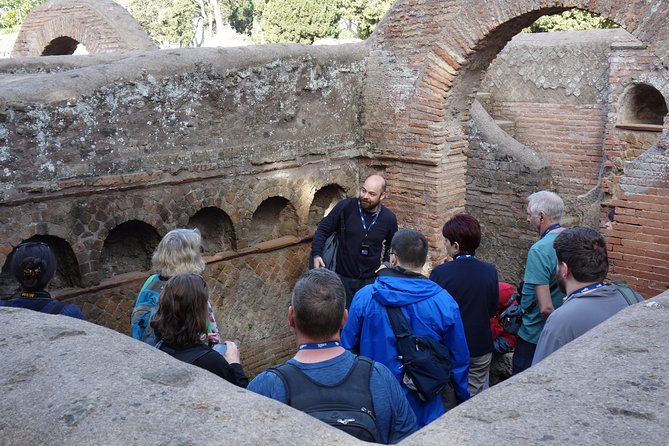
- Ostia shows daily Roman life: See bakeries, shops, housing, public baths, temples, and streets instead of only monumental buildings.
- The train ride is part of the experience: Meet near Piramide metro station, travel with your guide, and avoid working out the route alone.
- The Baths of Neptune are a highlight: Look for the striking mosaic of Neptune riding behind a four-horse chariot.
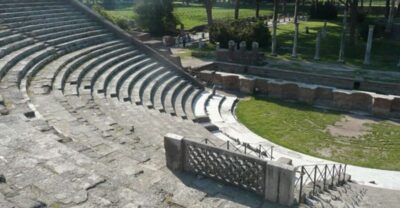
- The amphitheater still gives a sense of scale: The theater dates to 12 BC and once held about 3,500 spectators.
- Small groups help: The maximum group size is 12, though some past groups have been described as slightly larger.
- Plan for sun and rough paths: Wear practical shoes, carry water, and tell the guide early if you need a slower pace.
Why Ostia Antica Is Worth Leaving Central Rome
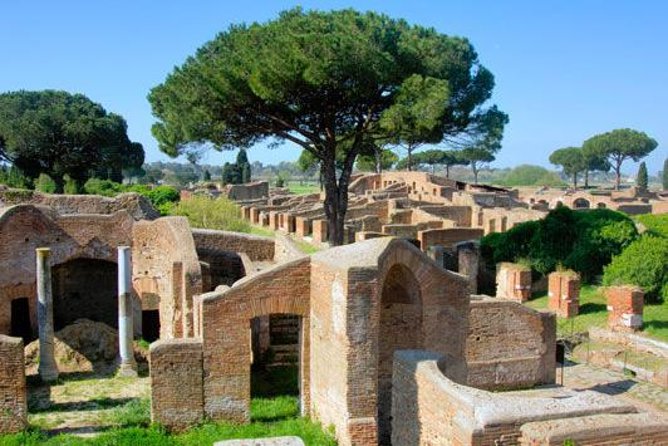
Rome can fill your day with famous monuments, but those sites often show the city at its most grand and theatrical. Ostia Antica offers a different lesson. This was a port town serving ancient Rome, with a population once estimated at more than 100,000 people.
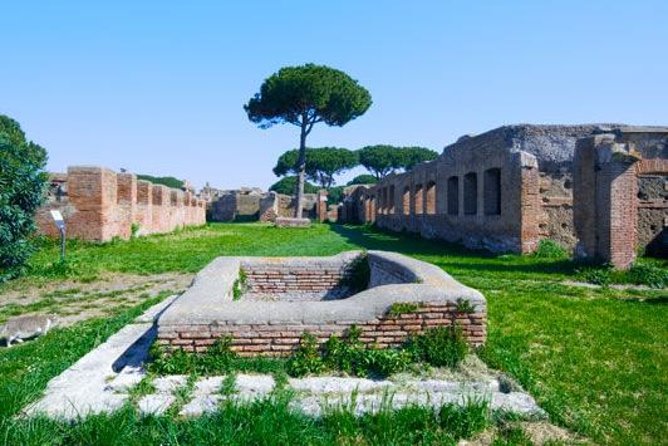
You see the infrastructure of a real town. A broad main road leads past commercial buildings, living quarters, public facilities, religious sites, and entertainment spaces. The ruins are unusually readable, so you can connect a wall or mosaic to everyday life instead of treating it as another pile of ancient stone.
The site dates as far back as the fourth century BC. Its later Roman buildings make the place feel like a town frozen in stages of growth. You can picture people buying food, visiting the baths, worshipping at temples, conducting business, and attending performances at the theater.
That is the chief reason I would choose Ostia for a half-day outing from Rome. It gives you a fuller picture of Roman society than a quick look at an arch or column. You are not only seeing what emperors built. You are walking through the places used by workers, merchants, families, and local officials.
More Private Day Trips in Italy
- Private Tour: Pompeii and Positano Day Trip from Rome
★ 4.5 · 74 reviews - Private Tour: Day Trip to Florence and Pisa from Rome with Lunch
★ 4.0 · 65 reviews - Private Day Trip Rome to Pompeii & Amalfi Coast tickets included
★ 5.0 · 61 reviews
Meeting Near Piramide And Taking The Train
The tour begins at Piazza Ostiense, 11, near the Piramide metro station. You meet the guide there, receive the round-trip train ticket, and travel together toward Ostia Antica.
This arrangement is practical. You do not need to purchase the rail ticket, find the correct connection, or wonder where to meet once you arrive. The train ride also gives the outing a local feel. You are leaving central Rome by public transport rather than joining a large coach group.
You should arrive early enough to identify the guide and settle in before departure. One useful tip is to check for the operator’s message on the morning of the tour and aim to be at the meeting point about 20 minutes early. Hotel pickup is not included, so you must reach Piazza Ostiense on your own.
The full experience lasts about four hours, including the journey there and back. The archaeological visit itself takes about two and a half hours. That is enough time to see the major areas without turning the outing into an all-day march.
Following The Decumanus Maximus Into Ancient Ostia
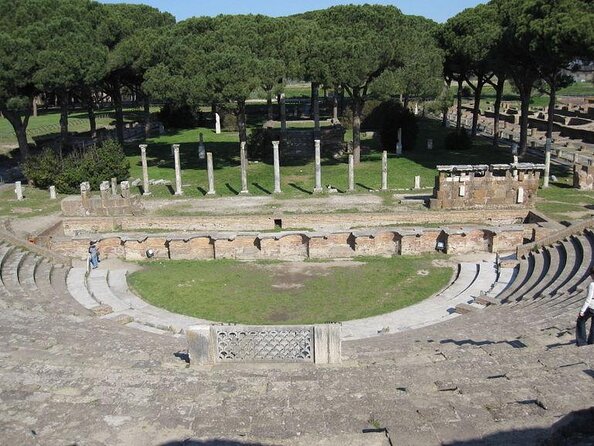
The walking tour follows the Decumanus Maximus, the main street through the ancient settlement. This route gives you a useful sense of direction and helps the site feel like a town rather than a collection of unrelated ruins.
As you walk, look for the statues lining the route and the remains of shops and apartments. These smaller buildings are especially useful because they bring the scale down to human level. You can think about where people lived, worked, ate, and met friends.
A guide adds value here by explaining what the structures were used for and how the town functioned. The best guides described in the feedback, including Alberto, Laura, Rob, Cat, and Barbara, combine facts with stories about daily life. Alberto was praised for keeping explanations clear and adding humor without slowing the group. Laura Luongo was singled out for adjusting the pace and helping the group manage crowded sections.
Guide quality can vary, so it is important to keep expectations realistic. Several people found guides warm, clear, and engaging. Others found the presentation flat or felt the guide moved too fast. The site itself remains worthwhile, but the quality of the storytelling can shape how much you take from the visit.
The Baths Of Neptune And Their Four-Horse Mosaic
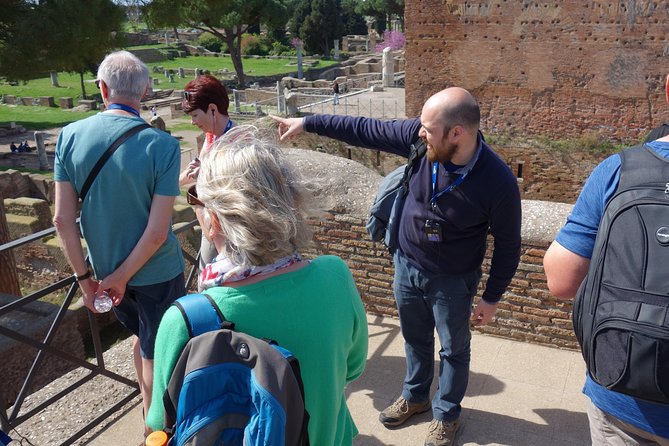
The Baths of Neptune are one of the most memorable stops. The complex is topped by a mosaic showing Neptune, the Roman god of the sea, riding behind a four-horse chariot.
This is more than a quick photo stop. The baths show how much public life depended on shared facilities. Roman baths were places for washing, exercise, conversation, and social contact. Standing beside the surviving walls and decoration helps you understand that these were not simple utilitarian rooms.
The mosaic is also a good example of why a guide can help. Without context, you may notice the image but miss its connection to the port town and the importance of Neptune to a maritime community. A strong guide points out details and explains what you are seeing without burying you in dates.
Expect to spend much of the visit outside. In hot weather, the sun can be intense. One guide, Rob, was praised for finding shaded places for explanations during a 95-degree day, and Alfredo was noted for reminding the group where to refill water bottles. Still, bring your own water and sun protection rather than relying on perfect shade at every stop.
Same base, another direction out:
- From Rome: Pompeii, Amalfi Coast, and Sorrento Day Trip
★ 4.6 · 7,031 reviews - From Rome: Pompeii, Amalfi Coast and Positano Day Trip
★ 4.6 · 6,620 reviews - Pompeii, Amalfi Coast and Positano Day Trip from Rome
★ 4.5 · 6,250 reviews - Pompeii and Mount Vesuvius Day Trip from Rome with Pizza Lunch
★ 4.5 · 6,151 reviews
Sitting In The Ancient Amphitheater
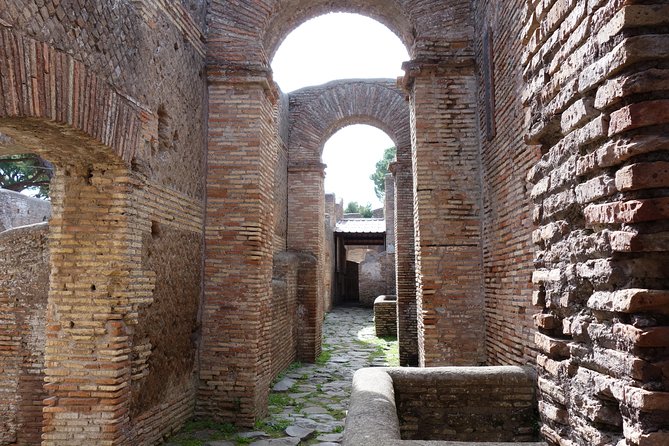
The amphitheater dates to 12 BC and held about 3,500 spectators. You can take photos from the seating area and get a clear sense of how performances worked within the town.
It is smaller than Rome’s Colosseum, but that is part of its appeal. The scale feels connected to the local population rather than to the entire empire. From the seating, you can picture a community gathering for entertainment after a day of work.
The theater is also one of the easier places to understand visually. The shape remains clear, and the arrangement of the seats gives you a natural view across the site. Guides often use this kind of stop to explain the town’s social life and the role of public shows.
If your group moves at a sensible pace, the amphitheater provides a welcome pause. The tour is active, and you will appreciate moments when you can stop, sit, and take in the surroundings.
Shops, Homes, Taverns, And The Forum Of The Corporations
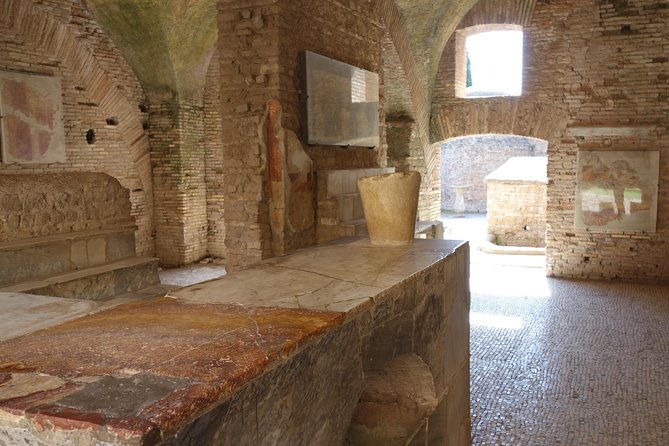
The smaller structures are where Ostia earns its reputation as a place for understanding ordinary Roman life. You pass remains of shops, taverns, and apartments. These spaces help you picture the working town behind the grand public buildings.
The Forum of the Corporations is another important area. Its name points to the commercial role of Ostia and its links with trade. The town was not simply a residential suburb. It handled goods moving through the port and supported the larger Roman economy.
You also see the Collegiate Temple and other religious buildings. Together, these stops show how business, worship, government, and entertainment sat close together in an ancient city.
The appeal is not just the number of ruins. It is the way the pieces fit. A street leads to a shop. A bath complex sits near housing. A theater anchors public life. The tour works best when you allow the guide to connect those parts rather than treating each stop as an isolated photo opportunity.
What The Four-Hour Schedule Really Feels Like
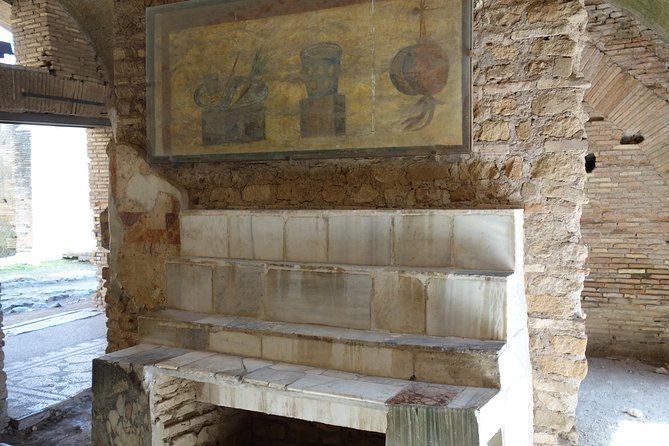
Four hours is a good length for this outing. You spend about 2.5 hours inside the archaeological park, with the remaining time used for the train journey, meeting, and movement between the station and site.
That schedule suits most people who want to add Ostia without giving up a full day in Rome. It also works well for families and teenagers. One family found the pace suitable for two teens, while still leaving enough of the site visible to make the visit worthwhile.
The limitation is that Ostia Antica is large. You will see the main attractions, but you will not explore every street or building in detail. After the guided portion, you may have the option to remain longer and continue on your own, including a visit to the museum. Confirm the day’s arrangement with your guide, since timing and group needs can affect how much free time remains.
Some people could easily spend several more hours here. If you love archaeology, you may feel the tour ends just as you are getting oriented. If you are less interested in ancient sites, the two-and-a-half-hour visit gives you a useful introduction without exhausting your entire day.
Group Size, Walking Conditions, And Comfort
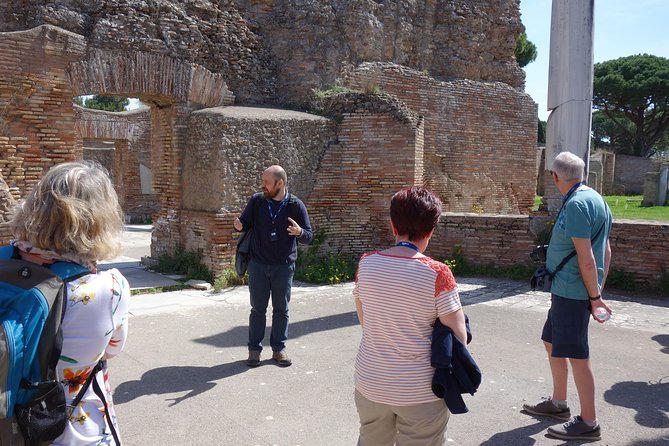
The advertised maximum is 12 people, a useful middle ground between a private tour and a large group. You get more personal attention than on a coach excursion, and it is easier to hear explanations or ask a question.
The small-group promise does not remove every practical challenge. Past groups have included people with different walking speeds and different levels of interest. A few guides have been praised for patience, shade breaks, and clear pacing. One account described a guide continuing ahead while a person using a cane struggled to keep up. If you have a knee problem, use a cane, or need extra time, tell the guide at the start.
The site requires a moderate level of physical fitness. Expect uneven ground, stairs, extended walking, and getting on and off the train. Comfortable shoes matter more here than stylish footwear. In summer, the combination of stone surfaces and open ground can make the site feel hotter than Rome’s shaded streets.
Children under 18 may be asked to show an identity card at the entrance, so bring one for each child. That is an easy detail to miss and worth handling before you leave Rome.
Is The $59.26 Price Good Value?
At $59.26 per person, the tour is priced reasonably for a four-hour guided outing if you value convenience. The cost includes the English-speaking guide, round-trip train ticket, semi-private group, and entrance to Ostia Antica. You avoid several small purchases and do not need to plan the rail connection or admission yourself.
The value depends on how much help you want. You can reach Ostia Antica by train independently, and an audio guide is available at the site. If you are comfortable with public transport and prefer to set your own pace, the do-it-yourself option may suit you better.
I would pay for this tour if you want the ancient town explained as you walk through it. A good guide turns walls, mosaics, and street plans into a picture of Roman life. I would skip the guided option if you dislike group pacing or want several hours for detailed photography and independent exploration.
The biggest variable is the guide. Alberto, Rob, Laura Luongo, Cat, Barbara, Eduardo, Liv, Caterina, and Alfredo have all been praised for different strengths, from clear historical explanations to patience in hot weather. You cannot assume you will receive a particular guide, so book for the structure and site rather than a named individual.
Who Will Enjoy This Ostia Antica Tour Most?
I recommend it to first-time visitors who want to see more than the Colosseum and Forum. It is also a strong choice if Pompeii is not practical during your Rome stay. Ostia is closer, easier to reach, and focused on a Roman port town rather than a city destroyed by volcanic eruption.
Families can do well here, especially when the guide uses stories and explains how buildings worked. The theater, mosaics, and open streets provide visual variety. Teenagers may appreciate having the option to continue toward the beach area afterward, since the rail line continues beyond Ostia Antica.
History fans will enjoy the amount of surviving urban fabric. You can spend time comparing housing, commerce, religion, and public buildings. Casual sightseers should also find the main route manageable, provided they are ready for walking and sun.
I would be cautious if you have limited mobility, dislike uneven surfaces, or need a very slow pace. The operator asks for moderate fitness, and the route includes stairs and train transfers. A private arrangement or independent visit might give you more control if accessibility is a major concern.
Cancellation And Timing Details
You can cancel up to 24 hours before the start time for a full refund. Changes made less than 24 hours before the tour are not accepted, and cancellations inside that window are not refunded.
The experience requires good weather and a minimum number of participants. If poor weather or low participation causes cancellation, you are offered another date or experience, or a full refund. Since the stated duration is approximate, allow a little flexibility after the planned return time.
Should You Book Ancient Ostia From Rome?
Book this tour if you want an easy half-day trip, a clear introduction to Roman daily life, and the reassurance of traveling by train with a guide. The included tickets and group limit make the $59.26 price fair, especially for a first visit.
Skip it if you want to roam alone, use an audio guide, or spend most of the day examining every corner. Also think carefully about the walking conditions. For most people who want a quieter alternative to Rome’s busiest ancient sites, Ostia Antica is one of the smartest additions to a Rome itinerary.
FAQ
Where does the tour begin?
The meeting point is Piazza Ostiense, 11, 00154 Rome, near the Piramide metro station.
How long does the experience last?
The tour lasts about four hours in total. The guided visit inside Ostia Antica takes approximately two and a half hours.
Is transportation from Rome included?
Yes. The English-speaking guide provides the train ticket for the journey to Ostia Antica and the return trip to Rome.
Is the entrance fee included?
Yes. Admission to the Ancient Ostia archaeological site is included.
How large is the group?
The advertised maximum is 12 participants.
Is hotel pickup available?
No. You must make your own way to the meeting point near Piramide metro station.
What should I bring for a child under 18?
Children under 18 might be asked to show an identity card at the site entrance, so bring one with you.
Can I cancel for a refund?
Yes. You can cancel at least 24 hours before the start time for a full refund. Cancellations made less than 24 hours before the start time are not refunded.
More Ancient Ruins Day Trips in Rome
- Athens: Cape Sounion & Poseidon Temple Sunset Half-Day Trip
★ 4.8 · 8,241 reviews - London: Windsor, Stonehenge, Bath, and Roman Baths Day Trip
★ 4.5 · 5,131 reviews - From Aswan: Abu Simbel Temple Day Trip with Hotel Pickup
★ 4.4 · 2,807 reviews - Fes: Volubilis Roman Ruins, Mouly Idriss, & Meknes Day Trip
★ 4.6 · 2,375 reviews
More Train Day Trips in Italy
- From Rome: Ostia Antica Guided Half-Day Trip by Train
★ 4.8 · 486 reviews - Venice Day Trip from Rome by High-Speed Train with Happy Hour
★ 4.5 · 445 reviews - From Rome: Day Trip to Venice by High-Speed Train
★ 4.6 · 352 reviews - From Milan: Bernina Train and St. Moritz Day Trip
★ 4.5 · 4,495 reviews
New day trips around Rome
- Assisi & Orvieto Day Trip from Rome★ 4.5 · 341 reviews
- From Rome: Ostia Antica Guided Half-Day Trip by Train★ 4.8 · 486 reviews
- Venice Day Trip from Rome by High-Speed Train with Happy Hour★ 4.5 · 445 reviews
- From Rome: Day Trip to Venice by High-Speed Train★ 4.6 · 352 reviews
- Private Day Trip Rome to Pompeii & Amalfi Coast tickets included★ 5.0 · 61 reviews
- Private Tour: Pompeii and Positano Day Trip from Rome★ 4.5 · 74 reviews
- Private Tour: Day Trip to Florence and Pisa from Rome with Lunch★ 4.0 · 65 reviews
- Tivoli Full Day Trip from Rome: Hadrian’s Villa and Villa D’Este★ 4.5 · 1,730 reviews
Day Trips from Rome, compared.
From Rome: Pompeii, Amalfi Coast, and Sorrento Day Trip
Read our review →
Pompeii and Mount Vesuvius Day Trip from Rome with Pizza Lunch
Read our review →
Rome: Tuscany & Montepulciano Day Trip with Lunch & Wine Tasting
Read our review →
From Rome: Pompeii Day Trip with Optional Vesuvius and Lunch
Read our review →
Rome: Amalfi Coast & Positano Day Trip with Coastal Cruise
Read our review →
Rome: Tuscany & Montepulciano Day Trip with Lunch & Wines
Read our review →
Tivoli Full Day Trip from Rome: Hadrian’s Villa and Villa D’Este
Read our review →