
Review · BELGIUM
Luxembourg and Dinant Day Trip from Brussels
Luxembourg and Dinant make an ambitious pair for one day. You get a taste of a country famous for its fortified old quarter and European institutions, then stop in Dinant, where a Gothic church, steep citadel, and saxophone history crowd into a compact riverside town. The catch is the long coach ride, about three hours each way from Brussels.
I like the efficient route and the chance to see two places that are awkward to combine by public transport in a single day. I also like the mix of guided orientation and free time, especially in Luxembourg, where you can leave the group and explore at your own pace. The main drawback is that six or more hours can go by on the bus, leaving both destinations feeling like introductions rather than full visits.
Key points to know before booking
- Two destinations in one day: See Luxembourg City and Dinant without arranging separate trains or buses.
- Luxembourg includes a guided overview: Expect the Grand Ducal Palace, Notre-Dame Cathedral, Neumünster Abbey, the Alzette valley, and the European Quarter.
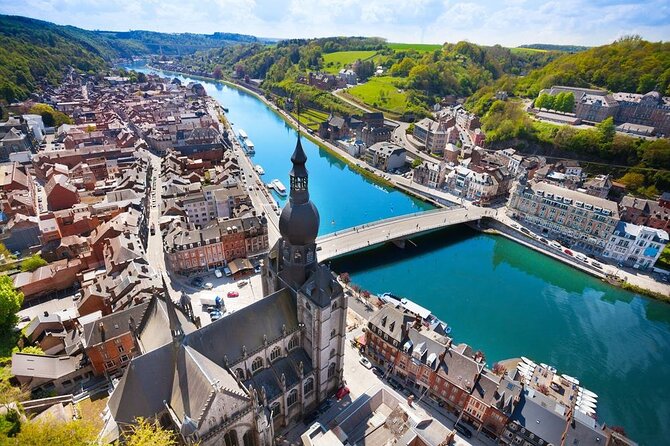
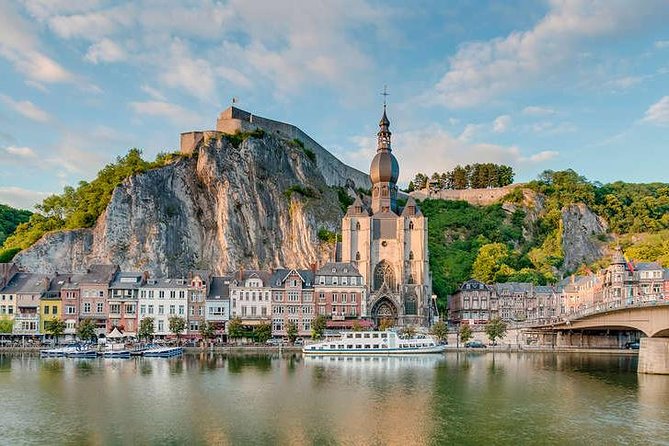
- Dinant is short but photogenic: The stop gives you time for river views, the Collegiate Church, Maison de Monsieur Sax, and perhaps a quick look toward the citadel.
- Commentary may be bilingual: English, Spanish, and sometimes French may be combined on one coach, making the day longer and the explanations less smooth.
- Bring money for lunch and admissions: Food, drinks, and entry fees are not included in the $79.30 price.
- Be early: The coach leaves from Bd de Berlaimont 18 at 8:30 a.m., and latecomers may be left behind.
What this $79.30 day trip really gives you
At $79.30 per person, this is priced as a transport-and-orientation day rather than a deep visit to either place. Your coach, guide, air-conditioning, and radio headset are included. You arrange lunch yourself, and entrance fees are extra.
That makes the price reasonable if you value convenience. Luxembourg is about three hours from Brussels by road, and Dinant lies in a different direction within Belgium. The coach removes the need to compare train schedules, make connections, or organize a second day.
The tradeoff is time. This is an approximately 12-hour outing, usually returning to central Brussels around mid-evening. Traffic can push that later. You should book it because you want a broad first look at Luxembourg and Dinant, not because you expect a relaxed day in either town.
The maximum group size can reach 200 people, although the exact coach size may vary. A large group helps keep the price down, but it can make meeting points, walking commentary, and free-time instructions harder to follow.
More day trips around the world:
- Tuscany Day Trip from Florence: Siena, San Gimignano, Pisa and Lunch at a Winery
★ 5.0 · 21,634 reviews - From Amsterdam: Zaanse Schans, Volendam & Marken Day Trip
★ 4.4 · 18,501 reviews - From Munich: Neuschwanstein & Linderhof Castle Full-Day Trip
★ 4.6 · 14,646 reviews
Starting in Brussels and crossing the Ardennes
The meeting point is Bd de Berlaimont 18 in central Brussels. There is no hotel pickup, so allow enough time to reach the departure point by public transport or on foot. The coach is air-conditioned and fitted with radios and earphones, which are useful when the group spreads out during the walking portions.
The drive toward Luxembourg passes through the Ardennes, a wooded and hilly part of Belgium. This is scenic road travel, but it remains road travel. If you dislike long rides, bring water, a small snack, and something to read. Seat comfort has not been consistent for everyone, and some passengers have found the rear seats cramped, with limited legroom and poor support.
Sit near the front if you arrive early and want the clearest sound. Also keep your passport or another form of identification with you. There are no routine border controls within the Schengen area, but carrying identification is still advised.
The guide may present the tour in English, Spanish, and French depending on the group. Some guides, including Bruno, Veronica, Paolo, Stefan, Jan, and Adrianne, have been praised for clear explanations, humor, kindness, or strong organization. The quality can depend heavily on the individual guide. If the commentary is bilingual, expect each point to be repeated, which can reduce the time available for sightseeing.
Luxembourg City: a quick introduction to the capital
Luxembourg City is the main event, and the guided walk helps you get oriented quickly. The city is divided between an upper town and lower districts cut by the Alzette River. Streets can rise and fall sharply, so comfortable shoes matter.
The first sight is usually the Grand Ducal Palace, the official residence of Luxembourg’s grand duke. You see the exterior and hear about its role in the country’s government. The building combines several periods, including Renaissance and Baroque work, with the Chamber of Deputies beside it.
This is a photo stop and an orientation point, not a palace tour. Entrance is not included, and the schedule does not provide a dedicated interior visit. If you want to see more than the facade, you would need to use your free time and confirm opening arrangements yourself.
Notre-Dame Cathedral and Neumünster Abbey
The former Jesuit church now known as Notre-Dame Cathedral brings together Baroque, Renaissance, and Gothic details. Inside, you can see a forum devoted to the Grand Ducal family. The adjacent Jesuit College later became the National Library, another reminder of how much history is packed into this small center.
The scheduled stop is listed as about 30 minutes, but the exact amount of guided attention can vary. Some guides give a proper explanation, while others move quickly through the exterior and allow less time inside. If entering the cathedral matters to you, ask clearly where the group is going and how much free time you have.
Neumünster Abbey sits in the Grund district, below the upper city. The original Benedictine abbey on the Altmünster Plateau was destroyed in 1542, and the monks built the present Neumünster in 1606. Today it serves as a public meeting place and cultural center.
The setting is one of the most rewarding parts of the city walk. You get a change of scale from grand government buildings to the lower valley and old stone structures. The listed visit lasts about 20 minutes, so treat it as a brief introduction rather than a full cultural visit.
Same base, another direction out:
- Lisbon: Pena Palace, Sintra, Cabo da Roca, & Cascais Daytrip
★ 4.7 · 9,981 reviews - Florence: Pisa, Siena and San Gimignano Day Trip with Lunch
★ 4.6 · 9,771 reviews - From Marrakech: Day Trip to Ouarzazate and Ait Benhaddou
★ 4.7 · 9,447 reviews - From Naples: Sorrento, Positano & Amalfi Coast – Small Group Tour
★ 5.0 · 8,643 reviews
The bridges and European Quarter
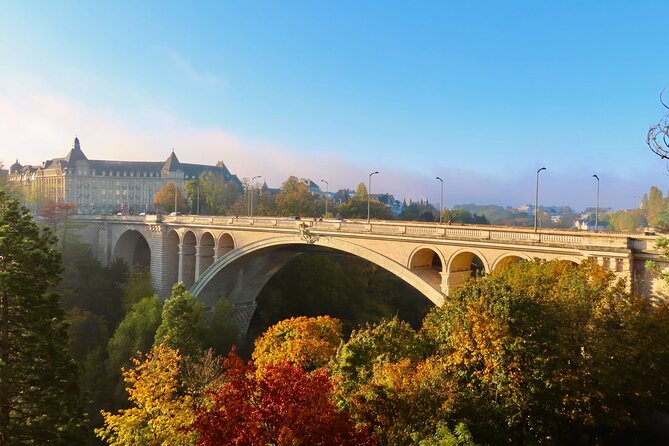
The coach route or walking commentary also points out the Grand Duchess Charlotte Bridge, a red steel bridge crossing the Alzette. Nearby sights include the Municipal Theater and the Monument Schuman, honoring Robert Schuman, one of the figures linked with European integration.
The modern European Quarter in Kirchberg provides a sharp contrast with the old town. The European Parliament, the Council of Ministers, and the European Court of Justice all connect Luxembourg with the daily work of the European Union. The guide explains the roles of these institutions, including the Secretariat of the European Parliament and the Schuman Center.
You should keep expectations realistic. This is an exterior sightseeing pass and explanation, not a series of institutional tours. The buildings matter because they show how a small country became a major center of European administration, but they are not designed as easy sightseeing attractions from the street.
Free time in Luxembourg: use it with a plan
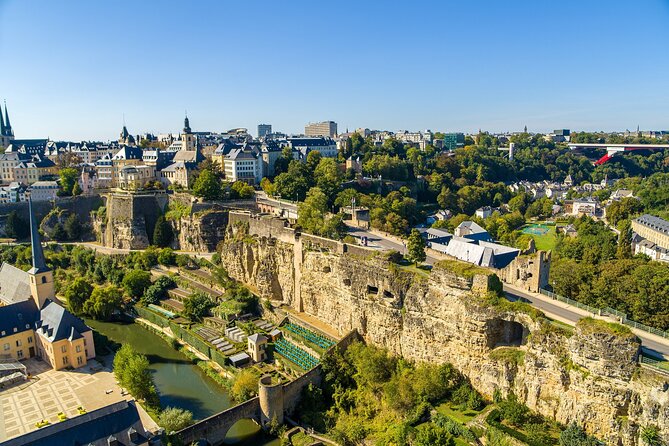
After the guided portion, you receive free time, generally around two to three hours depending on traffic and the day’s schedule. This is your best chance to make the city feel like your own rather than a string of guidebook stops.
Have lunch, walk the old streets, take photographs from the upper town, or head toward the lower district if you are comfortable with hills and stairs. Food is not included, and Luxembourg can be expensive, so check the menu before sitting down. Slow restaurant service can eat into a short break. A quick meal from a kiosk or casual counter may give you more time to walk.
Some guides recommend Luxembourg’s underground tunnels and casemates. This can be worthwhile, but check the last admission time as soon as you arrive. One schedule left only about an hour between arrival and the end of the walking tour, and late entry was not possible after the tunnels closed. Do not build your entire free-time plan around this attraction unless you confirm the hours on the day.
A tourist map is usually provided on the coach. Take a moment to mark the meeting point before wandering off. The guide may not stay with the group during all free time, so you need to manage your own return.
Dinant: a compact town with a dramatic view
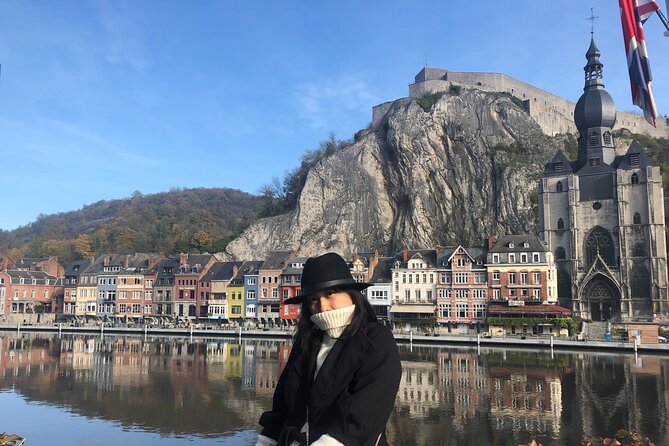
The usual route visits Dinant on the way back to Brussels, although the order can change. The town sits beside the Meuse River and is much smaller than Luxembourg City, making a one-hour to 90-minute stop enough for a quick introduction.
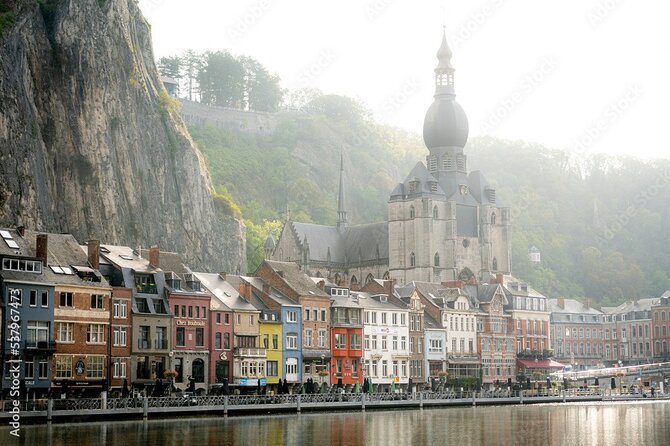
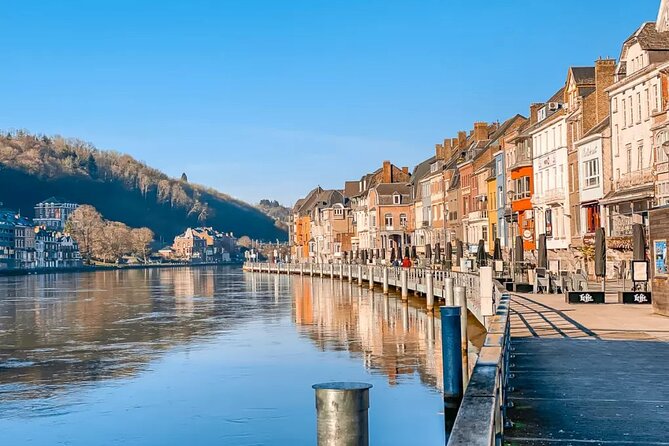
The view is the reason to come. Look across the river toward the onion-domed tower of the Collegiate Church of Notre-Dame, then look up to the citadel above it. A narrow line of houses and shops runs along the water, creating the classic Dinant scene.
Dinant also gave its name to dinanderie, the making of copper objects. Local treats include biscuits, including honey biscuits. These details add character, but time is tight. You may have just enough time for photographs, a short walk, and a quick snack.
The citadel is the tempting extra. It sits high above the town and is reached by a long stairway of more than 400 steps if the funicular is not operating. A one-hour stop is not enough for every activity. If the lift is closed, climbing to the top can consume the entire visit and leave no time for the town below.
Closures are another risk. The citadel or funicular may be unavailable for repair, and the tour does not guarantee replacement sightseeing. When that happens, Dinant can feel quiet, especially on a weekday when shops are closed. I would treat the town walk and river view as the reliable part of the stop, with the citadel as a bonus.
Maison de Monsieur Sax and the short free period
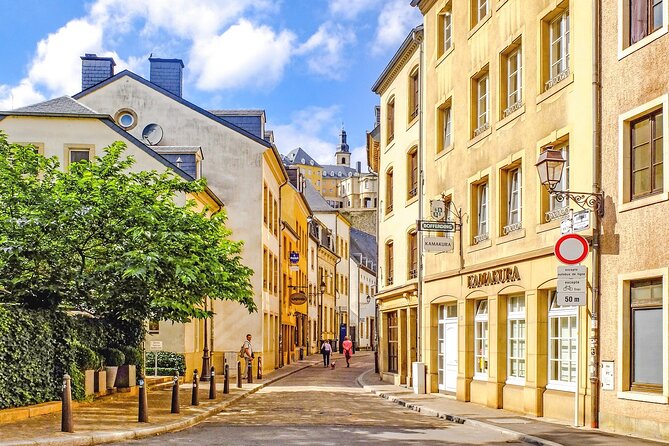
Dinant is the birthplace of Adolphe Sax, who invented the saxophone in 1814. Maison de Monsieur Sax is a small historical museum devoted to him. The scheduled visit is about 30 minutes, though the display itself is compact.
That makes it an easy stop, but not a major museum visit. You can see the saxophone connection, take photographs, and continue exploring. If you are especially interested in musical instruments, you may wish for more time. If you simply want a distinctive fact about Dinant, it fits the schedule well.
The town’s most appealing moments are often outdoors: the church tower, riverfront, cliffs, and unusual saxophone references around town. Bring a camera, but do not expect a long café break. The free period may be closer to 20 minutes in practice once the group assembles and the guide gives directions.
Guides, language, and the human factor
The guide can make a major difference on this tour. Stefan has been praised for a calm teaching style and gentle humor. Paolo has been praised for switching easily between English and Spanish. Bruno has been praised for friendliness, strong organization, and adjusting the route to make better use of daylight. Veronica has also been praised for being helpful and clear.
But the bilingual setup does not suit everyone. If the guide explains each point first in English and then Spanish, or the reverse, the walk takes longer and can feel less personal. Some passengers have also found the delivery scripted, quiet, or low in energy. Ask questions when you have the chance, and stay close enough to hear through the headset.
The tour is designed as an overview. You should not expect the guide to escort you into every cathedral, museum, palace, or tunnel. If a particular interior is important, treat the guided walk as your orientation, then use free time and your own admission money to visit it.
Who should book this day trip?
I would choose this excursion if you have a short stay in Brussels and want to sample Luxembourg without planning a separate overnight trip. It also suits visitors who prefer a guide to handle transport and provide historical context.
It works well for people who enjoy scenery, city walks, photographs, and a full day away from Brussels. A moderate level of fitness is needed because of walking, uneven streets, hills, and possible stairs. The tour is not recommended for people who have difficulty walking or need disability access.
I would hesitate if you want long museum visits, relaxed meals, or time to explore Luxembourg in depth. Independent visitors may prefer a longer Luxembourg stay, especially if they want the casemates, palace interiors, or European institutions. The same applies to Dinant if the citadel is your main reason for going.
Arrive early, wear comfortable shoes, carry water and cash, and keep lunch simple. The coach may leave exactly on schedule. The operator says it can wait five minutes if you call ahead about a delay, but you should not rely on that.
Should you book it?
Book this Luxembourg and Dinant day trip if you value convenience and variety more than a slow pace. For $79.30, you get transport over a difficult route, a guide, and a useful first look at two attractive places.
Skip it if the long ride sounds tiring or if you want a detailed visit to either destination. The strongest version of the day comes with an energetic guide, good weather, open Dinant attractions, and a clear plan for Luxembourg free time. Go in expecting an introduction, not a full tour of every sight, and the day is much easier to enjoy.
FAQ
Where does the tour leave from?
The meeting point is Bd de Berlaimont 18, 1000 Bruxelles, Belgium. Hotel pickup and drop-off are not included.
What time does the tour start?
The scheduled departure is 8:30 a.m. The experience lasts approximately 12 hours and ends back at the meeting point in Brussels.
How long is the drive from Brussels to Luxembourg?
The drive from Brussels to Luxembourg takes approximately three hours. Traffic can make the overall day longer.
Which languages are available?
Tours can be conducted in English, French, or Spanish. The guide may combine languages on the same coach, and bilingual commentary is possible.
Is lunch included?
No. Food and drinks are not included, so you need to pay for lunch yourself during free time in Luxembourg.
Are entrance fees included?
No. Admission fees are paid separately. This applies to attractions such as the citadel, underground tunnels, or other sites you choose to enter.
Can I bring luggage?
Yes. The tour uses large tourism coaches, and luggage can be taken with you.
Can I cancel for a full refund?
You can cancel up to 24 hours before the experience start time for a full refund. Changes or cancellations made less than 24 hours before departure are not accepted for a refund.
New day trips around the world
- Beijing: Badaling Ancient Great Wall of China Day Trips★ 4.8 · 208 reviews
- Barcelona: Montserrat Monastery and Natural Park Day Trip★ 4.6 · 755 reviews
- Bari: Alberobello and Polignano a Mare Half-Day Trip★ 4.8 · 37 reviews
- Bari: Matera Day Trip★ 4.6 · 65 reviews
- Bangkok: Maeklong Railway & Amphawa Floating Market Day Trip★ 4.3 · 675 reviews
- Barcelona: Walking and Horse Riding Day-Trip in Montserrat★ 4.8 · 40 reviews
- Montserrat & Cava Wineries Day Trip from Barcelona w/ Pickup★ 4.6 · 218 reviews
- Bali: Ubud Waterfall, Village and Pool Club Day Trip★ 4.7 · 45 reviews
Day Trips from Belgium, compared.
From Brussels: Guided Day Trip to Bruges and Ghent
Read our review →
From Amsterdam: Bruges Day Trip in English with Boat Option
Read our review →
From Brussels: Bruges Day Trip with Boat Tour Option (ENG)
Read our review →This day trip also appears in