Review · SIEM REAP
From Siem Reap: Angkor Wat and Floating Village 3-Day Trip
The best thing about this three-day trip is its range. You get the grand stone temples of Angkor, the quiet countryside beyond Siem Reap, the tangled ruins of Beng Mealea, and daily life on Tonle Sap at Kampong Phluk. It is not just an Angkor Wat photo stop.
I like the private car and guide, which let you pause for questions, adjust the pace, and return to cool air between temple walks. I also like the care built into the day: chilled water, cool towels, careful drivers, and guides such as Phanne, Sean, Sam, and Veasna who explain both temple design and Cambodian life. The main drawback is the early start and heat. Day 3 begins at 4:40 am, and several days include long walks over uneven stone.
Key points at a glance
- Sunrise at Angkor Wat: Start before dawn on Day 3, with time to see the temple in the changing morning light.
- Beng Mealea away from the main circuit: Crawl and climb around a partly ruined jungle temple where fallen stones are part of the experience.
- Kampong Phluk by local boat: See stilted homes, fishing life, a flooded forest, and a Buddhist monastery on an artificial island.
- Three full days of temple variety: The route includes Angkor Thom, Bayon, Ta Prohm, Banteay Srei, the Roluos Group, and several smaller temples.
- Private transport with practical comforts: An air-conditioned car or minivan, hotel pickup, water, and cool towels matter in Cambodia’s heat.
- Extra costs to plan for: Add $62 for the three-day Angkor pass and $15 for the Tonle Sap ticket and private boat, before meals and personal spending.
Why three days works better than one
Angkor is too large for a quick visit. The famous temples are spread across a wide area, and each has a different mood. One day can cover the headline sights, but you will spend much of it moving from one stop to the next. Three days give you room for the large monuments, the outlying temples, the lake, and the countryside.
This is a private group tour, so you are not tied to a large bus timetable. Your guide can explain a carved scene when you ask, take photos, or shorten a stop if the heat becomes too much. The itinerary is full, but the air-conditioned vehicle gives you a useful reset between walks.
The guides named in the feedback include Phanne, Sean, Veasna, Sam, Seila, Saroun, David, and Youk Makara. The company assigns guides according to availability, so you should not assume one particular person unless you arrange that before booking. The strongest pattern is clear: guides focus on temple history, religion, local customs, and present-day Cambodia rather than simply pointing out photo stops.
Drivers are part of the experience here. Names include Tha, Ouk, Kim, Chantrea, Khim, Phat, and Sky. They are repeatedly described as careful and punctual, with a clean car, chilled bottles of water, and fresh towels ready after temple visits. That may sound minor, but after walking across sun-baked stone, it is one of the tour’s most useful comforts.
More three-day trips around the world:
- Las Vegas: Grand Canyon, Zion and Monument Valley 3-Day Tour
★ 4.8 · 271 reviews - Marrakech: 3-Day Trip to Fez with Sandboarding & Camel Ride
★ 4.8 · 143 reviews - 3 Day Trip – Petra, Wadi Rum and Dead Sea from Amman
★ 5.0 · 136 reviews
Day 1: Angkor Thom and the great temple
Pickup begins at 8:00 am from your hotel. Before entering the archaeological park, you stop to buy the three-day Angkor pass. The pass costs $62 per person and is not included in the tour price, so add it to your budget from the start.
The first major stop is Angkor Thom, the last ancient capital of the Khmer Empire. Its name means Great City, and the scale becomes clear as you pass through its gates and move among several monuments rather than visiting one isolated temple.
Bayon is the star here. Its towers carry large carved faces with calm, smiling expressions. The faces are the feature most people remember, but your guide can also help you read the bas-reliefs and understand how the temple combines Buddhist and Hindu elements.
You also visit the Terrace of the Elephants, the Terrace of the Leper King, the Royal Palace area, and Baphuon. Baphuon is a large Hindu temple with steep steps and strong vertical lines. The route gives you a useful first lesson in Angkor’s range: royal ceremony, religious worship, symbolic sculpture, and daily scenes all appear within the same old capital.
Lunch is at a local restaurant opposite Angkor Wat. Food and soft drinks are not included, and prices can vary, so carry some Cambodian riel or another accepted payment method. The lunch stop is practical rather than a formal dining event. It gives you shade and a break before the afternoon’s main visit.
Angkor Wat deserves time. Its galleries, towers, courtyards, and reliefs can feel like several sights in one. Your guide is especially helpful here because the structure is large enough to overwhelm you without a clear route. Ask about the scenes carved into the galleries, the difference between the temple’s outer and inner areas, and how Hindu and Buddhist use shaped the site.
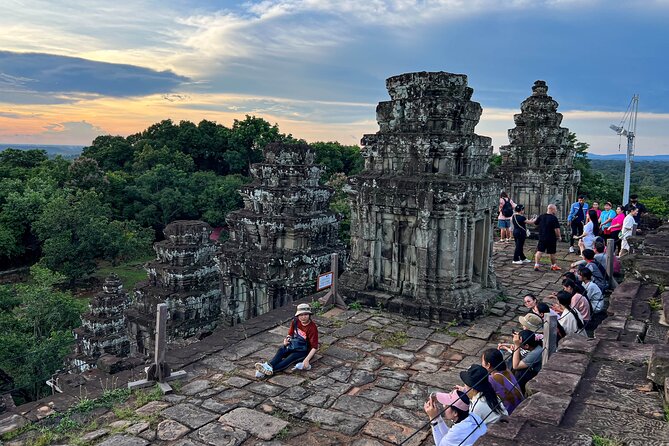
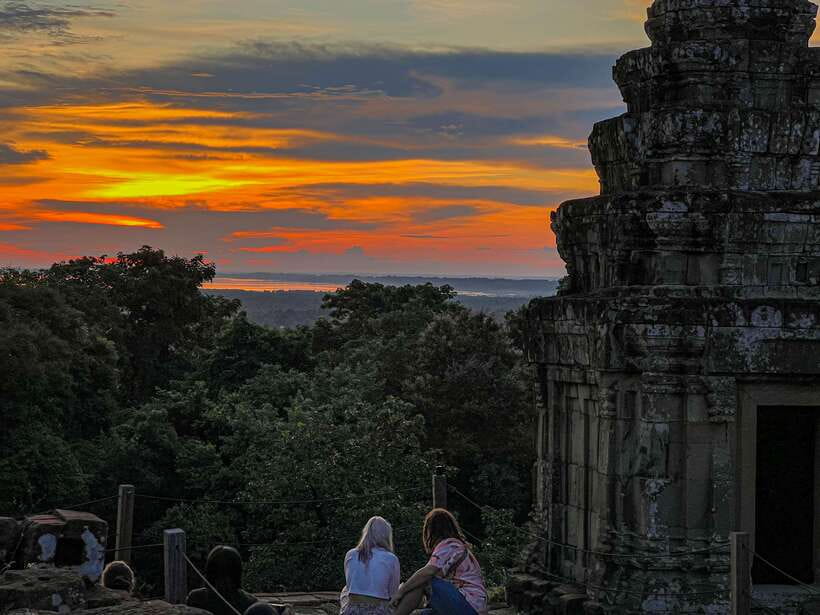
The published schedule also offers sunset from Phnom Bakheng. If you want this option, you need to reach the hill before 4:30 pm. This is not an effortless add-on. You will already have spent much of the day walking, and sunset access can be busy. Still, it gives you a high view over the surrounding area and a different mood from the close-up stonework at Angkor Wat.
Day 2: Banteay Srei, palm sugar, and Beng Mealea
Day 2 starts at 8:00 am in a private air-conditioned vehicle. The drive to Banteay Srei takes you through rural villages, rice fields, and traditional homes. This is one of the tour’s better choices because it shows you something beyond the temple zone.
At Phum Preah Dak, you can see how local people make palm cake and palm sugar. The stop connects the countryside to everyday work and food. It also breaks up the long drive to the temples. Do not expect a polished museum presentation. The appeal is seeing a village activity in its local setting.
Banteay Srei is known as the Ladies’ Temple. It is smaller than Angkor Wat, but its pink sandstone and fine carvings make it one of the most detailed stops on the trip. The scale feels more intimate, and the decoration rewards a slow look. A guide can point out figures, floral designs, and small details that are easy to miss if you simply walk around the outside.
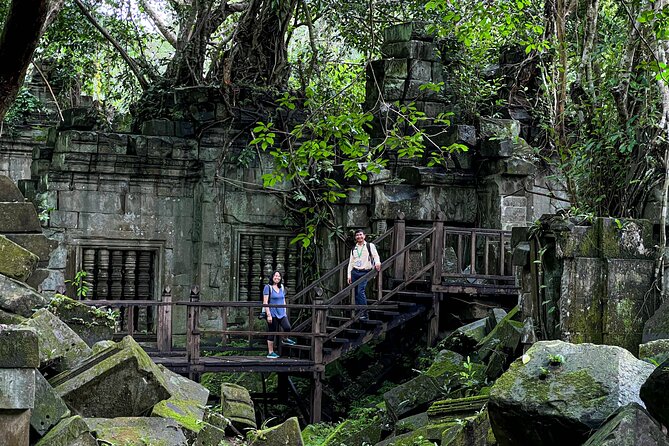
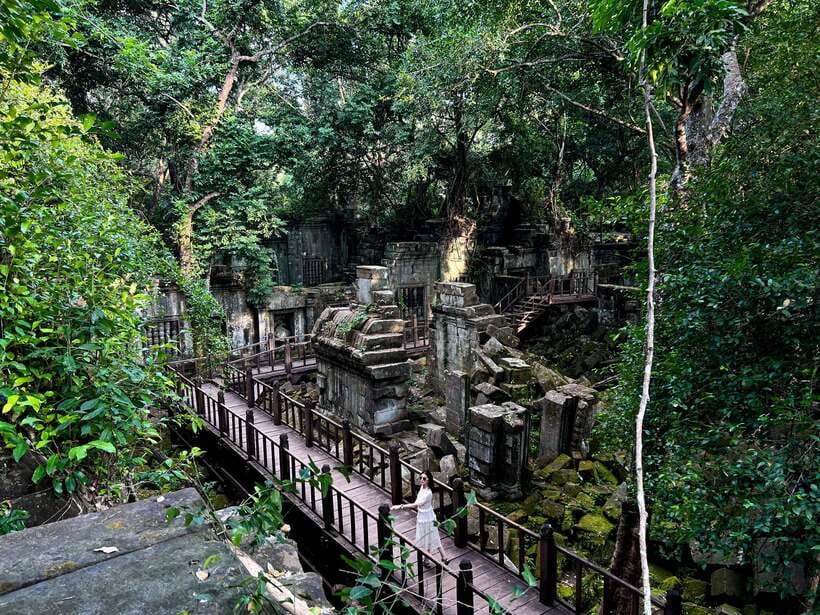
Beng Mealea changes the tone completely. Often described as a lost temple in the rainforest, it is a partly ruined site where blocks, galleries, and trees share the same space. You should be ready for crawling, climbing, and uneven footing. Comfortable shoes are essential here, and this is not the place for a spotless outfit or delicate sandals.
The damage and collapse are part of Beng Mealea’s character. At the better-preserved Angkor temples, you can follow grand plans and clear architectural lines. At Beng Mealea, you work out the structure through broken corridors and fallen stones. That makes the visit more physical and less formal, but it also means you need to watch your footing.
Lunch follows the temple visits at a local restaurant. Cambodian food and soft drinks are at your own cost. You can use this stop to cool down before the afternoon continues.
The Roluos Group comes next, including Bakong and Lolei. Bakong is a substantial temple mountain with a strong central form. Lolei gives you a different look at early brick construction. These temples are useful in the wider story of Angkor because they show that the Khmer capital developed over time rather than appearing all at once.
The final major stop is Kampong Phluk on Tonle Sap. The port is about 21 kilometers from Siem Reap, and you continue by local boat. The boat ticket and private cruise cost $15 per person, not included in the $180 tour price.
Kampong Phluk is a fishing and flooded village. Many homes are built on long poles, allowing high water during the rainy season. The scene changes with water levels, so the exact appearance of the village depends on when you visit. You can see how families organize life around fishing and the lake rather than treating the water as a scenic backdrop.
The route also includes a flooded mangrove forest, home to crab-eating macaques, and a Buddhist monastery built on an artificial island. The tour information gives the village population as about 3,000 people. This part of the day is valuable because it shifts your attention from old kings and temples to present-day livelihoods.
The lake visit is also the day’s main consideration. The water level and weather affect the experience, and the boat is not a substitute for a quiet village walk. Some people will find it the most memorable part of the tour. Others may prefer more temple time. If the lake is a priority, ask about timing and conditions before you go.
Day 3: sunrise, Ta Prohm, and quieter temples
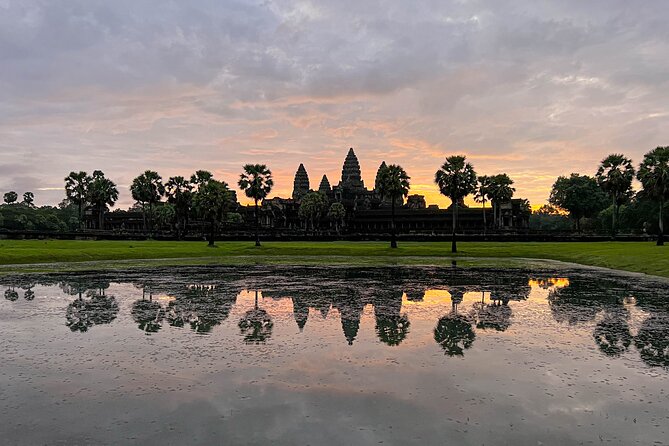
You will need to ask your hotel to prepare a takeaway breakfast. Pickup is at 4:40 am for sunrise at Angkor Wat. That is an early alarm, but it is the right way to see the temple before the heat builds.
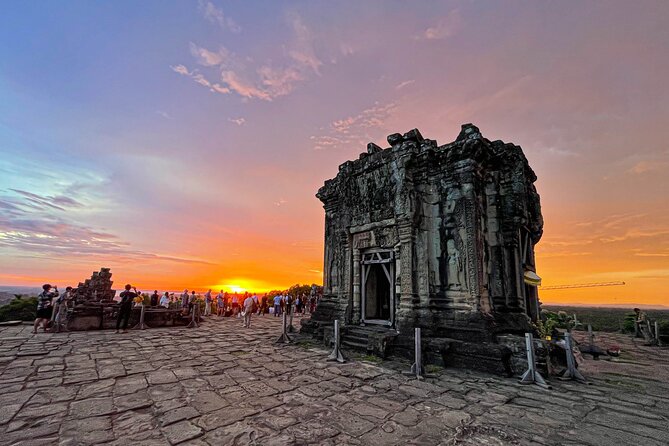
Sunrise crowds can gather near the familiar reflecting pools, so your guide’s timing and choice of position matter. Even without perfect clouds or color, the gradual change from darkness to daylight gives the temple a fresh sense of scale. Bring a light layer if you dislike waiting before dawn, but plan for heat later in the day.
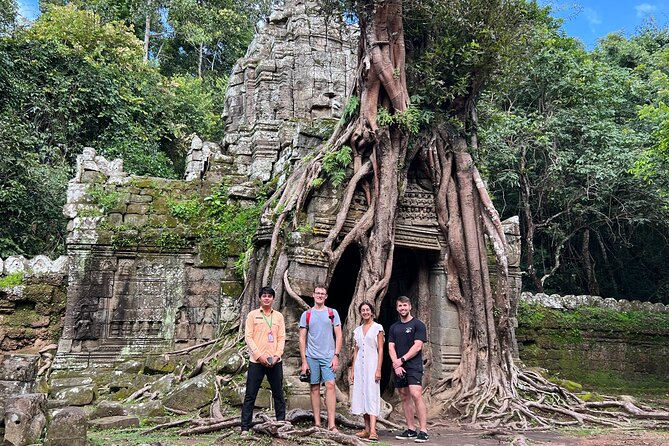
The route then goes to Ta Prohm early, before the busiest part of the morning. Ta Prohm is famous for trees growing through the stonework and for its association with the film Tomb Raider. The movie connection brings attention, but the temple is worth seeing for its courtyards, galleries, roots, and sense of slow return to the forest.
Early access is one of the smartest choices in the schedule. Ta Prohm’s narrow passages can feel crowded later, while an earlier visit gives you more space to notice the carvings and the relationship between roots and masonry. The stones are uneven, so keep both hands free and wear shoes with a firm sole.
Preah Khan follows. It is sometimes called the Father Temple and offers another large temple complex with long passages and varied carved details. Neak Pean is a more unusual stop, built around a central structure associated with water. Ta Som is known for trees at the temple, giving you another chance to see nature pressing into old stone without repeating Ta Prohm exactly.
East Mebon is a tenth-century brick temple. Its material and layout make it a useful contrast with the sandstone monuments. Pre Rup, associated with royal cremation, finishes the temple circuit with a higher, more open structure and a strong final viewpoint over the surrounding area.
Day 3 covers a lot. The order avoids the worst heat at the most popular sites, but you should not expect a slow morning. By the final temples, fatigue is likely. The guide can help you decide how long to spend at each stop, and the car provides welcome shade between visits.
More day trips around the world:
- Tuscany Day Trip from Florence: Siena, San Gimignano, Pisa and Lunch at a Winery
★ 5.0 · 21,634 reviews - From Amsterdam: Zaanse Schans, Volendam & Marken Day Trip
★ 4.4 · 18,501 reviews - From Munich: Neuschwanstein & Linderhof Castle Full-Day Trip
★ 4.6 · 14,646 reviews - Lisbon: Pena Palace, Sintra, Cabo da Roca, & Cascais Daytrip
★ 4.7 · 9,981 reviews
What the $180 price really covers
The base price is $180 per person. It includes private air-conditioned transport, hotel pickup and drop-off, an English-speaking guide, chilled water, and towels.
The required extras bring the known cost to $257 per person:
- Tour price: $180
- Three-day Angkor pass: $62
- Tonle Sap ticket and private boat: $15
Meals, soft drinks, and personal expenses are extra. That total is not cheap compared with hiring a tuk-tuk for selected temples, but the comparison is not quite like for like. This package includes three days, an English-speaking guide, distant sites such as Beng Mealea and Banteay Srei, the Roluos temples, and private transport to Kampong Phluk.
I see the value in the guide and vehicle more than in the number of stops. A good explanation can turn Bayon from a set of smiling faces into a readable monument, while a clean, cool car matters after a walk through Beng Mealea or Ta Prohm. If you already have transport and prefer to visit only the central temples, a shorter arrangement may suit you better.
Free cancellation up to 24 hours before departure and reserve-now, pay-later terms make the booking flexible. You should still confirm the start times and ask about the assigned guide if a particular language style or guide matters to you.
Heat, clothing, and walking demands
Cambodia is hot for much of the year, and this itinerary spends long periods outdoors. Bring sunscreen, insect repellent, a sun hat, comfortable clothes, and plenty of water. The tour supplies chilled water and towels, and umbrellas are provided during the rainy season.
Temple clothing rules are firm. Your shoulders, chest, and knees must be covered. Sleeveless shirts are not allowed, and alcohol and drugs are prohibited. A light, breathable shirt with sleeves and longer trousers or a knee-covering skirt is the safe choice.
Expect steps, rough ground, and uneven stone. Beng Mealea is the most demanding stop because of the crawling and climbing. Ta Prohm, Angkor Thom, and the other temple areas also involve regular walking. Tell your guide if you need a slower pace. The private format makes that conversation easier than it would be on a large group trip.
Who will get the most from this tour
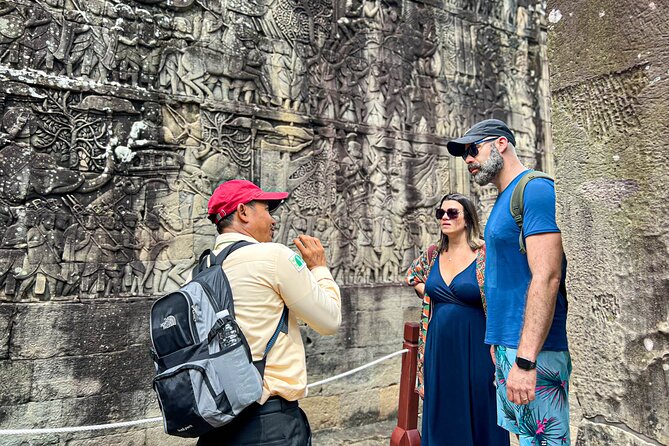
This suits you if you want the major Angkor temples but also want to see how Siem Reap connects to villages, palm sugar production, fishing, and Tonle Sap. It is a strong choice for first-time visitors who would rather have one guide explain the wider story than arrange several separate day trips.
It also works well for couples, families, and solo visitors who value privacy. A solo visitor can get help with photos, as several guides, including Seila and Youk Makara, are noted for finding good angles and taking pictures. A private vehicle is especially useful for families who need short breaks.
You should think twice if you dislike early mornings, hot weather, temple steps, or a packed schedule. The tour covers many places, so it is not designed for someone who wants to spend an entire afternoon sitting quietly at one monument.
Should you book it?
I would book this if you have three days in Siem Reap and want a broad introduction to the area without arranging transport, temple explanations, and the Tonle Sap visit yourself. The strongest reasons are the private setup, the range of sites, the careful drivers, and the chance to meet a guide such as Phanne, Sean, Sam, or Veasna who can make the stonework easier to understand.
Before paying, budget the extra $77 for the Angkor pass and lake boat, plus meals. Ask for the exact daily start times, confirm the guide language, and be honest about how much walking you can handle. If those details fit, this is a well-planned way to see both the monuments and the living countryside around Siem Reap.
FAQ
Is the Angkor pass included in the $180 price?
No. The three-day Angkor pass costs $62 per person and must be purchased separately before entering the archaeological park.
Is the Kampong Phluk boat ride included?
No. The Tonle Sap ticket and private boat cruise cost $15 per person. Food, soft drinks, and personal expenses are also separate.
What time does the tour begin?
Day 1 and Day 2 begin with hotel pickup at 8:00 am. Day 3 begins at 4:40 am for sunrise at Angkor Wat. The sunset option at Phnom Bakheng requires arrival at the hill before 4:30 pm.
Is this a private tour?
Yes. You travel in a private group with an English-speaking guide and a private air-conditioned car or minivan.
What should I wear to the temples?
Wear comfortable clothing that covers your shoulders, chest, and knees. Comfortable shoes are important, especially at Beng Mealea and the larger temple complexes.
What does the tour provide during the day?
The tour includes hotel pickup and drop-off, private air-conditioned transportation, an English-speaking guide, chilled bottles of water, and towels. Umbrellas are provided during the rainy season.
New day trips around the world
- Beijing: Badaling Ancient Great Wall of China Day Trips★ 4.8 · 208 reviews
- Barcelona: Montserrat Monastery and Natural Park Day Trip★ 4.6 · 755 reviews
- Bari: Alberobello and Polignano a Mare Half-Day Trip★ 4.8 · 37 reviews
- Bari: Matera Day Trip★ 4.6 · 65 reviews
- Bangkok: Maeklong Railway & Amphawa Floating Market Day Trip★ 4.3 · 675 reviews
- Barcelona: Walking and Horse Riding Day-Trip in Montserrat★ 4.8 · 40 reviews
- Montserrat & Cava Wineries Day Trip from Barcelona w/ Pickup★ 4.6 · 218 reviews
- Bali: Ubud Waterfall, Village and Pool Club Day Trip★ 4.7 · 45 reviews
3-Day Experiences, compared.
Las Vegas: Grand Canyon, Zion and Monument Valley 3-Day Tour
Read our review →
Marrakech: 3-Day Trip to Fez with Sandboarding & Camel Ride
Read our review →