
Review · CHIANG MAI
Chiang Mai: Chiang Rai Temples, Karen Tribe and Hot Springs
Chiang Rai’s White, Blue, and Red Temples make this more than a quick temple visit. You also stop at Mae Kachan Hot Springs and a Karen long-neck village, so the day moves between art, faith, local customs, and northern Thailand’s open countryside. I like the way the route gives you three very different temples, and I like the guides’ personal touch, with names such as Benz, Ruby, Kwan, Ann, and Dee often attached to thoughtful explanations, photos, snacks, and help with timing.
The drawback is simple: this is a very long day on the road. The journey from Chiang Mai to Chiang Rai can feel tiring and bumpy, especially with roadworks, and some temple stops may feel short. Still, at $35, with transport, guide, insurance, and temple admission included, it offers a lot for the money.
Key points at a glance
- Mae Kachan Hot Springs: A gentle first stop where you can rest, walk around, and soak your feet, though swimming is not allowed.
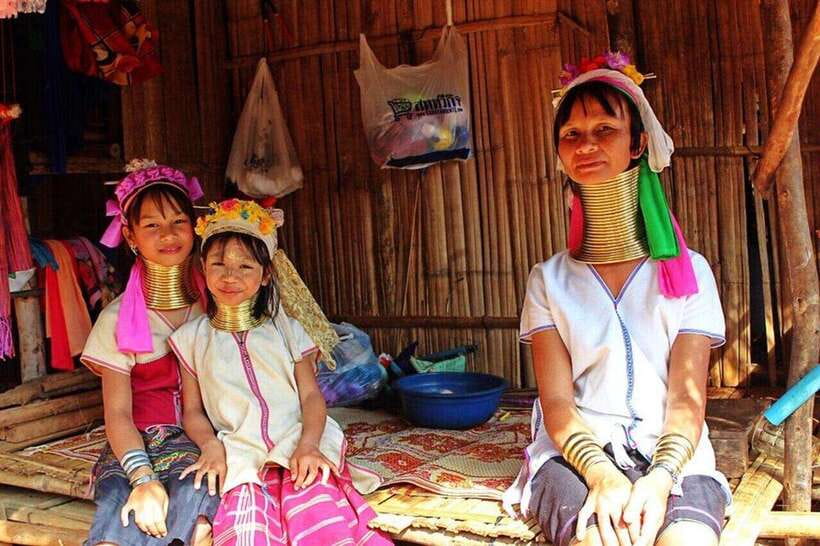
- Karen long-neck village: A chance to see brass neck rings, woven goods, and handmade crafts, with an entrance fee of 300 baht.
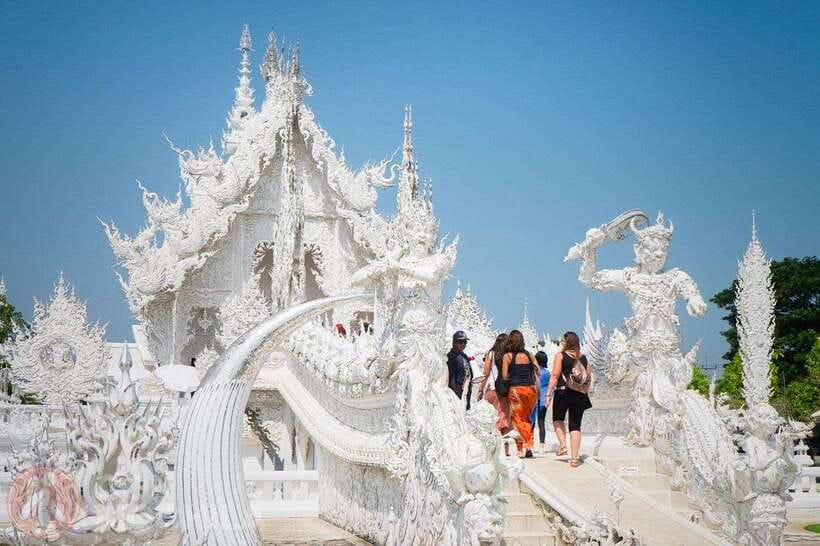
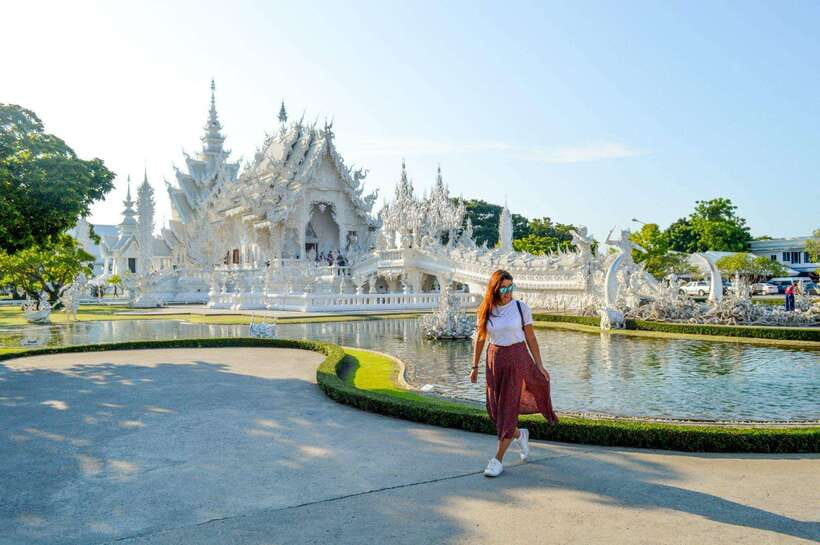
- Wat Rong Khun: Chalermchai Kositpipat’s dazzling White Temple mixes Buddhist ideas with striking modern artwork.
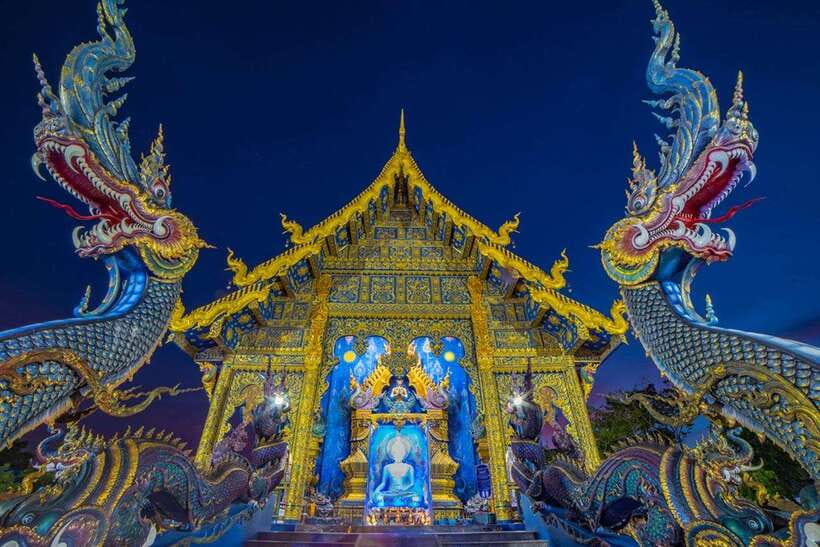
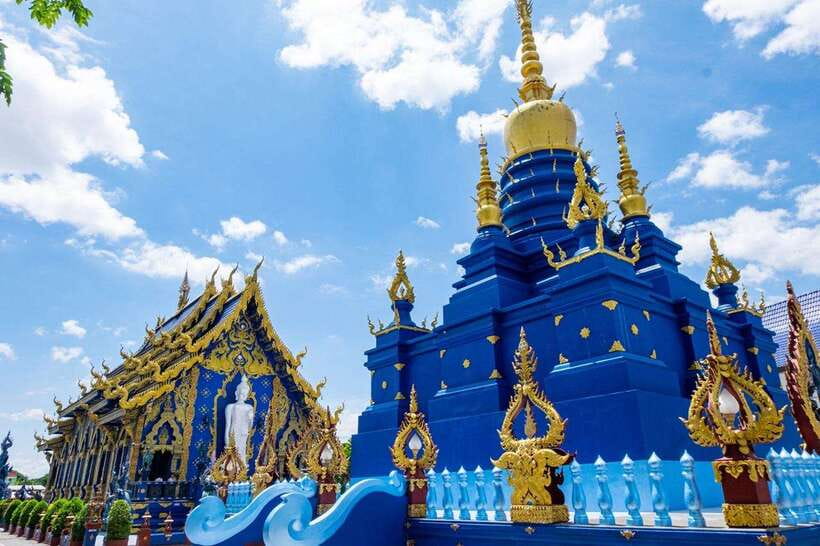
- Wat Rong Suea Ten: The Blue Temple uses dark blue walls, gold trim, dragon figures, and a calm white Buddha to memorable effect.
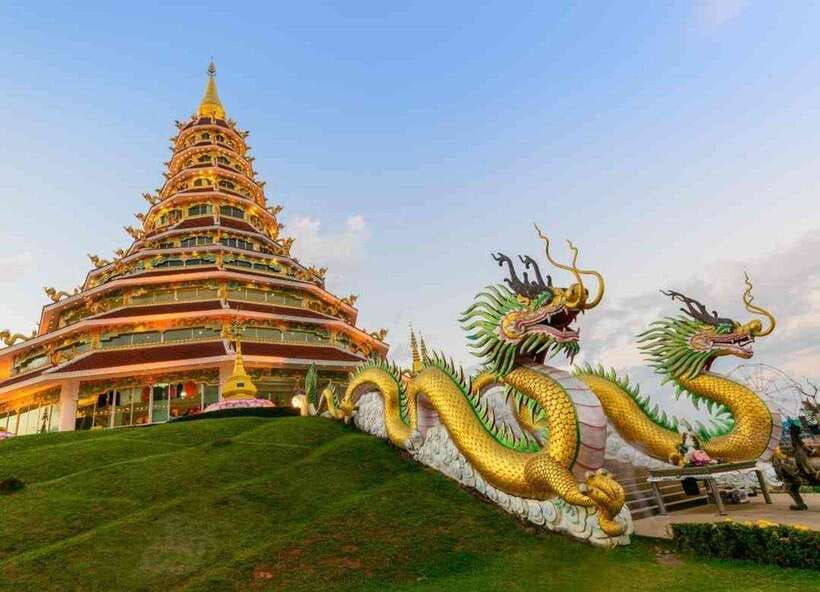
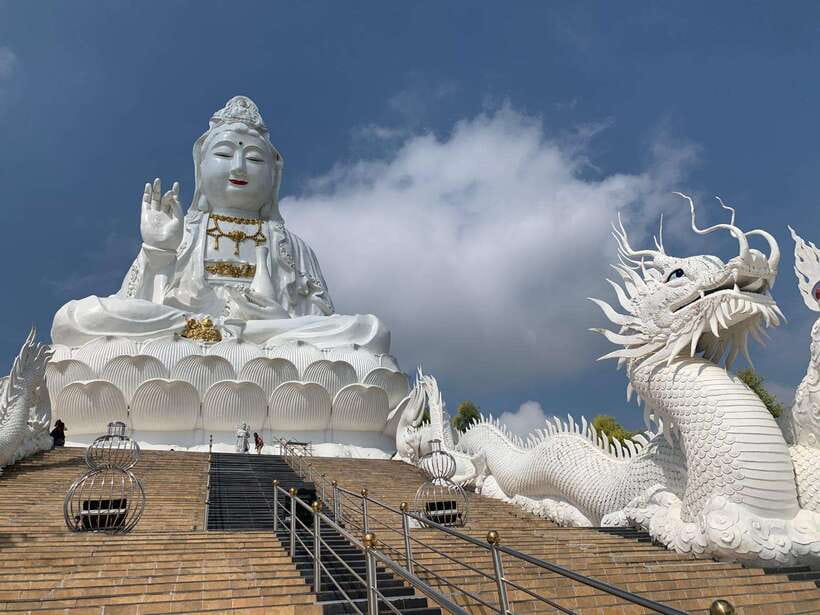
- Huay Pla Kang Temple: See the large Guan Yin statue and climb the nine-tiered pagoda, with an electric vehicle available for some visitors.
- Best value for: Anyone with one free day in Chiang Mai who wants to cover Chiang Rai’s main sights without arranging private transport.
Why this Chiang Rai day trip works
This tour solves a common northern Thailand problem: Chiang Rai is far enough from Chiang Mai that visiting independently takes planning, transport, and a full day anyway. Here, the vehicle, guide, entrance fees for the three temples, and mandatory insurance are bundled together.
The price is especially strong if you want the main sights rather than a slow, private exploration. You pay about $35 per person, then add your own lunch and 300 baht for the long-neck village. Food is not included, but you have chances to buy meals, coffee, snacks, ice cream, and drinks along the way.
I would not choose this outing for a relaxed pace. I would choose it because you can see a lot in one day and return to Chiang Mai without having to work out the route yourself. The tour runs for about 11 hours, and some accounts put the actual day closer to 12 hours depending on traffic and stops.
More Hot Spring Day Trips in Thailand:
- From Thessaloniki: Pozar Thermal Baths and Edessa Day Trip
★ 4.7 · 1,243 reviews - Krakow to Zakopane: Funicular, Tasting and Thermal Baths Day Trip
★ 5.0 · 1,189 reviews - Krakow: Zakopane, Gubałówka, and Thermal Baths Day Trip
★ 4.9 · 317 reviews
The road from Chiang Mai to Mae Kachan
Pickup depends on the option you book, but the main meeting point is Burger King Thapae at Hotel M Chiangmai. Arrive 15 minutes early. Chiang Mai traffic can be slow, and the vehicle will not wait for late arrivals.
The first drive lasts about an hour and a half. This is not wasted time, but it is still driving time, so bring water, a light layer, and something to occupy yourself. Coaches have been described as comfortable, and some vehicles include USB ports. Bring your own charging cable if you plan to use your phone for photos all day.
Guides help make the road time easier. Benz is often praised for his humor, clear explanations, Thai phrases, and care for older people and children. Ruby has been noted for filling the long ride with useful facts and light conversation. Kwan and Ann are also good examples of guides who keep the group informed about meeting times and what to expect at each stop.
The guide officially speaks English only. A QR audio guide is available in 41 languages, but you must bring your own earphones. This matters because explanations may be given on the bus or while walking between stops, and it is easy to miss details in a large group.
Mae Kachan Hot Springs: a useful first pause
Mae Kachan Hot Springs is the first proper stop. Think of it as a break rather than a full spa visit. You can walk around the warm mineral springs, look at the natural setting, and soak your feet, but swimming is not allowed.
This is a pleasant way to begin a long day. You can stretch your legs, buy coffee or Thai tea, and find small shops selling snacks and other goods. Some people also enjoy trying local food here, including roti. The hot springs are not the main reason to book the tour, but they help break up the first drive.
Keep your expectations in check. This is a commercial stop with shops, not a quiet forest pool. If you want a long soak, you may find the visit too brief. If you simply need a restroom, drink, coffee, and a few minutes outside the vehicle, it does the job well.
The Karen long-neck village and a difficult tradition
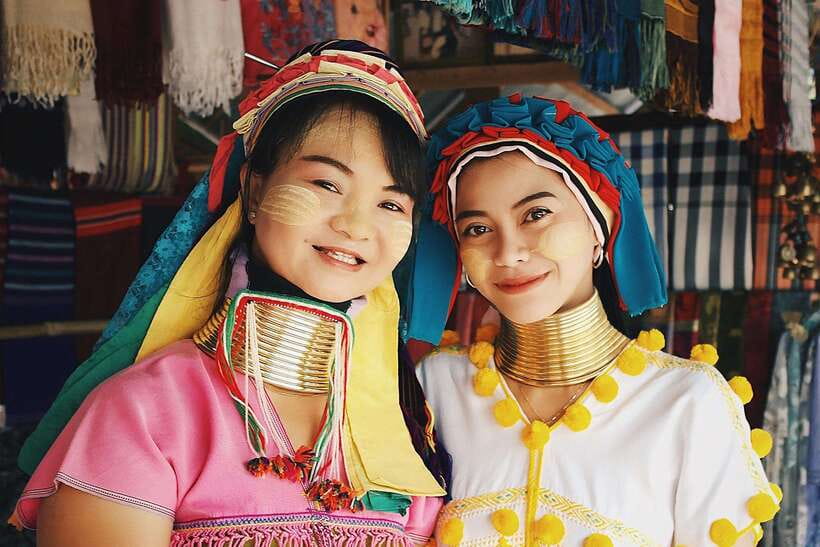
After about 15 minutes on the road, you reach the Mae Kachan hill tribe and long-neck village. The women of the Kayan community are associated with brass coils worn around the neck. The practice is part of a long-standing beauty tradition, and the village also displays woven goods, scarves, and other handmade crafts.
You pay a separate entrance fee of 300 baht. Bring small bills, since some local sellers may not have change for 500 or 1,000 baht notes. Buying a scarf or another handmade item can support the people working there, but take your time and buy only what you genuinely want.
I think this stop deserves a little thought before you book. It can be interesting and educational, but it can also feel uncomfortable if presented only as a photo opportunity. The tradition of neck rings, especially among young girls, raises real questions about choice, tourism, and how communities are displayed for visitors. Go respectfully. Ask permission before taking close-up photos, listen to the guide, and treat the people you meet as individuals rather than as attractions.
The stop is relatively short compared with the time spent driving, but it adds a human element that the temples cannot provide. You see crafts, daily customs, and a community connected to northern Thailand’s ethnic mix. The quality of explanation may depend on your guide and on how much time the group has.
Same base, another direction out:
- From Bangkok: Ayutthaya & Ayothaya Floating Market Day Trip
★ 4.7 · 6,084 reviews - Krabi: Premium 4-Island Day Trip by Longtail Boat with Lunch
★ 4.5 · 4,812 reviews - Krabi: Hong Islands Day Trip by Speedboat with Lunch
★ 4.5 · 3,952 reviews - Similan Islands Early-Bird Tour From Phuket and Khao Lak!
★ 4.7 · 3,648 reviews
Wat Rong Khun, the White Temple
The long drive to Chiang Rai continues for about two hours and 15 minutes before the tour reaches Wat Rong Khun, better known as the White Temple. This is the visual high point for many people.
Artist Chalermchai Kositpipat created the temple as a modern work of Buddhist art. The white surface suggests purity, while mirrored glass catches the sun and gives the buildings a sharp, almost glittering appearance. The design draws from traditional Buddhist forms but includes unexpected modern images, so do not expect an old temple in the usual sense.
Take time to look closely rather than rushing from one photograph to the next. The bridge, carved details, white figures, and reflective surfaces create different effects as you move around the grounds. Your guide can help explain the Buddhist ideas behind the design and point out details you might otherwise miss.
There is a lunch stop in Chiang Rai after the White Temple. Lunch is not included, so budget separately. Guides can suggest places to eat, and vegetarian options have been arranged or recommended during some outings. Allow enough time to eat without rushing, since the rest of the day still has two major temples.
The White Temple can be crowded and bright. Wear sunglasses, apply sunscreen, and dress modestly. Temples require respectful clothing, and comfortable shoes matter because you will be walking and standing throughout the day.
Wat Rong Suea Ten, Chiang Rai’s Blue Temple
A drive of about 30 minutes brings you to Wat Rong Suea Ten, the Blue Temple. Its deep blue interior and gold decoration create a very different mood from the White Temple’s bright, reflective surfaces.
Dragon statues guard the entrance, and the building combines traditional Buddhist shapes with newer artistic choices. Inside, a large pale Buddha image gives the room a calmer feel than the dramatic exterior suggests. I like this stop because it is visually strong without needing a long explanation to appreciate it, yet the guide’s comments add useful context.
You may have enough time to look around, take photographs, and sit quietly for a few minutes. The grounds can be busy, and the schedule depends on traffic and the size of the group. Some people also stop for blue coconut ice cream nearby, a small local treat that can make the visit more memorable.
The Blue Temple is a good reminder that Chiang Rai’s religious art is not limited to old Lanna buildings. Contemporary artists are still using Buddhist themes, color, symbols, and architecture in new ways. If you enjoy photography, this may be your favorite stop. If you prefer historic ruins, you may find the modern style less compelling.
Huay Pla Kang Temple and the nine-tiered pagoda
The final major stop is Huay Pla Kang Temple, reached after about 15 minutes on the road. The site is known for its large Guan Yin figure, often called the Goddess of Mercy, and its striking nine-tiered pagoda.
The pagoda gives you a chance to climb and see carved figures and decorations at close range. At the top, you can look out across the surrounding area. The large Guan Yin statue gives the complex a different scale from the White and Blue Temples, and the grounds feel more spread out.
This stop may require more physical effort. There are stairs, walking, and often a limited amount of time. One guide arranged an electric vehicle for a guest who had difficulty getting around, but the tour is officially not suitable for people with mobility impairments. If stairs or uneven walking surfaces are a concern, ask the operator about your needs before booking rather than counting on assistance.
Some people grab a quick snack or inexpensive pad Thai near the temple. Do not count on a leisurely meal here. The stop is best used for the pagoda, the Guan Yin statue, photographs, and a little quiet time if the schedule allows.
The return to Chiang Mai
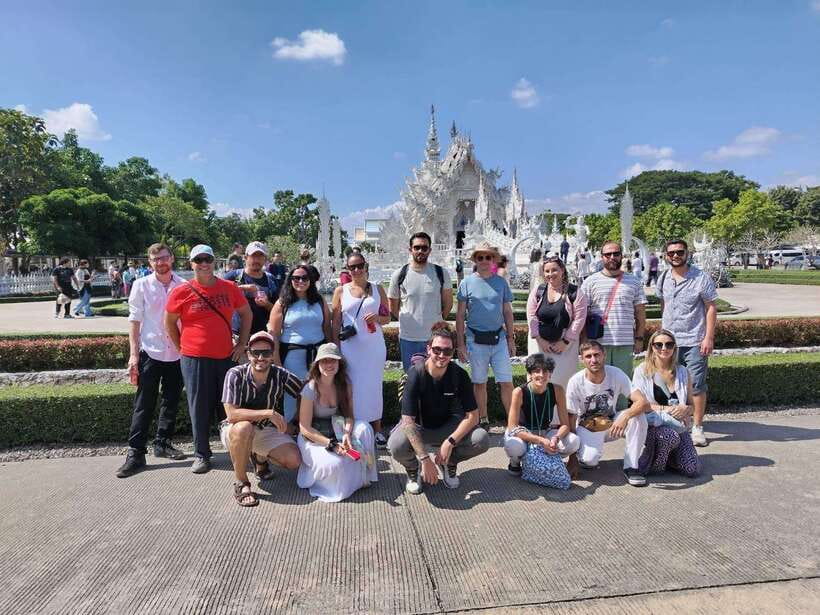
After Huay Pla Kang, the drive back can take about three hours. This is when the day catches up with you. Guides may keep the mood light with stories, songs, Thai language tips, or local snacks, but you should expect many people to rest.
The tour ends at three listed drop-off points: Hotel M Chiang Mai, Burger King Thapae, and Chiang Mai. Confirm your chosen option at booking. Some arrangements may allow a different drop-off, but that should be agreed with the operator in advance.
Do not schedule a flight on the same day. Traffic, roadworks, group timing, and the long return drive make that a poor risk. If you need to be at the airport, stay in Chiang Mai that night and treat this as a full-day outing with no important appointment afterward.
What to bring and how to make the day easier
A small day bag is enough. Large luggage is not allowed, so leave suitcases at your accommodation.
Bring:
- Passport or ID card
- Comfortable walking shoes
- Sunglasses and a sun hat
- Sunscreen
- Comfortable, modest clothing
- Insect repellent
- Your own earphones
- A phone charging cable
- Small Thai baht notes
The bus may hold your belongings during stops, but keep passports, money, phones, and medication with you. Water is sometimes provided, and there are restroom and snack breaks, but you should still carry your own bottle if you need regular drinks.
Use the toilet whenever the group stops. With three hours of driving back to Chiang Mai, you will be glad you did. Also keep track of the guide’s meeting time. The group will not wait for late arrivals, and missing the vehicle does not bring a refund or a new departure.
Guide quality can shape the whole day
The route is fixed, but the feel of the day depends heavily on the guide. A good guide makes the driving time useful and helps you understand why the temples look so different.
Benz is repeatedly singled out for humor, clear background information, photographs, and attention to the group’s needs. Ruby is known for keeping people entertained during the long ride and giving practical advice at each stop. Kwan has helped with food choices, explained temple details, and kept departure times clear. Ann and Dee are also described as warm, energetic, and helpful.
The official guide is English-speaking, so the live commentary may not suit everyone. The audio guide helps, but it is not the same as asking questions face to face. Bring earphones that work with your phone, and remember that the QR system is an extra tool rather than a replacement for the guide.
Who should book this experience?
I would book this if I had one free day in Chiang Mai and wanted to see the main Chiang Rai sights without renting a car or arranging several transfers. It is especially useful for first-time visitors, photographers, temple fans, and anyone who enjoys a full schedule.
I would think twice if I dislike long bus rides, need a slow pace, have mobility limitations, or want a quiet and deeply personal visit to each temple. The Karen village also deserves honest reflection before you go. It can be meaningful, but the setting may not suit everyone.
At $35, the value is strong. You get round-trip transport, a guide, three temple entrance fees, insurance, and a route that would be awkward to organize alone. Lunch and the 300 baht village admission cost extra, but the total remains reasonable for such a full day.
Should you book it?
Book this Chiang Rai day trip if your priority is seeing a lot in one outing. The White Temple, Blue Temple, and Huay Pla Kang Temple each offer a different look at northern Thai religious art, while the hot springs and hill tribe village add variety.
Skip it if you want a relaxed schedule or have only limited energy. The honest bargain here is not comfort or leisure. It is access, variety, and the chance to cover Chiang Rai’s major sights in one long, well-supported day.
FAQ
How long is the Chiang Rai tour from Chiang Mai?
The activity is scheduled for about 11 hours, or 810 minutes. Traffic and the pace of the group can make the day feel closer to 12 hours.
Where is the main meeting point?
The main meeting point is Burger King Thapae at Hotel M Chiangmai. Arrive 15 minutes before departure, and allow extra time for Chiang Mai traffic.
Is hotel pickup available?
Pickup is optional and depends on the selected option. If you use hotel pickup, wait in the hotel lobby 10 minutes before the scheduled pickup time.
Is lunch included?
No. Lunch is not included in the price. You will have a lunch stop in Chiang Rai and can buy food there.
Is the long-neck village entrance fee included?
No. The entrance fee is 300 baht per person and is paid separately.
Can I swim at Mae Kachan Hot Springs?
No. Swimming is not allowed at the hot springs, but you can walk around the site and soak your feet.
What language does the guide speak?
The official guide speaks English only. An audio guide is available through a QR code in 41 languages, and you must bring your own earphones.
Are temple entrance fees included?
Yes. Admission to the White Temple, Blue Temple, and Huay Pla Kang Temple is included.
Is the tour suitable for someone with mobility impairments?
The activity is not recommended for people with mobility impairments. The route includes walking and stairs, especially at Huay Pla Kang Temple.
New day trips around Thailand
- Bangkok: Maeklong Railway & Amphawa Floating Market Day Trip★ 4.3 · 675 reviews
- Phuket: Day Trip To Banana Beach Koh Hey By Speedboat★ 4.5 · 48 reviews
- From Bangkok: Ayutthaya Full-Day Trip with Driver★ 4.7 · 887 reviews
- From Phuket: Day Trip to Phi Phi with Private Longtail Tour★ 4.6 · 367 reviews
- Private Tour: Floating Markets of Damnoen Saduak Cruise Day Trip from Bangkok★ 3.5 · 199 reviews
- Ko Tao: Tao-Nangyuan Snorkeling Day Trip with Meals & Sunset★ 4.6 · 711 reviews
- Koh Kood or Koh Rang: Snorkeling Day Trip with Buffet Lunch★ 4.7 · 290 reviews
- Bangkok: Ayutthaya & Lopburi Monkey Temple Private Day Trip★ 4.7 · 196 reviews
Day Trips from Chiang Mai, compared.
From Chiang Mai: White Temple & Golden Triangle Day Trip
Read our review →
From Chiang Mai: Chiang Rai’s Temples Exploration Day Trip
Read our review →
Chiang Mai: Doi Inthanon Park with Kew Mae Pan Hike Day Trip
Read our review →This day trip also appears in