
Review · ASWAN
Best Private Day Trip To Abu Simbel From Aswan
Abu Simbel is one of Egypt’s great payoffs: four huge statues of Ramesses II greet you across the desert, while the smaller Temple of Nefertari adds a more personal touch. This private day trip makes the long journey from Aswan easier with hotel pickup, an air-conditioned car, lunch, and a guide who can explain the site before you arrive.
I like the private vehicle, which lets you stop for comfort breaks and adjust the pace. I also like the way guides such as Samir, Zak, Mostafa, and Mohammed have used photos, maps, and stories in the car, saving you from standing in the hot sun for the whole introduction.
The drawback is simple: Abu Simbel is far from Aswan. The drive takes about three hours each way, and the advertised nine-hour day can feel long, especially in summer. Communication about pickup points has also been uneven, so you should confirm the exact meeting place before bed.
Key points to know before booking
- Three hours each way: The temples are worth the trip, but this is a road journey, not a quick outing.
- Two major temples: You visit the Temple of Ramesses II and the Temple of Nefertari, also linked with the goddess Hathor.
- Private from Aswan: You get your own air-conditioned vehicle, driver, and local guide rather than joining a large bus group.
- History before the heat: Guides often explain the carvings and layout in the car, then let you explore the temples at your own pace.
- Lunch is included: A local restaurant meal is part of the price, though food quality can vary.
- Good value at $145: Entry fees, transport, guide, lunch, water, and return service are included, with tipping extra.
Why Abu Simbel is worth the long road from Aswan
I would not book this trip just to tick off another temple. Abu Simbel earns the journey because the setting and scale feel different from the monuments closer to Aswan.
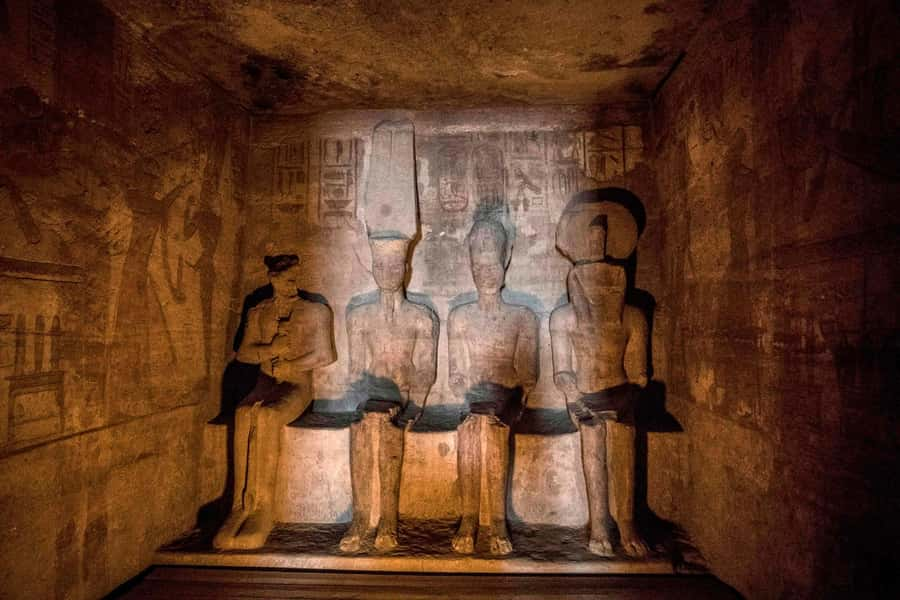
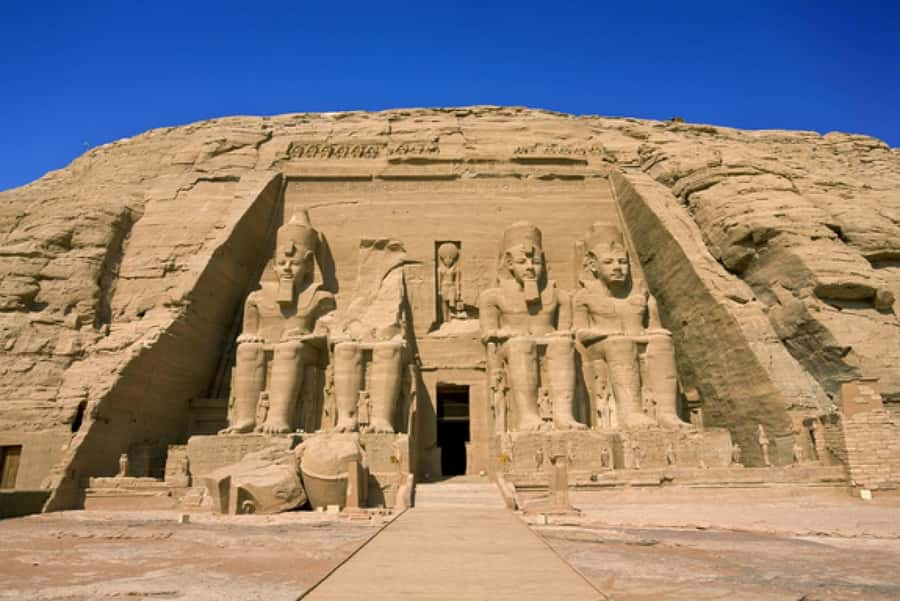
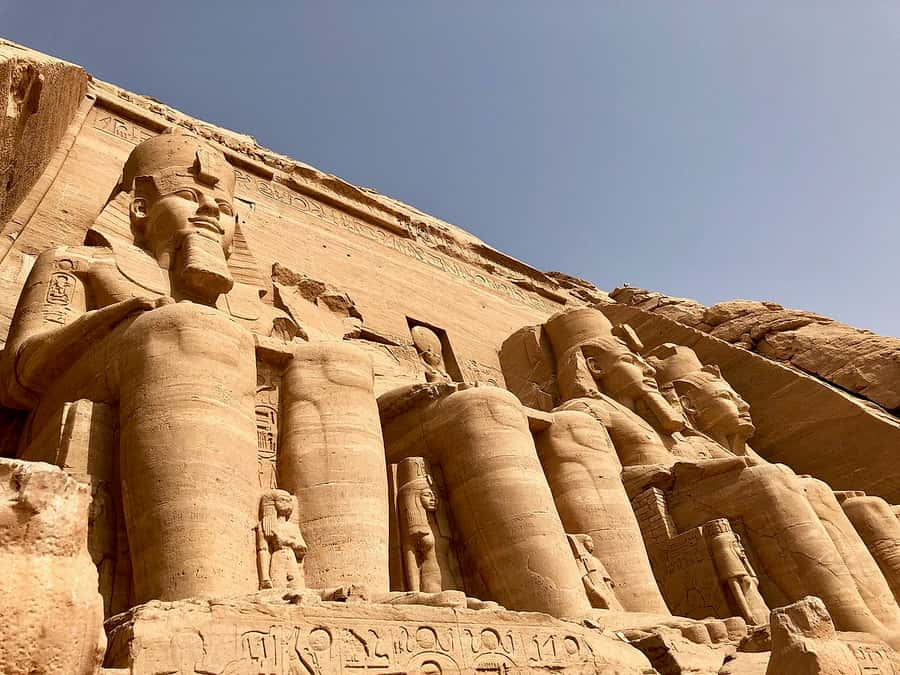
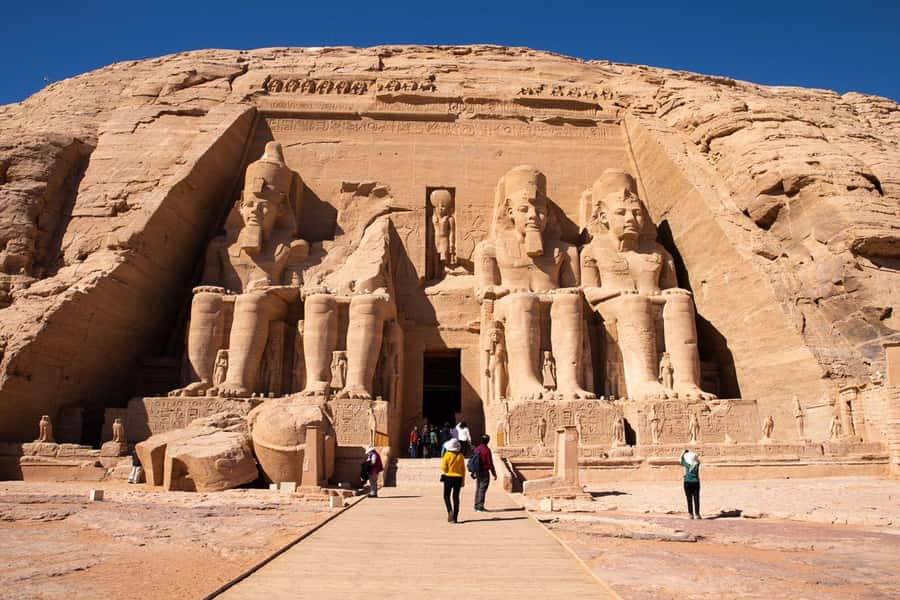
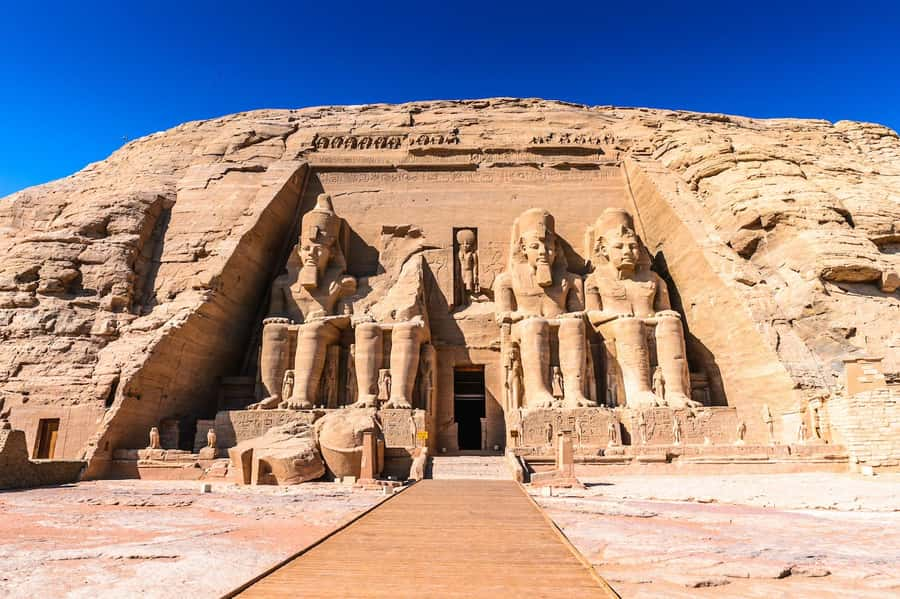
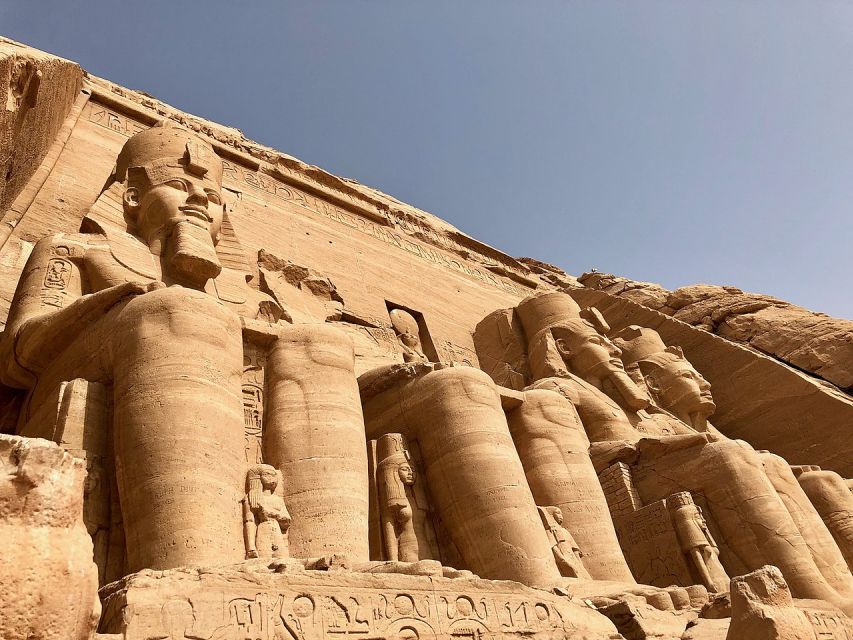
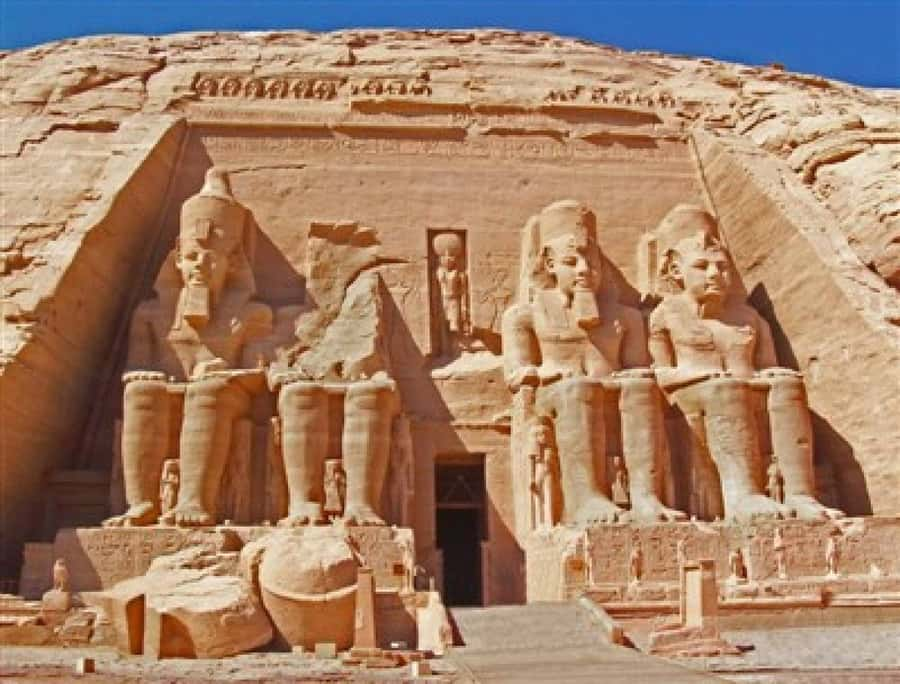
The main temple was built by Ramesses II and dedicated to Ptah, Re-Her-Akhtey, Amun-Re, and Ramesses himself. Its four seated statues are the first thing you see, and they give the entrance a powerful sense of ceremony. Inside, carved scenes connect the king with the gods and present Ramesses as both ruler and divine figure.
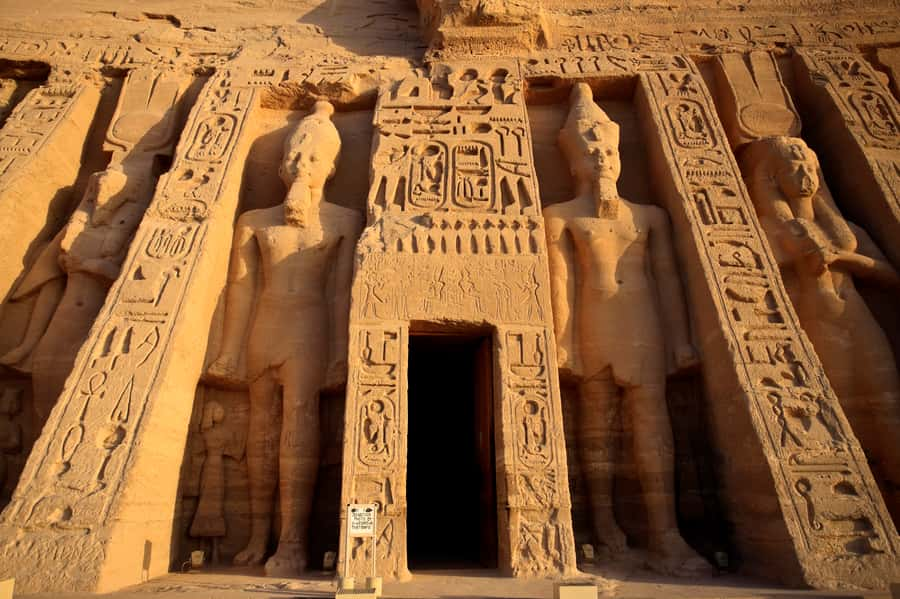
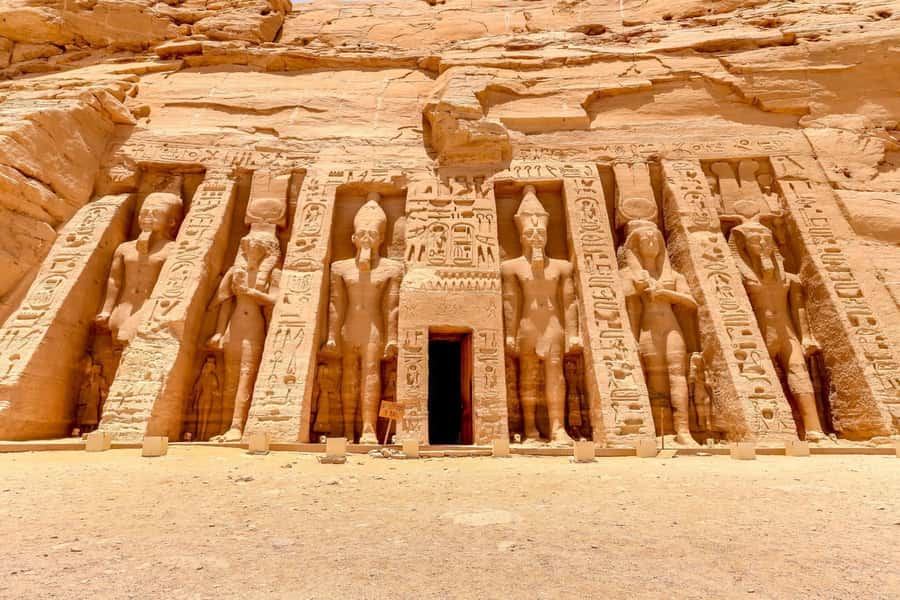
The nearby Temple of Nefertari is smaller, but it is not an afterthought. It was dedicated to Queen Nefertari and the goddess Hathor. The pairing of the two temples links Ramesses, Nefertari, Hathor, and the sun god in one carefully planned royal statement.
The temples were moved with help from the Egyptian government, UNESCO, and international partners to protect them from the rising waters of Lake Nasser. That rescue is a major part of the site’s modern story. Your guide can explain why the temples sit where they do now and how the relocation helped preserve them.
More Private Day Trips in Egypt
- Luxor: Abu Simbel Temple Private Guided Day Trip with Lunch
★ 4.6 · 546 reviews - Day-Trip to Alexandria from Cairo by Private Car
★ 4.5 · 480 reviews - Private Tour: Day Trip to the Pyramids and Sphinx from Cairo
★ 5.0 · 202 reviews
The three-hour drive from Aswan
The day is built around a long, straight road south. The advertised schedule runs roughly from 8:00 am to 5:00 pm, but actual pickup times can vary. Some past arrangements began shortly after 6:00 am, so confirm your pickup time rather than relying only on the general schedule.
A private car matters here. You are not tied to a large coach, and the driver can make a planned stop for the bathroom or a snack. Several drivers have been praised for smooth driving, including Tarek, Isham, Mohammed Walid, and Ahmed. Cars have been described as modern, clean, comfortable, and well air-conditioned.
That said, the road time remains the road time. Even a good driver cannot make three hours feel like thirty minutes. Bring your passport, water, sunglasses, and something to occupy you between explanations. The tour includes a bottle of water, but carrying an extra bottle is sensible in the heat.
The desert scenery is part of the experience, though it is spare rather than varied. One past trip included a stop for photographs in the Sahara. Do not assume that stop is part of every departure, but you can ask your driver if time and the day’s plan allow it.
Learning the story before you reach the gate
One of the smartest features of this experience is the use of the drive for history. Guides have explained the temples with photographs, hand-drawn maps, and picture cards before arrival. Samir, in particular, has been praised for spending more than an hour explaining the layout and stories during the drive.
This approach solves a real problem. Abu Simbel is hot, and the open area in front of the temples offers little shade. A long explanation at the entrance can leave you tired before you even see the interiors. Hearing the main story in the air-conditioned car means you arrive with a plan.
Guides commonly focus on Ramesses II, the temple gods, the meaning of hieroglyphs, Nefertari, and the relationship between the two buildings. You can also ask about Aswan and local life during the journey. Drivers have often added useful comments about the area rather than simply sitting silently behind the wheel.
There is one practical limitation. On some visits, guides cannot give a full explanation inside the temples. That means you may hear the main briefing beside the site or in the car, then walk through the rooms on your own. If you want detailed explanations beside every carving, tell your guide clearly and ask what is permitted that day.
Ramesses II’s temple and the first big view
The first temple is usually the main event, and it deserves your best attention. The four seated figures of Ramesses II dominate the facade. Even if you have already seen photographs, the scale is difficult to judge until you are standing in front of it.
Your guide will likely explain the figures, the entrance, the temple’s religious purpose, and the king’s use of art to project power. You should then allow yourself a quiet moment to look without trying to photograph everything. The facade is broad, the details are dense, and the sun can make the stone difficult to study quickly.
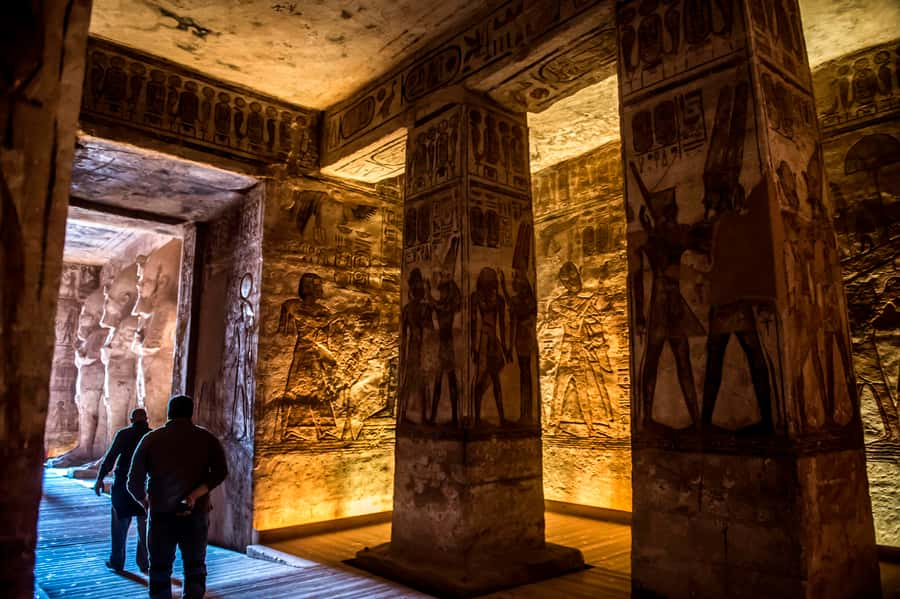
Inside, you can expect columns, royal scenes, religious images, and hieroglyphic inscriptions. The guide’s earlier explanation helps you know what to look for. Ask about the gods shown, the role of Ramesses, and the meaning of the scenes rather than treating the interior as a corridor of pictures.
The time given at the site is often around three hours for both temples, though the formal itinerary breaks the guided visits into about two hours at Abu Simbel and one hour at Nefertari. In practice, the exact balance depends on your guide, the heat, crowd levels, and how many questions you ask.
Same base, another direction out:
- Luxor Day Trip from Hurghada Small Group & Tutankhamun Tomb
★ 4.8 · 5,366 reviews - From Aswan: Abu Simbel Temple Day Trip with Hotel Pickup
★ 4.4 · 2,807 reviews - Hurghada: Full-Day Trip to Cairo by Plane
★ 4.5 · 2,415 reviews - Hurghada: Cairo Pyramids, Sphinx & Egyptian Museum Day Trip
★ 4.7 · 2,271 reviews
The Temple of Nefertari and the Hathor connection
The Temple of Nefertari is close to the larger temple, so you do not need another long ride or a separate excursion. Its scale is more modest, but the facade remains striking, with royal figures and a strong connection to Hathor.
I like this stop because it broadens the story. The larger temple can feel like a monument to military power and royal authority. Nefertari’s temple brings attention to the queen and to Hathor, a goddess associated with the sun god in the explanation provided for the site.
Do not rush it simply because it is smaller. Look at the balance between the king and queen, the carved figures, and the way the two temples were designed as a pair. This is also where a good guide can make a real difference, especially if you want help reading the hieroglyphs and understanding who is shown.
If the heat is severe, you may prefer a shorter outdoor explanation and more time inside the temple rooms. Tell your guide what you want. Private touring is valuable here because the day does not have to follow a fixed group pace.
Lunch at a local restaurant
Lunch is included, usually at a local restaurant after the temple visit or on the return journey. Meals described from the trip have included grilled chicken, rice, salad, tahini, and fresh fish. Several people have especially liked the fish and the local setting.
Food quality is not perfectly consistent. One meal was described as friendly and pleasant but had overcooked chicken and fish. You should also expect drinks beyond the included arrangements to cost extra, as one visitor paid only for beverages after the meal.
The lunch stop gives you a proper break after the site. It is not just a box eaten in the car, and that matters on a full-day road trip. If you have dietary needs, mention them during booking or to the guide early in the day. The supplied information does not promise a particular menu, so keep your expectations practical.
Comfort, safety, and the people who make the day
The strongest part of this trip is often the human service. Drivers are frequently described as polite, careful, and smooth. That is not a minor detail when you are spending six hours or more in a car.
Guides vary by departure, but several names appear repeatedly in the experience: Samir, Zak, Mostafa, Mohammed, Magdy, Mustapha, and Daria. Samir has been especially praised for detailed explanations, hand-drawn maps, checking water, and taking photographs. Zak has been described as friendly and good at explaining the temples without rushing. Mostafa has been praised for conversation, humor, and attention to comfort.
You should not assume you will receive a particular guide unless the company confirms it. Still, these examples show the level of service you can request: a guide who explains the temple before arrival, answers questions, gives you time for photos, and adjusts the pace to the heat.
The private format also helps if you are arriving by boat. Pickup from a ship can be awkward because boats do not always use the same berth. Confirm the exact pickup point and ask the driver or company to identify the vehicle and wait location clearly.
Value at $145 per person
At $145 per person, this is not the cheapest way to reach Abu Simbel. Its value comes from what is bundled into the price: return pickup from your Aswan hotel, a private air-conditioned vehicle, a local guide, entry fees, lunch, and bottled water.
A private car is particularly useful for this distance. You avoid being packed into a large group, and you can ask for a stop or adjust the pace once you reach the temples. For two people, the price may feel high compared with a basic shared transfer, but you are paying for comfort, flexibility, a guide, and less waiting around.
There are no stated hidden costs, but tipping is not included. Drinks at lunch may also be extra. If you want a spice-shop stop or another small detour, ask first. One past party requested a spice shop in Aswan and received help with it, but optional stops should not be treated as guaranteed parts of the day.
The tour offers free cancellation up to 24 hours before departure and a reserve-now, pay-later option. Booking at least 48 hours ahead is required, and you must provide full names, nationalities, passport numbers, and a passport photo during booking.
Heat, timing, and small problems to plan around
The biggest challenge is the combination of distance and weather. Summer temperatures can reach around 40 degrees Celsius, and one party chose shorter outdoor explanations because of the heat. Wear light clothing, use sun protection, and keep your water close.
The toilets and rest stops can vary. One stop was described as unpleasant and full of flies, while other trips had proper breaks. This is a road excursion through a remote area, so do not expect every stop to match hotel standards.
Communication is the other weak point. The drivers and guides are often praised, but the company’s pickup messages have sometimes been unclear. The transport has also failed to announce itself clearly in a hotel lobby on one occasion, and one party did not receive the included water.
You can reduce the risk by confirming the evening before:
- Exact pickup time
- Hotel lobby or ship berth
- Driver’s name and phone number
- Number of passengers
- Expected lunch arrangements
- Whether bottled water is in the car
Who should book this private Abu Simbel trip?
I would choose this tour if you want Abu Simbel without arranging a separate car, guide, tickets, and meal. It suits couples, families, and small private groups that value comfort and the ability to move at their own pace.
It is also a good fit if you want history explained before reaching the temples. Guides such as Samir and Zak have shown how useful that can be, especially when the heat limits the time you want to spend outside.
I would think twice if you dislike long car rides or want several hours at the archaeological site. The day gives you a solid visit, but the journey takes up much of the schedule. You should also confirm the pickup details carefully if you are staying on a cruise boat.
Should you book it?
Book this trip if Abu Simbel is a priority and you want a private, well-supported day from Aswan. The temples are exceptional, and the combination of private transport, included entry, lunch, and an on-site guide offers good value for $145 per person.
Skip it only if the three-hour drive each way sounds worse than missing the temples. For most people who have made Abu Simbel a goal, the long road is the price of admission. Confirm the pickup, prepare for heat, and ask your guide to explain the carvings before you enter.
FAQ
How long is the Abu Simbel day trip from Aswan?
The advertised duration is about nine hours, generally running from 8:00 am to 5:00 pm. The drive takes roughly three hours each way, with time at both temples and lunch.
What temples are included?
You visit the great Temple of Ramesses II and the Temple of Nefertari, also associated with the goddess Hathor.
Is the tour private?
Yes. The tour uses a private group format with private transfers in an air-conditioned vehicle and a local guide at Abu Simbel.
What is included in the price?
The $145 price includes hotel pickup and return in Aswan, private transfers, entry fees, a local guide, lunch at a local restaurant, and a bottle of water.
Is tipping included?
No. Tipping is not included in the tour price.
Which languages are available?
Live guiding is available in English, Spanish, German, and Arabic. One past departure also had an Italian-speaking guide, but Italian is not listed as a standard language.
What should I bring?
Bring your passport. Sun protection, comfortable clothing, and extra water are also sensible for the long drive and hot temple site.
How far in advance must I book?
The tour requires booking at least 48 hours in advance. You must provide full names, nationalities, passport numbers, and a passport photo during the booking process.
Can I cancel the tour?
You can cancel up to 24 hours in advance for a full refund. A reserve-now, pay-later option is also available.
New day trips around Egypt
- Aswan: Luxor Day Trip with Sunrise Hot Air Balloon & Felucca★ 4.5 · 22 reviews
- Private Tour: Day Trip to the Pyramids and Sphinx from Cairo★ 5.0 · 202 reviews
- Hurghada: Valley of Kings Hatshepsut & Karnak Luxor Day Trip★ 4.5 · 375 reviews
- From Cairo: Small-Group Day Trip to Luxor by Plane★ 4.9 · 76 reviews
- 1-day trip to Cairo with flight from Hurghada / Makadi Bay / Soma Bay / El Gouna★ 5.0 · 1,193 reviews
- Day-Trip to Alexandria from Cairo by Private Car★ 4.5 · 480 reviews
- Day Trip to Nubian Village with Camel Tour from Aswan★ 5.0 · 80 reviews
- Alexandria Day Trip From Cairo★ 4.5 · 991 reviews
Day Trips from Aswan, compared.
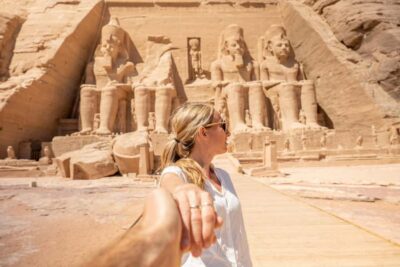
From Aswan: Abu Simbel Temple Day Trip with Hotel Pickup
Read our review →
Day Trip to Nubian Village with Camel Tour from Aswan
Read our review →
Aswan: Luxor Day Trip with Sunrise Hot Air Balloon & Felucca
Read our review →This day trip also appears in