
Review · BUSAN
Busan: Gyeongju Guided Day Trip to Three Kingdoms Capital
Gyeongju is the place to go when you want Korea’s ancient story to feel real rather than confined to a museum. This 11 to 12-hour trip from Busan links temples, royal tombs, an old observatory, traditional homes, and a palace pond in one long but rewarding day.
I like two things right away: the tour makes Gyeongju possible without arranging several buses and taxis, and the English-speaking guides turn bare stones and old roofs into stories. Guides including Kayla Kim, Bada, and Katrina are known for lively explanations, good photo spots, and keeping large groups together.
The catch is the pace. You will walk over hills, stairs, and uneven ground, and the advertised packages do not all visit the same places. Check your selected option closely, since Seokguram Grotto, Gyochon Village, Yangdong Folk Village, Cheomseongdae, and Woljeonggyo Bridge are distributed differently among the packages.
Key points to know before booking
- Gyeongju in one ambitious day: See the city’s main royal, Buddhist, and cultural sights without changing hotels or working out local transport.
- Four shared highlights: Bulguksa Temple, Daereungwon Tomb Complex, Hwangridan-gil, and Donggung Palace and Wolji Pond appear across the packages.
- Your package changes the experience: Choose among the Three Kingdoms trip, Seokguram Grotto tour, or UNESCO and 2025 APEC option.
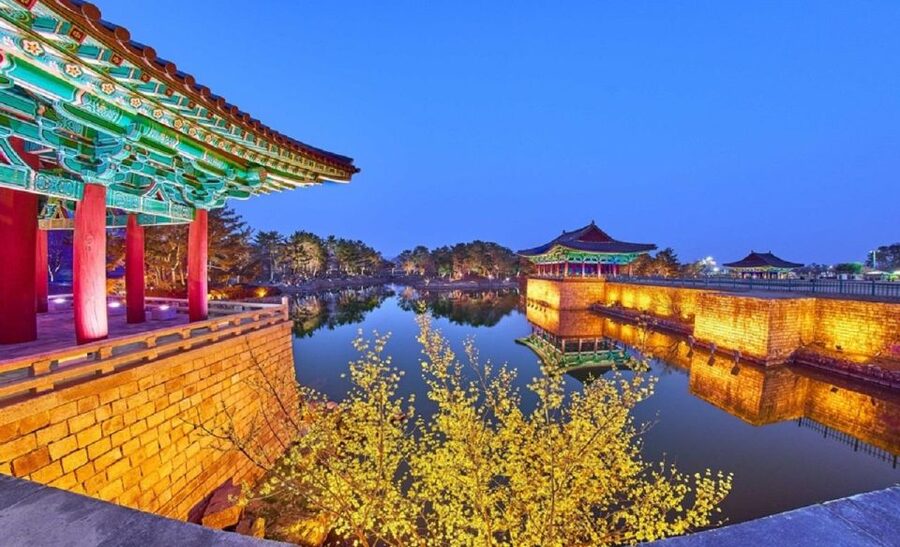
- Evening is a highlight: Donggung Palace and Wolji Pond, followed by Woljeonggyo Bridge in the listed schedule, can be especially attractive as lights come on.
- Strong guiding is central to the value: The best part is not simply transport, but the explanations, stories, timing help, and photo assistance.
- Plan for a full day on your feet: This is not suited to wheelchair users or people with mobility impairments.
Why Gyeongju makes a worthwhile day from Busan
Gyeongju was the capital of Silla, one of the ancient Korean kingdoms, and later the center of Unified Silla. Its historic sites are spread across a broad area, so visiting independently in one day takes planning. You would need to coordinate regional transport, local taxis, opening times, and entrance fees.
This trip solves the main problem. You meet at one of three Busan subway stations, ride by coach or van, and move from one sight to the next with an English-speaking guide. At $52 per person, the price is good value if you want a broad introduction rather than a slow visit to only two or three sites.
The trade-off is that you spend much of the day moving and following a fixed schedule. Gyeongju rewards a leisurely pace, but this tour is designed as a highlights day. I would choose it if you have limited time in Busan or want an organized first look at the city.
More guided days out around the world:
- From Brussels: Guided Day Trip to Bruges and Ghent
★ 4.6 · 8,353 reviews - From Madrid: Guided Day Trip to Toledo by Bus
★ 4.1 · 5,280 reviews - Montserrat, Girona & Costa Brava Guided Day Trip from Barcelona
★ 5.0 · 5,128 reviews
Meeting in Busan and settling into the coach
The three pickup points are Busan Subway Station Exit 2, Seomyeon Subway Station Exit 12, and Haeundae Subway Station Exit 7. The stated Haeundae meeting time is between 9:50 and 10:00 a.m., but your chosen departure time may differ.
Arrive at least 10 minutes early. Look for the guide holding a white flag with a green Lecirt logo. These are subway station exits, not KTX exits or shopping mall entrances, so double-check the location before leaving your hotel.
The ride to Gyeongju takes about 90 minutes. That is useful travel time, but it also makes punctuality important. If you miss the coach, late arrival and no-shows are not refundable. The return ride is about 80 minutes, with drop-off at the listed Busan subway locations.
Bulguksa Temple and the Buddhist heart of the day
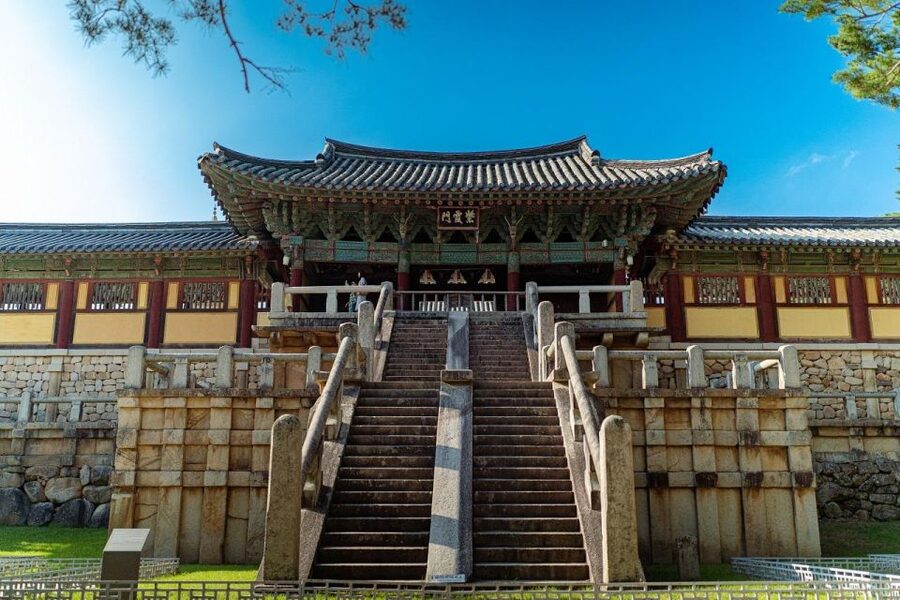
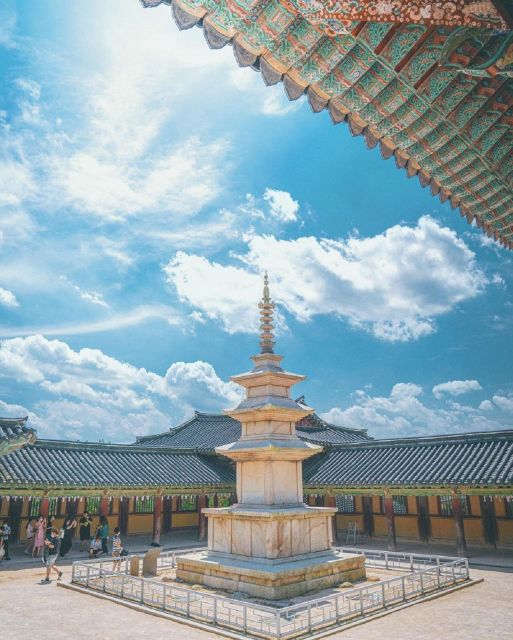
Bulguksa Temple is one of the day’s major sights and a UNESCO World Heritage site. The temple is known for its careful balance of buildings, stone features, and surrounding nature. You get about 80 minutes here, including a guided visit, walking, sightseeing, and free time.
The guide adds real value at Bulguksa. Without context, you may see a handsome complex of stairs, courtyards, roofs, and stone pagodas. With an explanation of Buddhist symbols, temple design, and Silla-era building traditions, the details become easier to read.
This stop involves walking and some steps. Wear shoes with a firm sole, especially in wet weather. The tour runs rain or shine, and the stone surfaces can feel less forgiving when the weather turns poor.
Bulguksa is also a good example of the tour’s basic rhythm: the guide explains the key points, then you have time to take photographs and look around independently. Several guides, including Bada and Kayla, are praised for answering questions without making the visit feel like a classroom lecture.
The package choice: Seokguram, Gyochon, or Yangdong
This is the part that needs careful attention when booking. All three packages share four main stops, but each adds different locations.
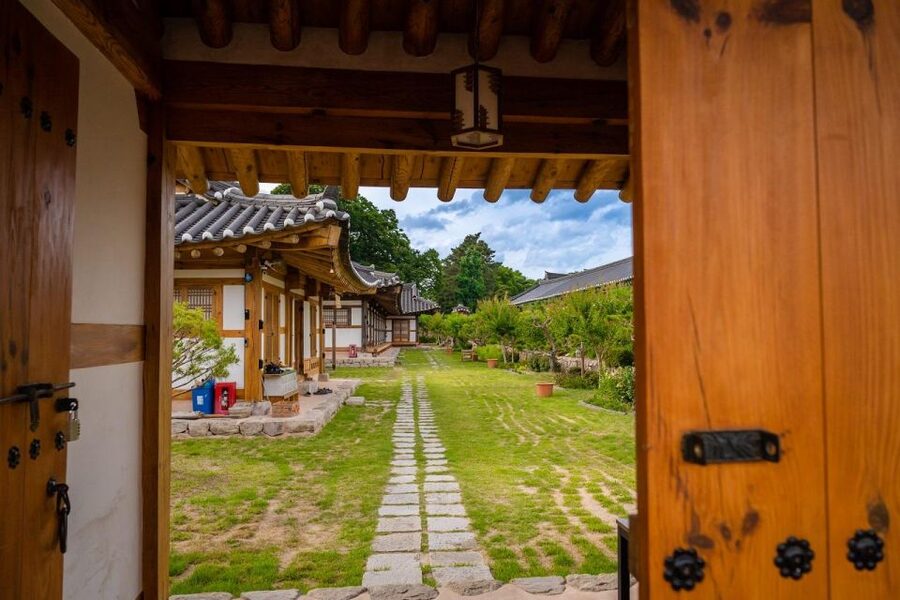
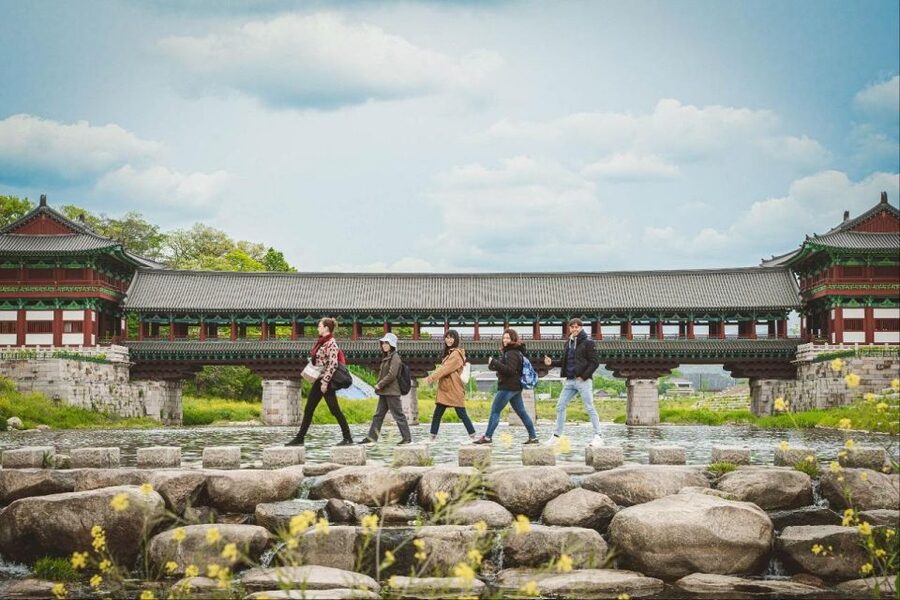
The Three Kingdoms Trip package features Gyochon Traditional Village and Woljeonggyo Bridge. Gyochon includes hanok homes, Gyeongju Hyanggyo, and a look at the old village setting. Woljeonggyo is a reconstructed historic bridge, and its lit appearance can be one of the most attractive photo moments later in the day.
The Seokguram Grotto Tour package adds Seokguram Grotto and Cheomseongdae Observatory. Seokguram is a UNESCO World Heritage site with a famous Buddhist sculpture in a mountain setting. The visit lasts about an hour and combines a guided explanation with walking and sightseeing. Cheomseongdae, described as Korea’s oldest astronomical observatory, gives the day a different angle by showing Silla interest in science and the sky.
The UNESCO and 2025 APEC package adds Yangdong Folk Village and Cheomseongdae. Yangdong is Korea’s largest UNESCO-listed traditional village, with hanok houses and Confucian heritage linked to the Joseon period. It is not simply another old street. It shows how homes, family status, education, and village life were organized.
The supplied stop sequence includes all of these places, but the package details indicate that the extras are divided among the options. For that reason, do not assume you will visit every optional stop in a single booking. Confirm the exact package before paying, especially if Seokguram or Yangdong is your priority.
More day trips around the world:
- Tuscany Day Trip from Florence: Siena, San Gimignano, Pisa and Lunch at a Winery
★ 5.0 · 21,634 reviews - From Amsterdam: Zaanse Schans, Volendam & Marken Day Trip
★ 4.4 · 18,501 reviews - From Munich: Neuschwanstein & Linderhof Castle Full-Day Trip
★ 4.6 · 14,646 reviews - Lisbon: Pena Palace, Sintra, Cabo da Roca, & Cascais Daytrip
★ 4.7 · 9,981 reviews
Lunch at a local restaurant
Lunch is given about an hour at a local restaurant. Food and drinks are not included, so bring money and expect to choose and pay for your own meal.
This break matters on such a full schedule. It gives you a proper pause between temple visits and the afternoon sights. The exact menu is not specified, so I would not book this tour based on a particular dish. Think of lunch as a practical meal stop rather than a formal food experience.
If you have dietary needs, plan ahead and ask the guide early. The tour information does not promise special menus or included refreshments.
Gyochon Village and Woljeonggyo Bridge
For the Three Kingdoms package, Gyochon Traditional Village provides a change of mood after the grand scale of Bulguksa. You walk among traditional hanok homes and visit the area around Gyeongju Hyanggyo, a historic Confucian school. The stop lasts about an hour and includes guided time and free exploration.
This is a good place to notice smaller details: rooflines, courtyards, wooden gates, and the way older buildings sit within a living neighborhood. It is less about one spectacular object and more about seeing how traditional architecture fits together.
Woljeonggyo Bridge is scheduled near the end of the day in the supplied route, with about 30 minutes for photographs and sightseeing. The bridge’s lighting and reflection can make it especially appealing around dusk. It is a short stop, so keep your camera ready and follow the guide’s timing.
Cheomseongdae and Yangdong Folk Village
Cheomseongdae is a compact stop with a big idea behind it. The observatory is associated with Silla astronomy and ancient engineering. You receive a guided explanation and free time, usually enough to see the structure, take photographs, and understand why it matters.
Yangdong Folk Village offers a broader walk. The village preserves hanok homes and Confucian traditions from the Joseon period. You get about an hour, including a photo stop, guided information, and free time.
These optional locations are valuable because they widen the story beyond kings and temples. Cheomseongdae points to scientific work, while Yangdong shows social and domestic life. The drawback is distance and walking. If you choose the UNESCO option, expect another outdoor stop on an already active day.
Hwangridan-gil, Daereungwon, and the royal tombs
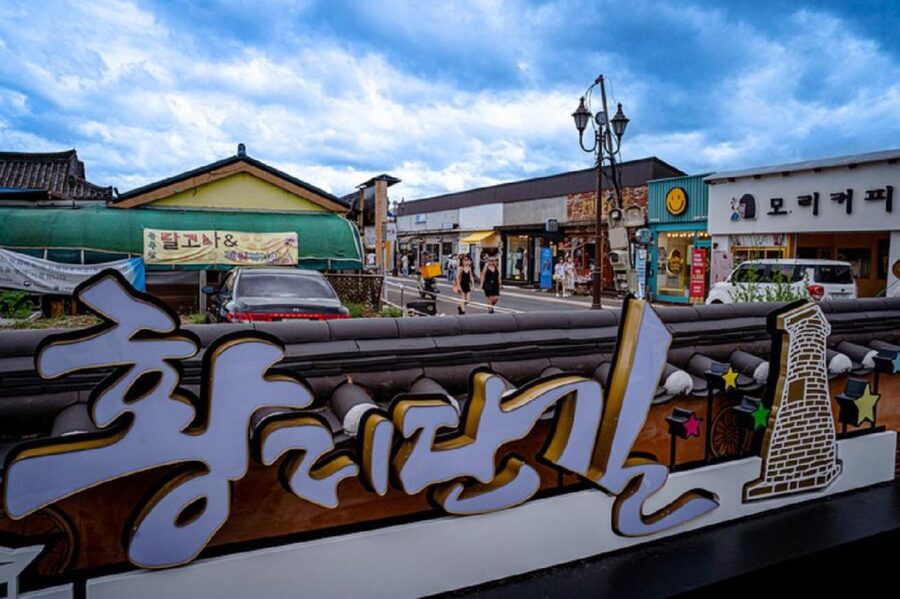
Hwangridan-gil is a short, 30-minute stop for free time, shopping, and self-guided sightseeing. The street is lined with preserved 1960s architecture and has a more modern, casual feel than the temple and tomb areas.
Half an hour is enough to stretch your legs, browse, or take photographs, but not enough for a long meal or serious shopping. I like its place in the schedule because it breaks up the historical sites with a glimpse of present-day Gyeongju.
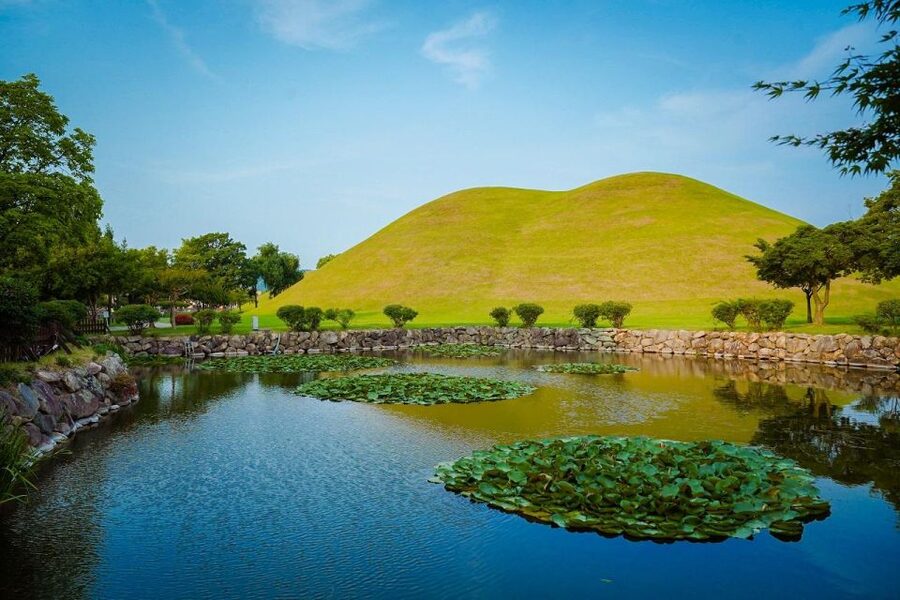
Daereungwon Tomb Complex is more substantial, with about an hour for a guided visit and free time. The large grassy mounds are royal and aristocratic tombs from the Silla Kingdom. Their size is striking, but the guide’s explanation helps you understand that these are burial structures, not hills formed by nature.
The tomb area is also one of the most visually memorable parts of the day. You can walk between the mounds and see how the burial grounds shape the city. Bring shoes you can comfortably walk in, since the route includes outdoor paths and steady movement.
Donggung Palace and Wolji Pond after dark
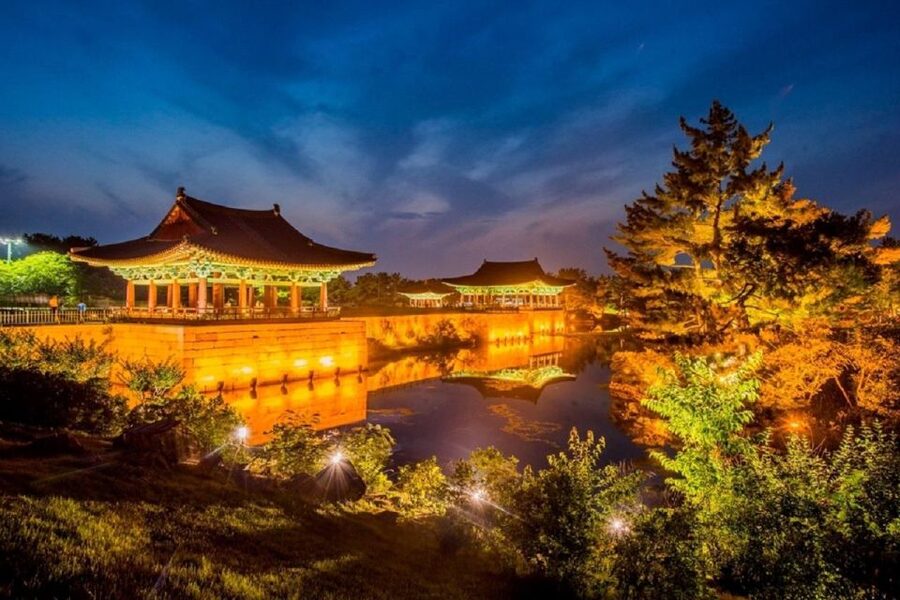
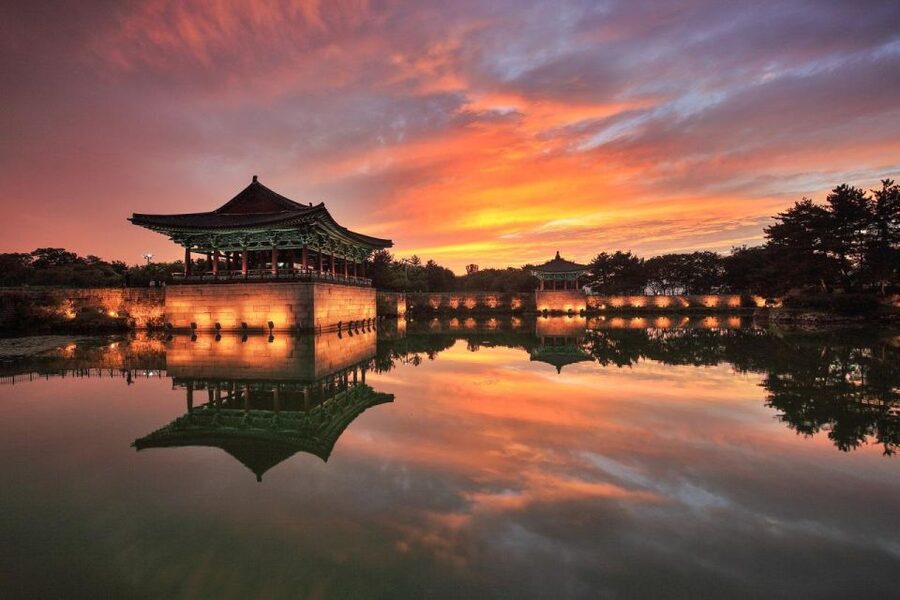
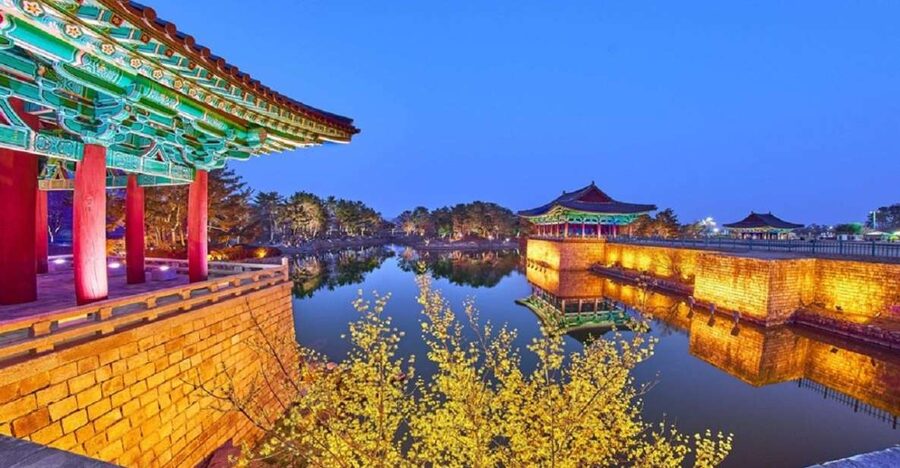
Donggung Palace and Wolji Pond is included in all three packages, with admission included as well. You have about an hour for a guided visit, photographs, and free time.
This is often the emotional high point of the schedule. The restored palace buildings and pond reflect in the water, and the scene becomes especially attractive as evening lights appear. The combination of architecture, water, and darkness gives the stop a different character from Bulguksa or Daereungwon.
The timing may depend on the season and the day’s traffic, so do not assume complete darkness. Still, the schedule places this stop late, and the evening setting is part of its appeal. One practical point: after a full day, your feet may be tired just when this beautiful site deserves your attention.
Guides, group rhythm, and the human side of the tour
The guide can make or break a day like this. The strongest guides named in the supplied material include Kayla Kim, Bada, Katrina, Hyony, Yuna, Jack, and Jieun. Guide assignments can change, so you should not book expecting a specific person, but the recurring strengths are clear: history explained in plain English, humor, patience, photo help, and careful timekeeping.
Kayla is frequently praised for high energy and storytelling. Bada is noted for Buddhist explanations, practical advice, and looking after the group. Katrina is described as especially effective with large groups and good at bringing historical details to life.
You should expect a guide-led introduction at each stop, followed by independent time. This is a useful balance. You get enough context to know what you are seeing, but you are not required to stay beside the guide for every minute.
A larger group can mean waiting at meeting points and moving at the pace of the slowest person. On the other hand, the guide and driver handle the roads, parking, directions, and timing. That is a fair exchange when Gyeongju is only one part of a South Korea trip.
Is $52 good value?
At $52, the tour offers strong value for a full day of transport, guiding, and several cultural sites. Donggung Palace and Wolji Pond admission is included in every package, and Yangdong Folk Village admission is included with the UNESCO option. Other food, drinks, insurance, and personal spending are extra.
The price makes the most sense when you compare it with the effort of arranging a private route. You would need to connect Busan with Gyeongju, move between spread-out sites, and keep track of entry points and closing times. The coach also lets you rest between stops.
It is less suitable if you want a slow, highly personal visit. A private guide or overnight stay would give you more time at each location. This tour wins on coverage and convenience, not solitude.
Who should book this Gyeongju day trip?
I would choose this tour if you are staying in Busan, have one free day, and want to see the major cultural sights without handling complicated transport. It is especially useful for first-time visitors who want a clear introduction to Silla, Buddhist architecture, royal tombs, and traditional Korean villages.
It also suits solo visitors and small groups who value an English guide and built-in company. The photo help is a nice bonus, particularly if you are traveling alone.
I would hesitate if you use a wheelchair, have a mobility impairment, or dislike hills, stairs, and long days outdoors. The tour is specifically not suitable for wheelchair users, and even fit participants should expect plenty of walking.
Cancellation is free up to 24 hours before departure, and you can reserve now and pay later. That flexibility helps, but it does not cover a missed pickup. Choose your station in advance and arrive early.
Final verdict: book it for coverage, not a leisurely pace
You should book this Gyeongju trip if your goal is to see a lot in one day and learn what the sites mean. The mix of Bulguksa, Daereungwon, Hwangridan-gil, and Donggung Palace gives you a strong overview, while the package-specific stops let you focus on temples, traditional villages, or UNESCO sites.
Before booking, check the exact option twice. Pick the Three Kingdoms package for Gyochon and Woljeonggyo, the Seokguram option for the grotto and Cheomseongdae, or the UNESCO and 2025 APEC option for Yangdong and Cheomseongdae. If you accept the long hours and active pace, $52 is a practical way to turn one Busan day into a memorable introduction to Gyeongju.
FAQ
How long is the Gyeongju tour from Busan?
The tour lasts about 11 to 12 hours, including transport between Busan and Gyeongju.
Where are the pickup points in Busan?
Pickup is available at Busan Subway Station Exit 2, Seomyeon Subway Station Exit 12, and Haeundae Subway Station Exit 7. These are subway exits, not KTX station or shopping mall exits.
What time should I arrive?
Arrive at least 10 minutes before departure. At Haeundae, the stated meeting window is 9:50 to 10:00 a.m. Late arrivals and no-shows cannot be refunded.
Is lunch included?
No. The tour includes a one-hour lunch break at a local restaurant, but food and drinks are not included.
Which sights are included in every package?
Bulguksa Temple, Daereungwon Tomb Complex, Hwangridan-gil, and Donggung Palace and Wolji Pond are the shared highlights. Admission to Donggung Palace and Wolji Pond is included in all three packages.
What is different between the three packages?
The Three Kingdoms package includes Gyochon Traditional Village and Woljeonggyo Bridge. The Seokguram Grotto package includes Seokguram Grotto and Cheomseongdae Observatory. The UNESCO and 2025 APEC package includes Yangdong Folk Village and Cheomseongdae Observatory.
Is the tour suitable for wheelchair users?
No. The tour is not suitable for wheelchair users or people with mobility impairments. It includes walking, hills, stairs, and outdoor surfaces.
New day trips around the world
- Beijing: Badaling Ancient Great Wall of China Day Trips★ 4.8 · 208 reviews
- Barcelona: Montserrat Monastery and Natural Park Day Trip★ 4.6 · 755 reviews
- Bari: Alberobello and Polignano a Mare Half-Day Trip★ 4.8 · 37 reviews
- Bari: Matera Day Trip★ 4.6 · 65 reviews
- Bangkok: Maeklong Railway & Amphawa Floating Market Day Trip★ 4.3 · 675 reviews
- Barcelona: Walking and Horse Riding Day-Trip in Montserrat★ 4.8 · 40 reviews
- Montserrat & Cava Wineries Day Trip from Barcelona w/ Pickup★ 4.6 · 218 reviews
- Bali: Ubud Waterfall, Village and Pool Club Day Trip★ 4.7 · 45 reviews