
Review · LA PAZ
From La Paz: 4-Day Trip to San Pedro de Atacama w/Salt Flats
The real prize here is not simply the salt flats. It is the full crossing from La Paz to San Pedro de Atacama, with a night bus, three days of rough desert roads, flamingo lagoons, volcanic springs, and a border crossing into Chile. You get a huge amount of scenery in a short time, though the pace is demanding.
I like the small group of up to 11 people, which makes the 4WD rides and photo stops more manageable. I also like the sunset stop on the Salar de Uyuni, complete with wine, and the chance to see the flats change from white salt to mirror-like water during the rainy season.
The trade-off is comfort. The second night can be very cold and basic, with shared rooms, limited electricity, no reliable Wi-Fi, and little or no hot water. You should also know that the advertised four days include the overnight bus, so your time with the guide is closer to two and a half or three active days.
Key points at a glance
- An overnight start from La Paz: Check in at 8:30 p.m. and leave by bus at 9 p.m., with dinner, breakfast, a blanket, heating, Wi-Fi, and a toilet onboard.
- A full Salar de Uyuni circuit: See the Train Cemetery, Colchani, salt eyes, a salt hotel, the Dakar Monument, world flags, and Incahuasi Island.
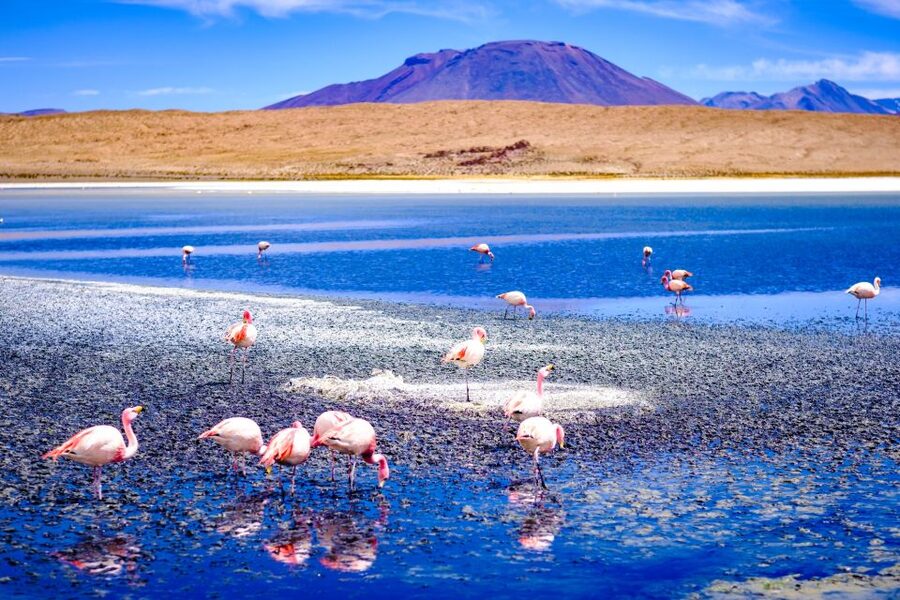
- A flamingo-filled desert route: Visit Cañapa, Hedionda, and Chiarcota lagoons, then continue to the Siloli Desert and Laguna Colorada.
- A cold but memorable final morning: See Sol de Mañana geysers, bathe at Polques hot springs, and photograph the Green Lagoon, White Lagoon, and Licancabur Volcano.
- A practical Bolivia to Chile transfer: Guides assist with the border crossing, with arrival at San Pedro’s main square around 1:30 p.m.
- A trip built for hardy sightseers: Expect bumpy roads, basic hostels, high altitude, and long hours in a shared 4WD.
Why this route works so well
At $493 per person, this is an efficient way to connect two major South American destinations while seeing the best-known sights of southwestern Bolivia. The cost includes the La Paz to Uyuni bus, 4WD transport, an English-speaking guide, accommodation, meals, and the onward transfer to San Pedro de Atacama.
That bundle matters. Booking the bus, Uyuni circuit, desert hostels, and Chile transfer separately takes more planning, and a missed connection in this remote region would be a real headache. Here, the same operator coordinates the ground transport and border handoff.
Still, do not treat the price as all-inclusive. You need extra money for the Eduardo Avaroa Reserve entry, Incahuasi Island, toilets, hot springs, migration tax, drinks, snacks, and personal expenses. The listed extras add up quickly, so carry roughly 350 Bolivianos or more, depending on what you buy. Tips for the guide and driver are also worth planning for.
The strongest part of the experience is the scenery. The guides and drivers have earned particular praise for safe driving, photo help, and keeping the group moving through a packed route. Guides such as Mary, Andres, James, Marica, and Jose have led recent departures, but your guide will depend on the date.
More four-day trips around the world:
- Agadir/Taghazout/Port: Sahara Desert 4×4 Day Trip with Lunch
★ 4.5 · 438 reviews - From Fes: 4-Day Trip to Marrakech via Merzouga & Gorges
★ 4.4 · 29 reviews
Night one: leaving La Paz for Uyuni
You go to the bus office in La Paz at 8:30 p.m. for check-in, then board for a 9 p.m. departure. This is a public overnight bus rather than a private tour vehicle, but the listed service is better than a basic local bus: dinner, breakfast, bottled water, a hot drink, heating, a toilet, a polar blanket, Wi-Fi, and a first-aid kit are included.
The bus ride is useful because it saves you a separate travel day. You arrive in Uyuni at about 7:30 a.m., with some free time to walk around before meeting at the local office at 10 a.m. Departure for the salt flats is scheduled for 10:30 a.m.
That morning gap can feel disorganized. Keep your passport, warm layer, water, and valuables with you rather than burying them in luggage. Some departures have involved a wait in Uyuni before the group was fully organized, so do not expect a perfectly timed handoff the moment you step off the bus.
Day two: salt trains, Colchani, and the white expanse
The first stop is the Train Cemetery, where rusting locomotives from the eighteenth and early twentieth centuries sit in the desert outside Uyuni. It is a stark place, and the old metal makes good material for photographs. Give yourself time to frame the trains against the empty horizon rather than rushing through for a quick snapshot.
At Colchani, you see how local workers process salt and browse a small market and museum. This stop adds useful context before you reach the main attraction. The salt flats are not just a giant photo backdrop. They support local production and have shaped the nearby towns.
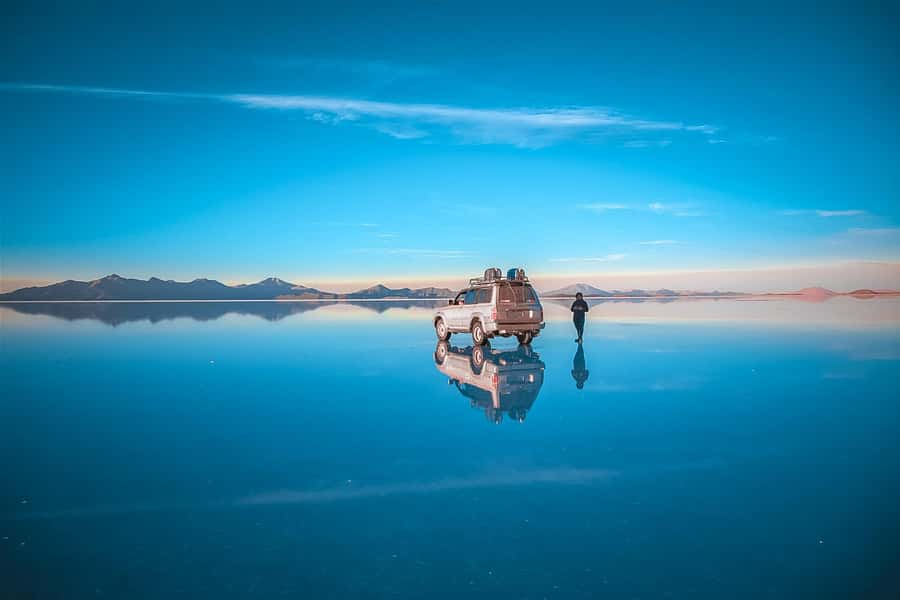
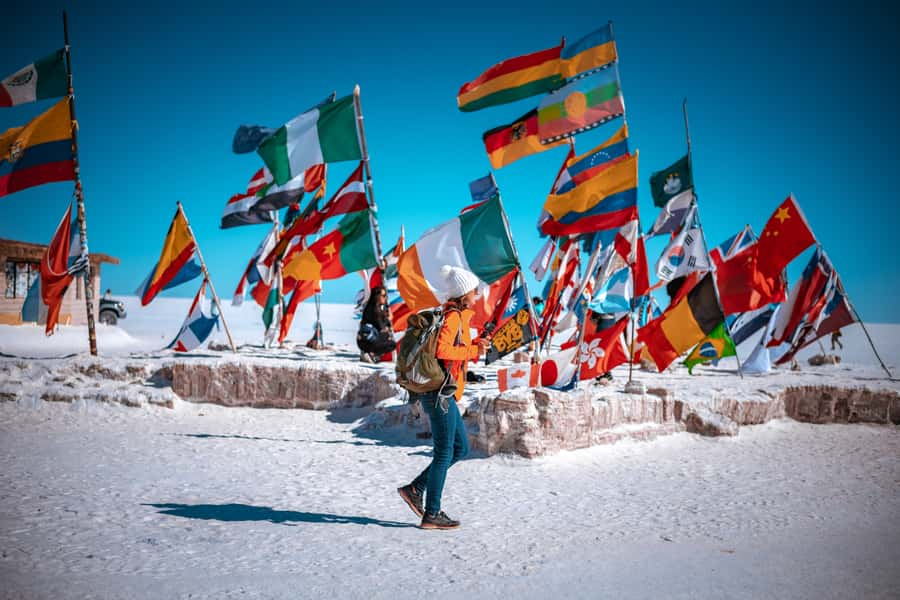
Then the 4WD enters the Salar de Uyuni. The scale is hard to grasp until the road disappears and the white surface stretches in every direction. Stops include salt eyes, the Salt Hotel-Museum built from salt blocks, the Dakar Monument, and flags from around the world.
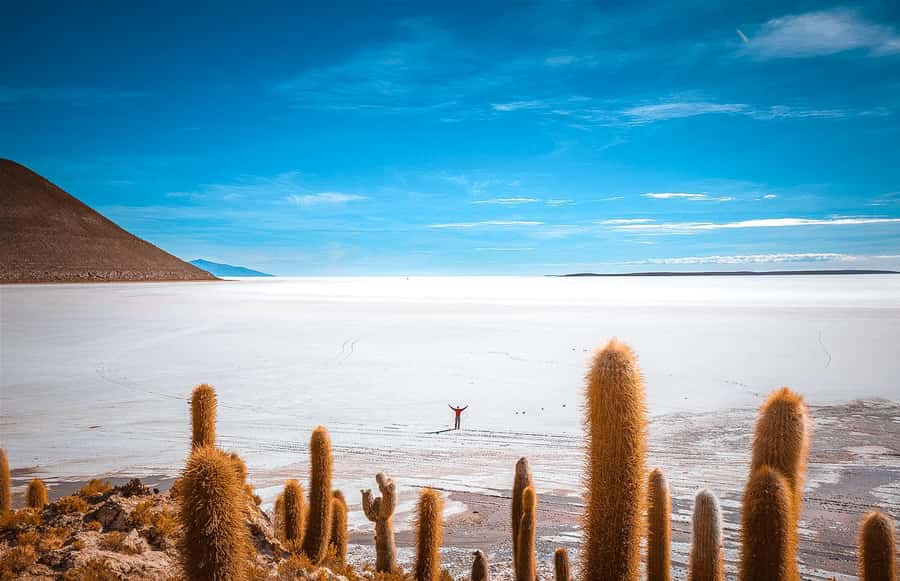
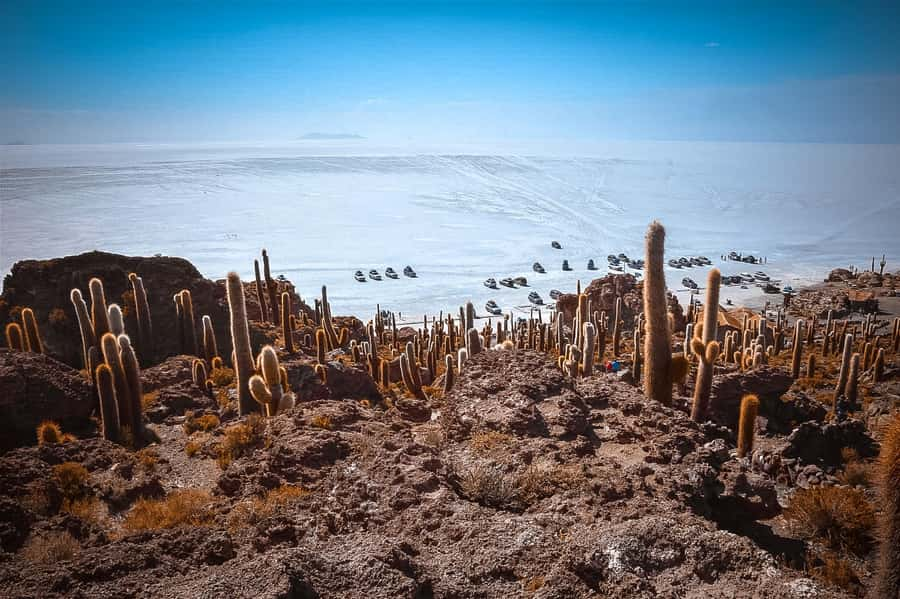
Incahuasi Island brings a change of texture. Giant cacti rise from a rocky island in the middle of the salt plain, giving you a high viewpoint across the bright, flat surface. The entry fee is not included and is listed at 30 Bolivianos.
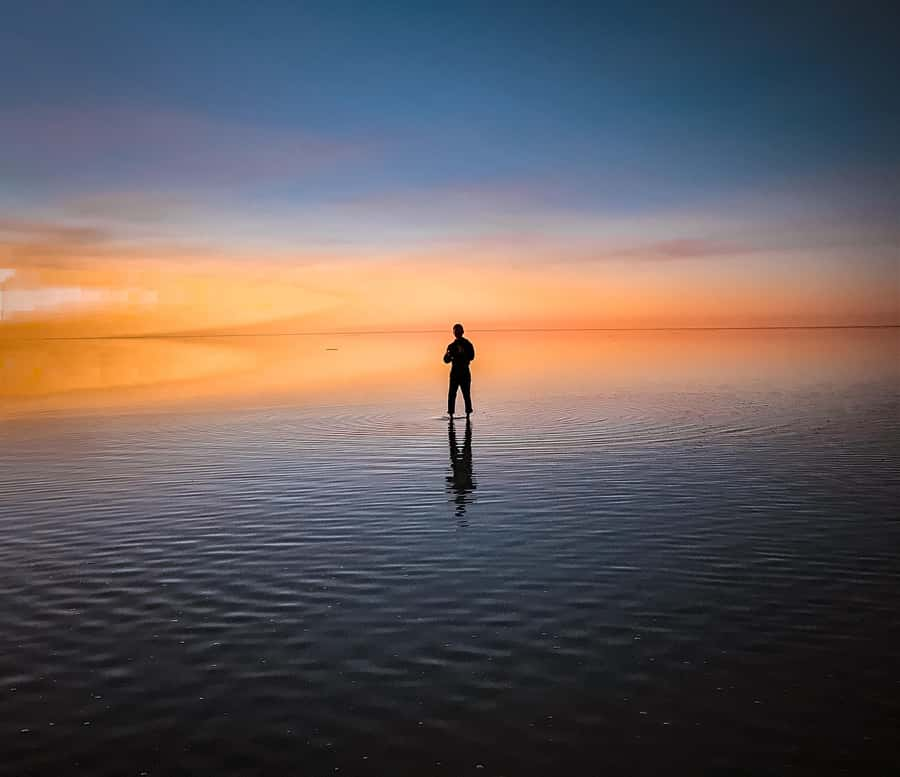
In the rainy season, usually January through April, water may cover parts of the Salar. That can create the famous mirror effect, but the same conditions can make Incahuasi Island inaccessible. The route may also change or use a different sleeping location if roads are blocked.
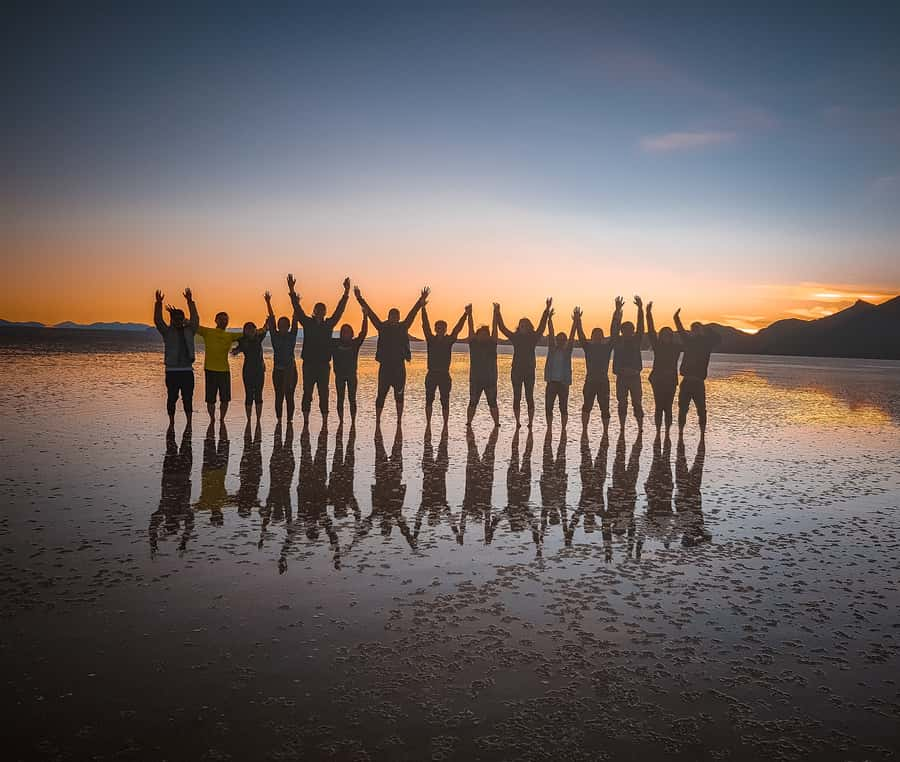
Late in the day, you stop for sunset with wine before heading to the hostel in Ajencha. This is one of the most enjoyable details in the program. After a long day in the vehicle, a simple drink and open view give the group time to slow down.
The first hostel uses four, five, or six-bed rooms with shared toilets. Conditions are basic, but this night is generally the easier of the two. A warm shower is not guaranteed, so pack as if you may need to skip it.
Day three: lagoons, flamingos, and Laguna Colorada
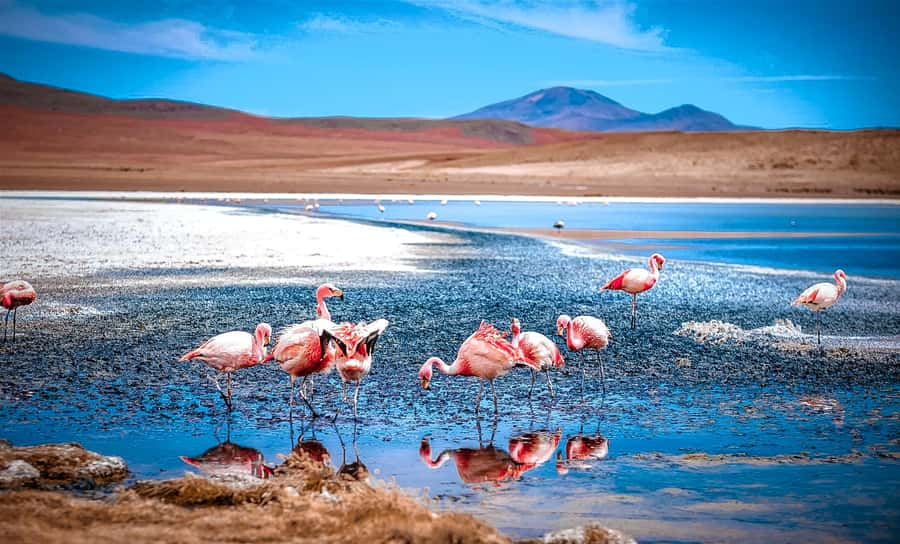
After breakfast, the route heads through the Chiguana area toward three Andean lagoons: Cañapa, Hedionda, and Chiarcota. Flamingos feed in the shallow water, creating one of the trip’s best wildlife stops. You may also see llamas, alpacas, and viscachas, small rabbit-like animals found along the route.
These lagoons are valuable because they break up the long drive with repeated chances to stop, stretch, and photograph wildlife. Each has a different setting, but the experience is shaped as much by wind and altitude as by scenery. Bring layers you can add and remove quickly.
Lunch is included, followed by the Siloli Desert and its Stone Tree, a naturally eroded rock formation. The desert feels spare and exposed, with unusual rocks rising from the sand. The roads are rough, and you spend much of the day inside the 4WD, so switch seats when possible.
The final major stop is Laguna Colorada, a red-toned lake known for its flamingos. The color comes from mineral and algae activity, and the effect changes with light and weather. At this altitude, the cold wind can be severe, so gloves, a hat, and a warm outer layer are more useful than stylish but thin clothing.
The night is spent in Huayllajara in a shared six-bed room with a shared toilet. This is the roughest accommodation. Previous departures have had limited electricity, cold rooms, no hot water, and unreliable or poor Wi-Fi. Bring toilet paper, a power bank, and a sleeping bag if you dislike cold nights. Sleeping bags are not included.
The food is part of the practical charm of the route. You receive two lunches, two dinners, and two breakfasts during the desert section. Meals are often filling and sometimes traditional, but do not expect restaurant choice or elaborate presentation.
More day trips around the world:
- Tuscany Day Trip from Florence: Siena, San Gimignano, Pisa and Lunch at a Winery
★ 5.0 · 21,634 reviews - From Amsterdam: Zaanse Schans, Volendam & Marken Day Trip
★ 4.4 · 18,501 reviews - From Munich: Neuschwanstein & Linderhof Castle Full-Day Trip
★ 4.6 · 14,646 reviews - Lisbon: Pena Palace, Sintra, Cabo da Roca, & Cascais Daytrip
★ 4.7 · 9,981 reviews
Day four: geysers, hot springs, and the Chile border
The last morning starts early. You visit Sol de Mañana, a geothermal area with fumaroles, bubbling mud, smoking holes, and a strong sulfur smell. The ground is active, so follow the guide and keep to the indicated areas.
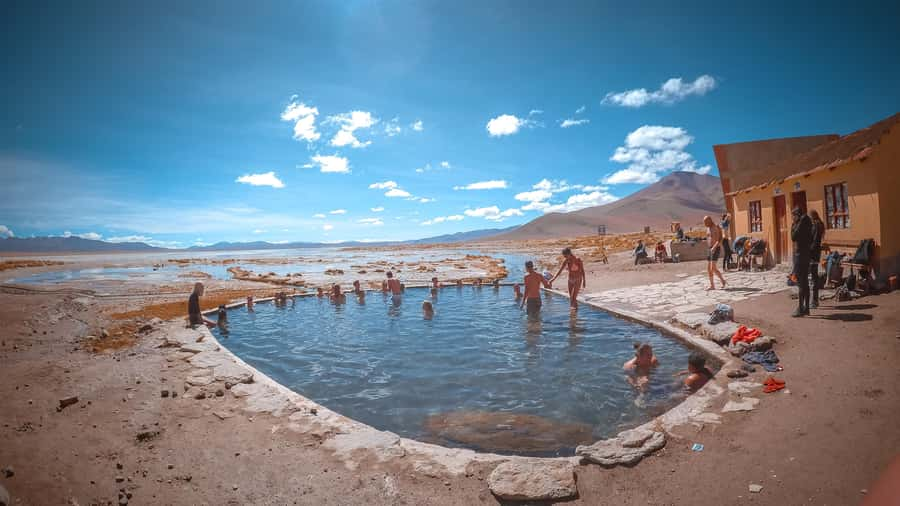
Next comes Polques hot springs. The chance to bathe in warm water while surrounded by cold desert scenery is one of the trip’s best contrasts. Entry costs 6 Bolivianos, and a towel is not listed as included, so pack one in an easy-to-reach bag.
The Salvador Dali Desert follows, with multicolored rock formations shaped by wind and erosion. Then you reach a viewpoint for the Green Lagoon, White Lagoon, and Licancabur Volcano. This final stretch gives you a last run of dramatic volcanic scenery before the road turns toward the border.
The guide assists with the border crossing at about 10 a.m. Arrival in San Pedro de Atacama is expected around 1:30 p.m., with drop-off at the town’s main square. Border procedures can take time, and the final day is not a relaxed sightseeing morning. Keep your passport ready and avoid scheduling a tight onward connection.
What the 4WD ride is really like
The vehicles are four-wheel drives with rooftop luggage racks, designed for remote roads rather than comfort. You can expect long stretches on rough tracks, vibration, dust, and tight seating. Six people in one vehicle can feel cramped, especially if you are tall or carrying more than a small day bag inside the cabin.
The small-group limit is helpful, but the group may be split across two vehicles. On some departures, one English-speaking guide has worked between two 4WDs. That means you may receive the most detailed commentary at shared stops, rather than continuous explanations inside your own car.
The driver matters a great deal here. Drivers such as Yvan, Ivan, Jonny, Roger, Pedro, and Arturo have been singled out for careful handling on difficult roads. You should still expect a hard ride. This is a wilderness transfer with sightseeing, not a soft-seat coach tour.
Cold, altitude, and what to pack

The route reaches high, exposed parts of Bolivia, and the tour is not suitable for people with serious back problems or altitude sickness. Anyone over 95 is also listed as unsuitable for the activity.
Pack for function, not fashion:
- Several warm layers, including gloves and a hat
- A sleeping bag if you get cold easily
- Toilet paper and basic toiletries
- A towel for the hot springs
- Snacks, since the included breakfasts can be as simple as bread, jam, and tea or coffee
- A power bank
- Cash in Bolivianos
- Your passport or ID card
There may be no phone signal or dependable Wi-Fi for much of the desert route. Handle important messages, payments, and travel arrangements before leaving Uyuni.
Who should book this trip?
I would choose this route if you want to see the salt flats, lagoons, geysers, and volcanic border region without returning to Uyuni. It works especially well if San Pedro de Atacama is your next stop and you value an organized transfer over having complete control of the schedule.
You should also enjoy active sightseeing. Each day is packed, with early starts, long drives, short walks, photo stops, and basic lodging. You will see far more than on a single-day salt-flat outing, but you give up comfort and spare time.
This is not a good fit if you need private rooms, reliable showers, strong internet, or a gentle pace. It is also a poor choice if you struggle with bumpy roads, cold nights, or high-altitude travel.
The free cancellation window extends to 24 hours before departure, and you can reserve now and pay later. Those terms help if your Bolivia plans are still moving, but the more important decision is physical: can you handle two nights in very simple accommodation and long hours in a 4WD?
Final verdict: an excellent route, with honest limits
I would book this trip for the scenery and the practical Bolivia to Chile connection. The sunset on the salt flats, flamingo lagoons, Laguna Colorada, Sol de Mañana, and Licancabur viewpoint make the route feel far bigger than its price suggests.
I would not book it expecting four full days of guided touring. The first night is an overnight bus, and the final morning ends at the border and then San Pedro. Think of it as three active days wrapped around a long transfer.
At $493, the value is good if you want transport, meals, accommodation, a guide, and border assistance in one package. It is less attractive if you can reach Uyuni independently and arrange a local three-day circuit at a lower price. For most people, the extra cost buys convenience and less risk of a poorly timed connection.
Bring cash, warm clothing, patience, and a sense of humor about basic facilities. If you do, this can be one of the most memorable ways to cross from Bolivia into Chile.
FAQ
Where does the tour start and finish?
The tour starts at the bus office in La Paz City and finishes at the main square in San Pedro de Atacama, Chile.
What time do I meet the group in La Paz?
You meet at 8:30 p.m. at the bus office. The bus departs at 9 p.m.
Is the guide English-speaking?
Yes. An English-speaking live guide is included. The group size is limited to 11 participants, though the guide may work between two 4WD vehicles.
What accommodation is included?
The first night is in Ajencha in a four, five, or six-bed room with a shared toilet. The second night is in Huayllajara in a shared six-bed room with a shared toilet.
Are entrance fees included?
No. Incahuasi Island, Eduardo Avaroa Reserve, toilets along the route, and the Polques hot springs require separate payment. The listed fees are 30 Bolivianos for Incahuasi, 150 Bolivianos for the reserve, 30 Bolivianos for toilets, and 6 Bolivianos for the hot springs.
Can I visit Incahuasi Island during the rainy season?
Incahuasi Island may not be accessible from January through April because of water and road conditions. The sleeping location may also change during this period.
What should I bring?
Bring your passport or ID card, warm layers, cash, toiletries, snacks, a power bank, and toilet paper. A sleeping bag and towel are also useful, but they are not included.
New day trips around the world
- From La Paz: Day Trip to Chacaltaya and Moon Valley★ 4.4 · 65 reviews
- From Kuala Lumpur: Kuala Gandah Elephant Sanctuary Day Trip★ 4.6 · 64 reviews
- From Kuala Lumpur: Genting Highlands Day Trip with Cable Car★ 4.4 · 64 reviews
- From Kuala Lumpur: Private Genting Highlands Day Trip★ 4.4 · 67 reviews
- From Kuala Lumpur: Colmar Tropicale and Batu Caves Day Trip★ 4.2 · 40 reviews
- From Kuala Lumpur: Cameron Highlands Day Trip with Transfers★ 4.0 · 24 reviews
- From Krakow: Wieliczka Salt Mine Half-Day Trip with Pickup★ 4.5 · 140 reviews
- Dunajec River Gorge and Zakopane: Full-Day Trip from Krakow★ 4.6 · 57 reviews